

Best HVAC CRM Software in 2026: Top Tools for Service Businesses

Updated:
March 28, 2026
The best HVAC CRM software helps contractors manage leads, schedule jobs, automate follow-ups, and improve customer retention. Tools like ServiceTitan, UI Bakery, and Housecall Pro stand out as the best HVAC CRM software thanks to strong automation, real-time job tracking, and customizable workflows tailored to HVAC businesses.
But choosing the best HVAC CRM software isn’t just about features, it’s about how well the tool fits your day-to-day operations. HVAC businesses don’t operate like typical sales teams. You’re managing technicians in the field, urgent service requests, seasonal demand spikes, and long-term maintenance contracts – all at once.
That’s where generic CRM tools often fall short.
Modern crm software for hvac companies is no longer just a contact database. It acts as an operational system that connects scheduling, dispatching, invoicing, and customer communication into one workflow. The right tool can significantly improve customer retention, reduce missed appointments, and automate repetitive tasks that usually slow teams down.
In this guide, we’ll break down the best CRM for hvac companies, compare their capabilities, and help you understand which solution actually fits your business model.
Top HVAC CRM picks
- ServiceTitan – best for enterprise HVAC operations.
- UI Bakery – best for custom HVAC workflows & internal tools.
- Housecall Pro – best for small HVAC teams.
- Jobber – best for scheduling & invoicing.
- Zoho CRM – best for flexible CRM customization.
- HubSpot CRM – best for marketing & sales alignment.
How we evaluated these tools
To identify the best crm software for hvac companies, we focused on what actually matters in daily HVAC operations:
- HVAC-specific workflows – job scheduling, dispatching, maintenance tracking.
- CRM automation – follow-ups, reminders, invoicing automation.
- Ease of use – for technicians and office teams.
- Customization – ability to adapt to different HVAC business models.
- Integration capabilities – accounting, ERP, IoT systems.
- Pricing transparency – suitability for SMB vs enterprise.
We prioritized tools that truly function as CRM software for hvac companies, not generic CRMs with minimal adaptation.
Comparison table: best HVAC CRM Software
ServiceTitan
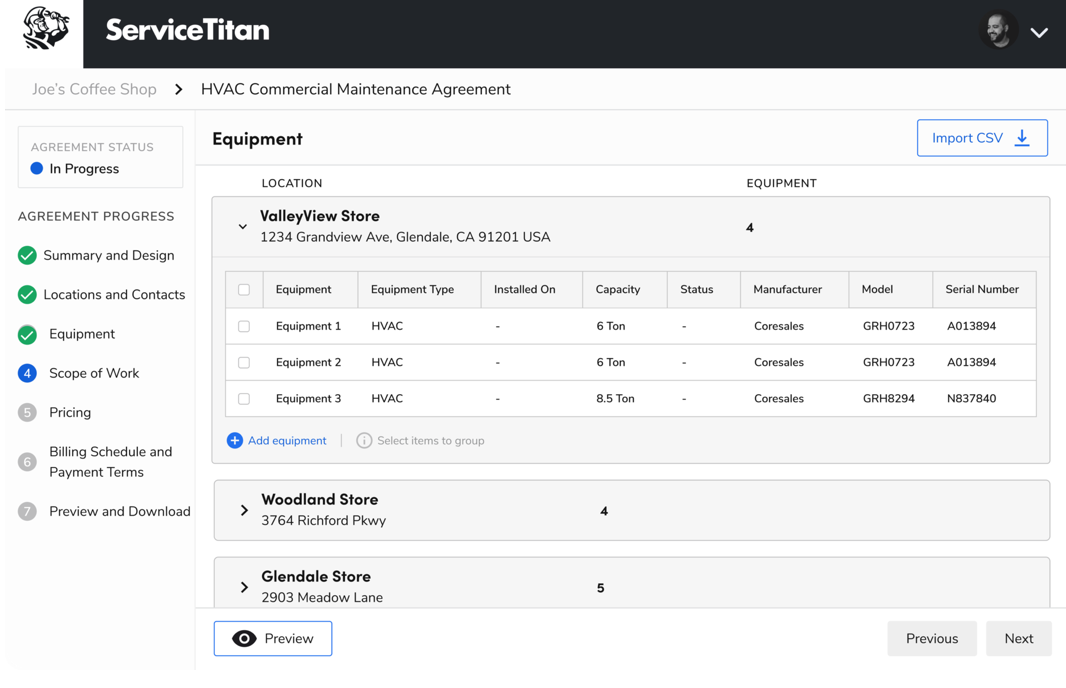
ServiceTitan is widely considered the best hvac CRM for large service businesses. It offers a full suite of tools for dispatching, reporting, and customer management, making it ideal for scaling operations.
The platform excels in providing deep analytics and operational visibility, which is critical for high-volume HVAC companies. Its automation capabilities help reduce manual workload and improve customer retention. However, pricing is custom and typically suited for larger teams.
Key strengths:
- Advanced HVAC CRM automation across scheduling, dispatching, invoicing, and follow-ups.
- Deep reporting and analytics for revenue tracking, technician performance, and job profitability.
- Built specifically as crm software for hvac companies, not a generic CRM adaptation.
- Real-time dispatch board with GPS tracking and route optimization.
- Strong mobile app enabling technicians to manage jobs, upsell services, and capture payments on-site.
- Built-in call booking and customer history tracking for improved customer retention.
Pros:
- Highly specialized hvac crm software with industry-specific workflows.
- Scales effectively for large and multi-location HVAC companies.
- Powerful automation reduces manual admin work significantly.
- Strong ecosystem of integrations (accounting, marketing tools, financing).
- Helps improve revenue through better job tracking and upselling tools.
- Excellent visibility into operations and team performance.
Cons:
- Expensive and often requires long-term contracts.
- Steep learning curve for new users and teams.
- Implementation can take time and require onboarding support.
- Overkill for small HVAC businesses or startups.
- Custom pricing makes it harder to compare upfront.
UI Bakery
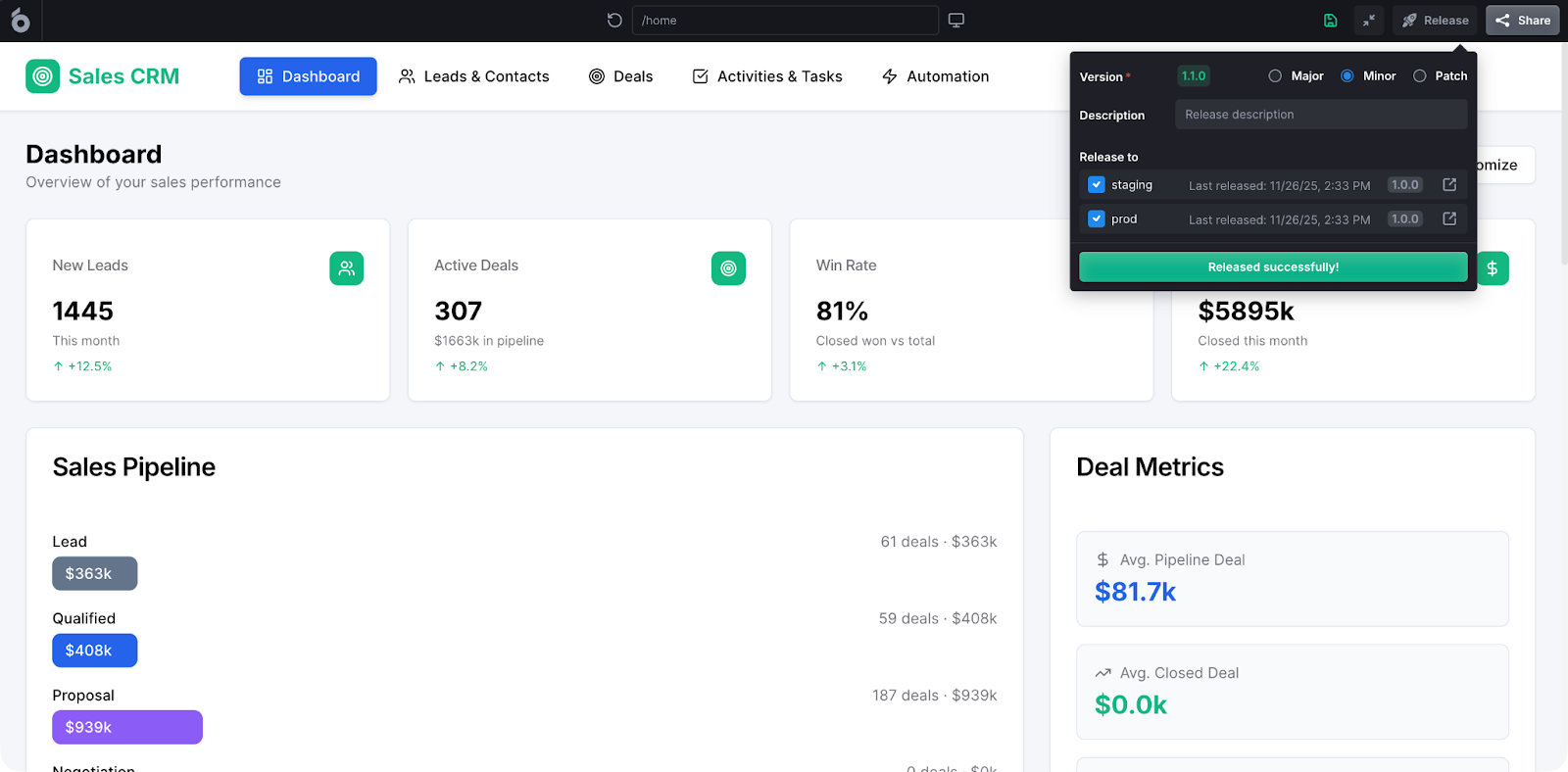
UI Bakery is a modern alternative to traditional CRM software for hvac companies, allowing teams to build fully customized HVAC CRM systems on top of their own data. Instead of forcing predefined workflows, it enables HVAC companies to create tailored dashboards, dispatch tools, and internal apps.
This makes it one of the best CRM software for hvac companies that need flexibility. With built-in integrations (SQL databases, APIs), it supports real-time operations and advanced automation. It’s especially powerful for companies that outgrow rigid HVAC CRM apps.
Key strengths:
- Fully customizable hvac CRM app built on top of your real data sources (SQL, APIs, etc.).
- Enables building tailored CRM software for hvac companies instead of adapting to rigid tools.
- Strong CRM automation capabilities including workflows, approvals, and internal processes.
- AI-powered app generation significantly speeds up development of HVAC dashboards and tools.
- Supports complex business logic, role-based access, and multi-step workflows.
- Self-hosted option for companies needing full data control and compliance.
Pros:
- Extremely flexible – ideal for companies with unique workflows.
- Eliminates limitations of traditional HVAC CRM platforms.
- Scales with business complexity without requiring platform migration.
- Integrates directly with existing systems (ERP, databases, APIs).
- Enables building internal tools beyond CRM (dispatch, analytics, inventory).
- Strong fit for operations-heavy teams and tech-savvy companies.
Cons:
- Requires initial setup and thinking through workflows.
- Not a plug-and-play solution like traditional HVAC CRMs.
- May require technical involvement for advanced use cases.
- No prebuilt HVAC templates compared to niche tools.
- Learning curve for non-technical users at the beginning.
Housecall Pro
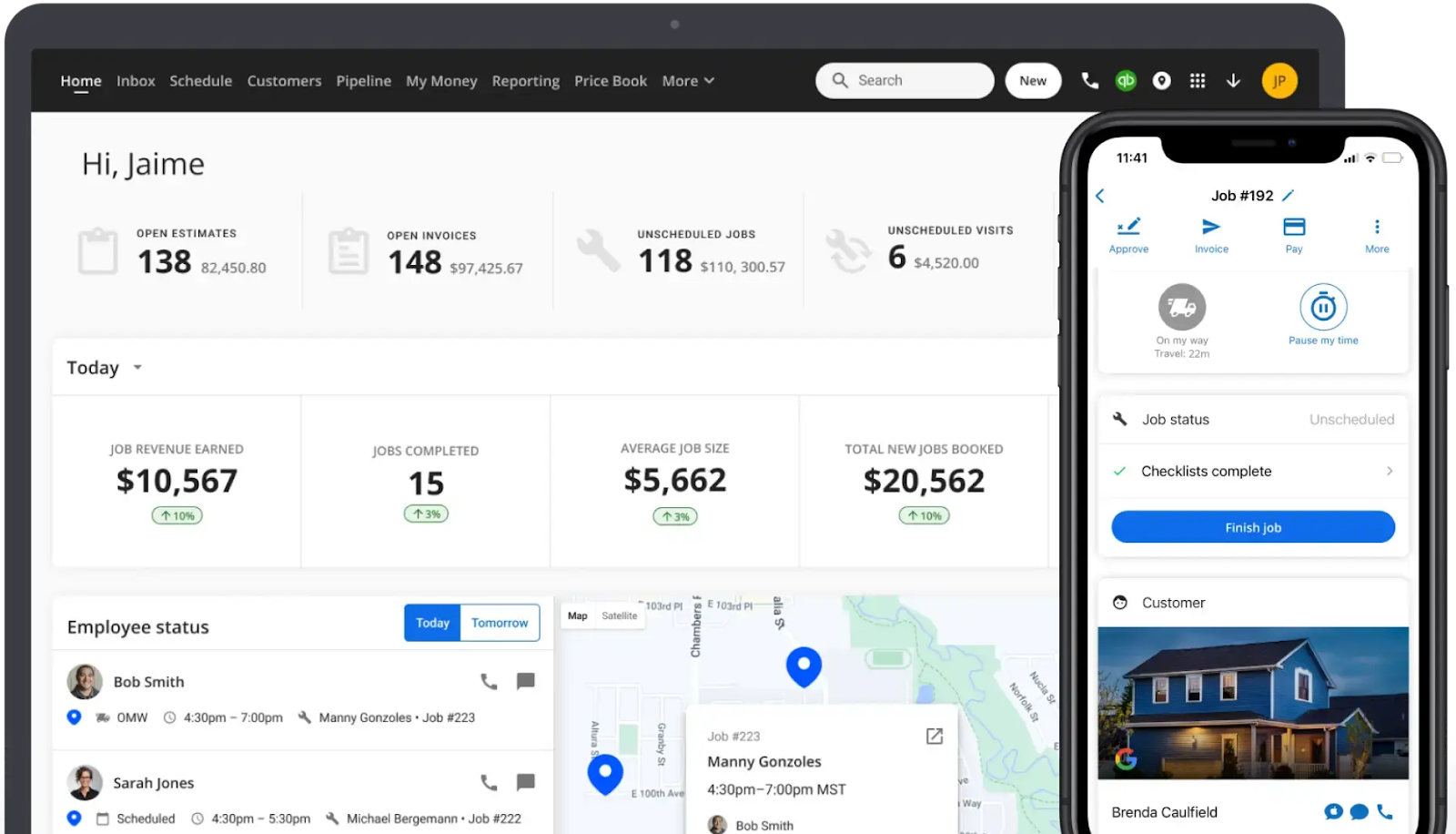
Housecall Pro is one of the most popular hvac CRM apps for small and mid-sized teams. It combines scheduling, invoicing, and customer communication in a simple interface. The platform focuses heavily on usability, making it easy for technicians to adopt quickly.
It also supports automation like appointment reminders and follow-ups, improving customer retention. For smaller HVAC businesses, it’s a strong all-in-one solution.
Key strengths:
- Easy-to-use hvac CRM app with fast onboarding and intuitive interface.
- Built-in scheduling, dispatching, invoicing, and payments in one platform.
- Strong automation for reminders, follow-ups, and recurring services.
- Mobile-first design optimized for technicians in the field.
- Customer communication tools including SMS and email notifications.
- Online booking and review management features.
Pros:
- Very user-friendly – minimal training required.
- Affordable pricing compared to enterprise HVAC CRM tools.
- Great for improving customer retention through automated communication.
- All-in-one solution for small HVAC teams.
- Fast implementation with little setup effort.
- Strong mobile experience for field technicians.
Cons:
- Limited customization compared to more advanced platforms.
- Not ideal for complex or multi-branch operations.
- Reporting and analytics are relatively basic.
- Fewer integrations than enterprise tools.
- Can become restrictive as the business scales.
Jobber
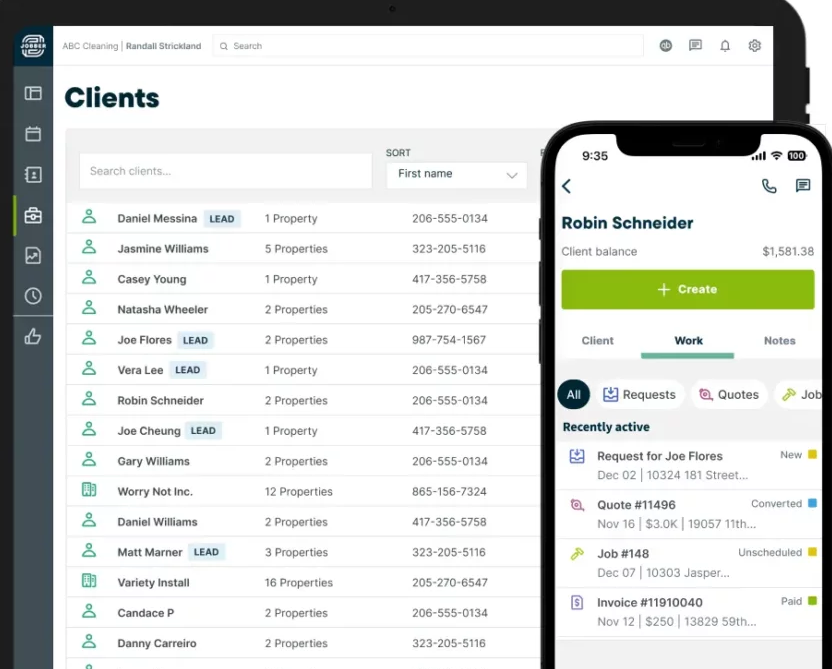
Jobber is a reliable CRM for hvac companies that need strong scheduling and client management tools. It simplifies job tracking, quoting, and invoicing, helping teams stay organized. Its automation features streamline repetitive tasks like reminders and follow-ups. While not HVAC-specific, it adapts well to service businesses. It’s a solid option for growing teams.
Key strengths:
- Strong scheduling and job management features tailored for service businesses.
- Clean and intuitive interface for managing clients, quotes, and invoices.
- Automation tools for reminders, follow-ups, and billing workflows.
- Good customer portal experience for approvals and payments.
- Solid mobile app for technicians to track jobs and updates.
- Flexible quoting and invoicing capabilities.
Pros:
- Easy to adopt for teams transitioning from spreadsheets.
- Reliable CRM for hvac companies with essential features.
- Good balance between functionality and simplicity.
- Helps streamline daily operations and reduce missed jobs.
- Scales reasonably well for growing HVAC businesses.
- Strong customer communication tools.
Cons:
- Not HVAC-specific – requires adaptation for industry workflows.
- Limited advanced automation compared to top-tier tools.
- Reporting capabilities are not as deep as competitors.
- The integration ecosystem is somewhat limited.
- May require additional tools for full business management.
Zoho CRM
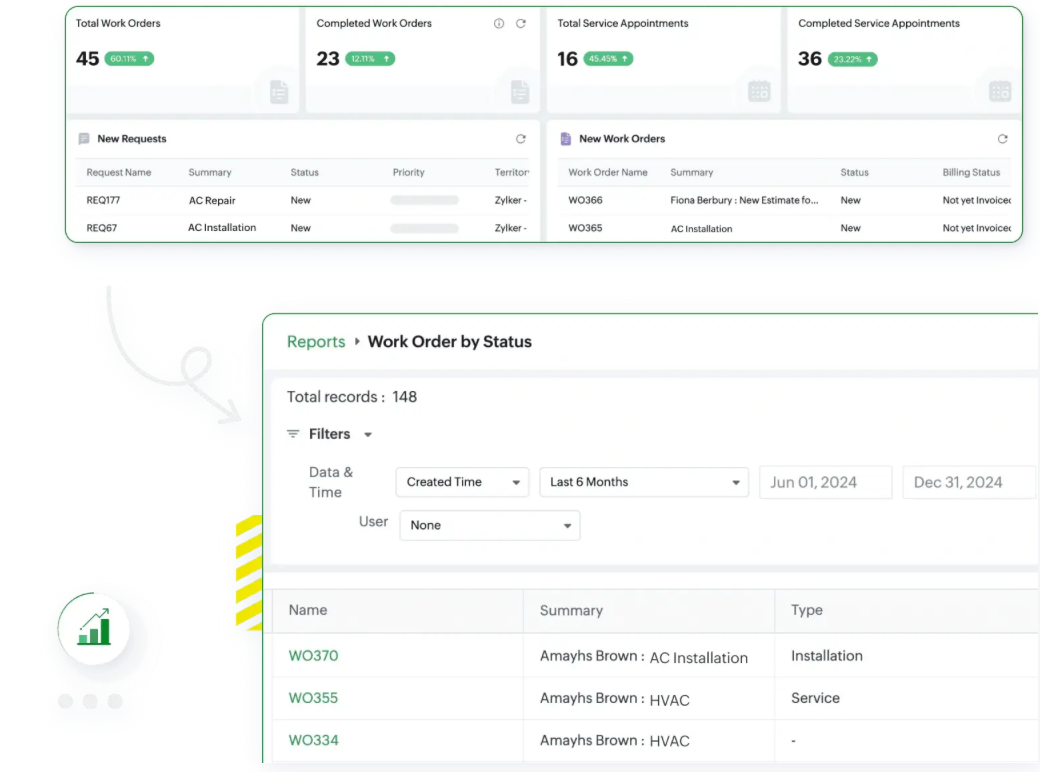
Zoho CRM is a flexible CRM software for hvac companies that need customization without building from scratch. It offers workflow automation, pipeline tracking, and integrations with other Zoho tools. HVAC companies can tailor modules to fit service operations. It’s a cost-effective solution for teams that want control without heavy development.
Key strengths:
- Highly customizable CRM software for hvac companies with flexible modules and workflows.
- Strong CRM automation engine for lead management, follow-ups, and pipeline tracking.
- Integration with the broader Zoho ecosystem (Books, Projects, Desk, etc.).
- AI assistant (Zia) for predictions, insights, and automation suggestions.
- Scalable pricing suitable for small to mid-sized HVAC businesses.
- Custom dashboards and reporting capabilities.
Pros:
- Cost-effective compared to many HVAC CRM platforms.
- Flexible enough to adapt to HVAC-specific workflows.
- Strong automation capabilities for sales and operations.
- Wide range of integrations and extensions.
- Good scalability as the company grows.
- Suitable for both sales and operations teams.
Cons:
- Requires setup and customization to fit HVAC use cases.
- Interfaces can feel complex for new users.
- Not purpose-built for HVAC industry needs.
- Some advanced features are locked behind higher-tier plans.
- May require technical support for full customization.
HubSpot CRM
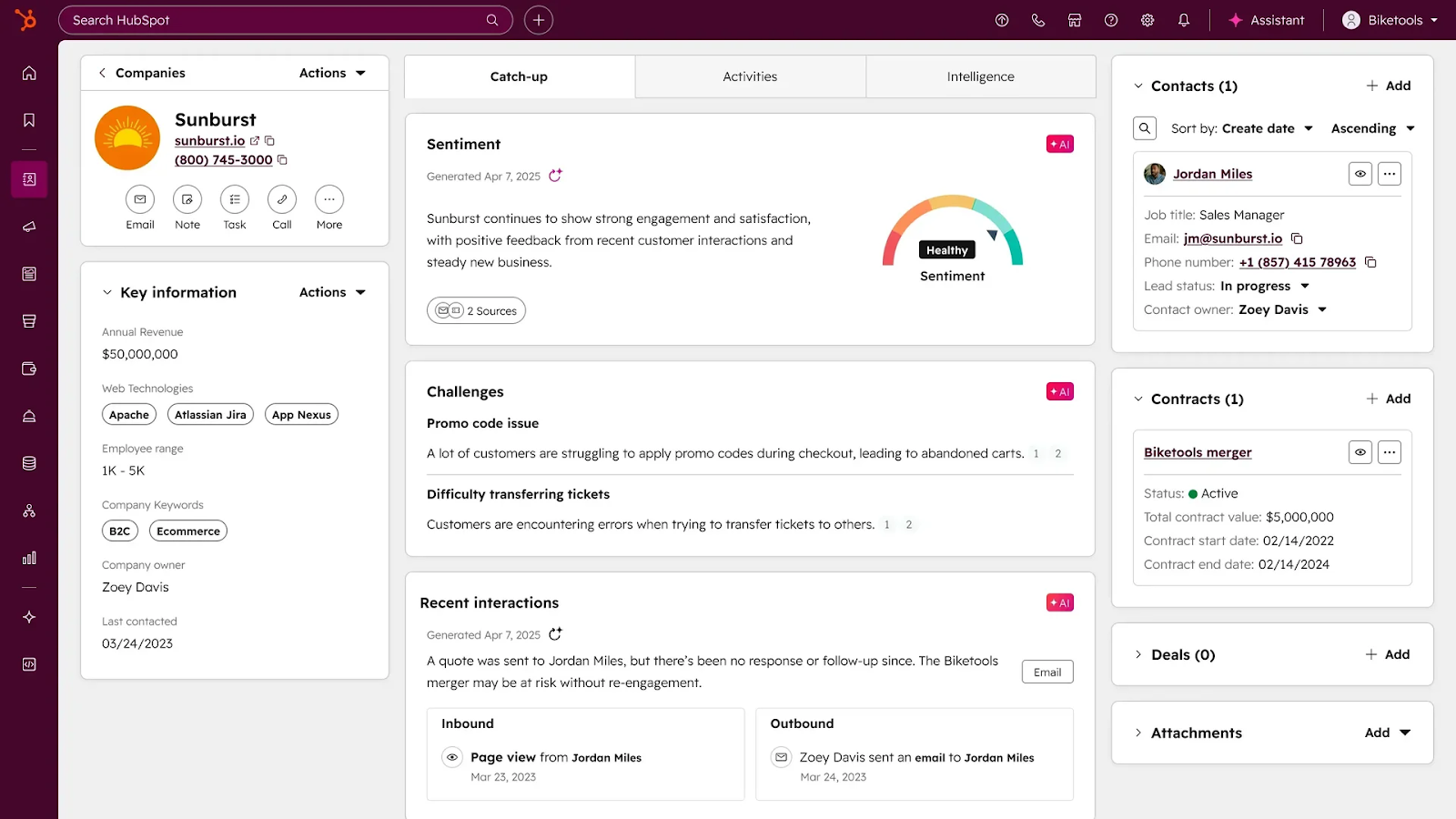
HubSpot CRM is a powerful CRM software for hvac companies focused on marketing and sales alignment. It provides tools for lead tracking, email automation, and customer lifecycle management. While not HVAC-specific, it works well for companies prioritizing growth and lead generation. Its free tier makes it accessible, but advanced features require upgrades.
Key strengths:
- Powerful CRM automation for marketing, sales, and customer engagement.
- Excellent lead tracking and pipeline management features.
- Strong email automation and marketing campaign tools.
- User-friendly interface with quick onboarding.
- Free CRM with optional paid upgrades.
- Large ecosystem of integrations and apps.
Pros:
- One of the easiest CRMs to start with.
- Strong marketing capabilities for lead generation.
- The free plan makes it accessible for small HVAC companies.
- Scales well with additional hubs (Sales, Marketing, Service).
- Great reporting and dashboard capabilities.
- Large community and support resources.
Cons:
- Not designed specifically as CRM software for hvac companies.
- Lacks built-in field service and dispatching features.
- Advanced automation becomes expensive quickly.
- Requires integrations for full HVAC workflow support.
- Can become costly at scale with multiple hubs.
Final thoughts
Choosing the best CRM software for hvac companies depends on your operational complexity. If you need plug-and-play simplicity, tools like Housecall Pro work well. If your workflows are more complex, customizable platforms like UI Bakery offer a long-term advantage.
As HVAC businesses scale, relying on flexible CRM software for hvac companies with strong CRM automation and tailored CRM features for hvac becomes essential. The right tool doesn’t just manage customers, it becomes the backbone of your operations.
Next step
Planning a HIPAA-sensitive internal app?
Use the checklist above to map data flow, roles, audit events, vendors, and deployment decisions before the first production workflow ships.
Healthcare operations example
Action Behavior Centers scaled internal operations across clinics with UI Bakery
For a real operational example, review UI Bakery customer stories and healthcare operations patterns.
5,000+users supported in the customer story
400+clinics mentioned in the case study
What are the benefits of using a HVAC CRM?
Using hvac CRM software helps streamline operations, automate scheduling, and improve customer retention. It centralizes customer data and reduces manual work, enabling better service delivery.
What features should a HVAC CRM have?
Key hvac CRM features include job scheduling, dispatching, invoicing, CRM automation, mobile access, and reporting. Advanced tools also include integrations and workflow customization.
What is the best HVAC CRM?
The best hvac CRM software depends on your needs. ServiceTitan is ideal for enterprise teams, while UI Bakery is best for custom workflows, and Housecall Pro suits smaller businesses.
How much does a HVAC CRM cost?
CRM software for hvac companies ranges from free tools to $100+ per user/month. Enterprise solutions often use custom pricing.
What are the best HVAC CRM options available?
Some of the best CRM for hvac companies include ServiceTitan, UI Bakery, Housecall Pro, Jobber, Zoho CRM, and HubSpot CRM.
.jpg)



"The UI Bakery platform offers a cost-effective approach to creating applications. With UI Bakery, you can achieve your app development goals without breaking the bank."

"Before switching to UI Bakery we developed a number of apps within the Retool system. The Retool system was good but ultimately did not have the flexibility and feature sets that we required."
Check the Story