

Best Data Security Software in 2026: Tools for Secure Data Access, RBAC, and Internal Apps

Updated:
July 23, 2026
Enterprise data now moves through databases, SaaS platforms, employee devices, APIs, AI agents, dashboards, and internal workflows. Protecting it requires more than encryption or authentication.
Some data security tools prevent leaks. Others discover exposed information, govern identities, protect machine credentials, monitor database activity, or control how employees use sensitive data through internal applications.
This guide compares ten leading products across those categories. It also explains where UI Bakery fits: not as a DLP, DSPM, or IAM replacement, but as a secure application layer for operational access to protected business data.
Quick answer: what is the best data security software?
- Best for enterprise DLP: Forcepoint DLP.
- Best for DSPM and AI data security: Cyera.
- Best for access governance: SailPoint.
- Best for secrets management: HashiCorp Vault.
- Best for secure internal apps: UI Bakery.
Data security software comparison table
These products are not interchangeable. Their value depends on where the control must be enforced: at the endpoint, identity layer, database, credential store, or internal application.
What is data security software?
Data security software protects sensitive information by controlling access, monitoring usage, preventing unauthorized disclosure, enforcing policies, and producing evidence for compliance and investigations.
Depending on the category, data protection software can help an enterprise answer:
- Where is sensitive data stored?
- Which users, applications, and AI agents can access it?
- Is that access necessary?
- Can data be copied, exported, emailed, or uploaded?
- Which actions should be blocked or require approval?
- Can security teams reconstruct an event from audit logs?
Effective enterprise data security covers data at rest, in transit, and in use. It also distinguishes between human users, service accounts, applications, and AI agents.
Authentication alone is not enough. An employee may be correctly authenticated but still have unnecessary access to thousands of customer records or an unrestricted export function.
Types of data security software
Data loss prevention software
Data loss prevention software detects sensitive content and applies policies when users try to move it through email, browsers, endpoints, cloud services, removable devices, or AI applications.
DLP software may block an action, encrypt a file, warn the user, request a justification, or create an incident for investigation.
It is best suited to preventing accidental and deliberate disclosure after an organization already understands what information it needs to protect.
Data security posture management
Data security posture management, or DSPM, discovers sensitive data and identifies risky combinations of location, permissions, configuration, and usage.
DSPM platforms commonly provide:
- Structured and unstructured data discovery.
- Data classification.
- Exposure and misconfiguration analysis.
- Identity and access-path mapping.
- Risk prioritization.
- Remediation recommendations.
DSPM is most valuable when teams lack a reliable inventory of sensitive information or cannot explain who has access to it.
Data access control
Data access control defines which identities may view, edit, delete, export, or administer specific resources.
Controls may exist in databases, APIs, file systems, SaaS applications, and internal tools. They can operate at the system, table, row, field, record, or action level.
A strong secure data access model combines source-level permissions with application-level authorization. Hiding a button in an interface is not sufficient if the underlying API still accepts the request.
Identity and access governance
Identity governance and administration platforms manage:
- Roles and entitlements.
- Access requests and approvals.
- Employee lifecycle changes.
- Periodic access reviews.
- Provisioning and deprovisioning.
- Separation-of-duties policies.
- Human and non-human identities.
IGA determines who should receive access. It does not usually inspect the sensitive content a user is copying or exporting.
Secrets management
Secrets management protects credentials used by applications, services, infrastructure, and automated workflows.
Typical secrets include database passwords, API keys, encryption keys, certificates, and authentication tokens.
The strongest implementations replace long-lived shared credentials with short-lived, narrowly scoped access that can be audited and revoked.
Data masking and encryption
Encryption makes information unreadable without the appropriate key. Masking limits the values visible to a particular user or application.
Common techniques include:
- Encryption at rest and in transit.
- Field-level encryption.
- Tokenization.
- Static masking for test data.
- Dynamic masking.
- Redaction.
Masking must be applied before sensitive values reach an unauthorized client. Visually hiding a field while returning its full value to the browser does not protect it.
Secure internal tools and operational apps
Internal applications determine how authorized employees use business data after access has been granted.
A secure application layer can control:
- Which records and fields a user sees.
- Which actions each role can run.
- Whether exports are allowed.
- Whether changes require approval.
- Which database query or API endpoint is executed.
- Which user initiated an action.
- What is recorded in the audit trail.
This category is especially important for support consoles, finance dashboards, compliance tools, admin panels, and operational workflows.
Best data security software in 2026
1. Forcepoint DLP
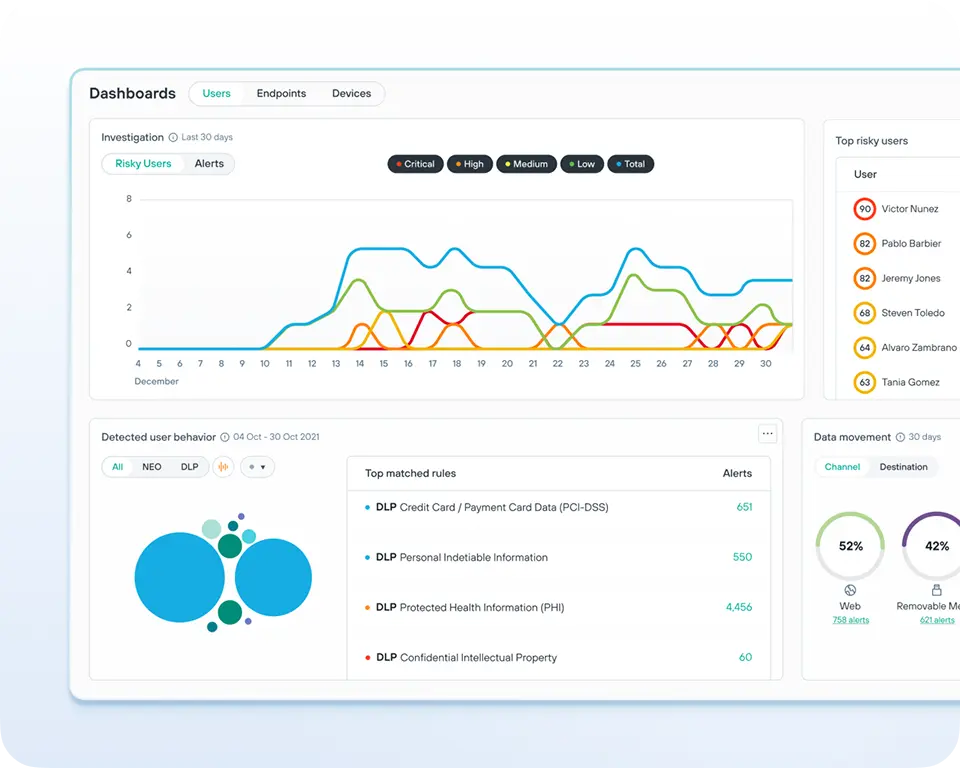
Forcepoint DLP is an enterprise platform for discovering sensitive information and enforcing policies across endpoints, web traffic, email, cloud services, SaaS applications, and AI tools.
Best for: Large organizations that need consistent DLP policies across several data channels, regions, and deployment environments.
Key features:
- Endpoint, email, web, cloud, and AI coverage.
- Unified policy management.
- Data discovery and classification.
- Prebuilt policy templates.
- Behavioral risk context.
- Blocking, encryption, and quarantine.
- Incident investigation and reporting.
Enterprise and security fit:
Forcepoint is a strong fit when DLP is a formal enterprise program rather than a standalone endpoint project. It supports cloud, on-premises, and hybrid deployments and applies controls based on data, user behavior, and context.
Limitations:
Broad coverage brings operational complexity. Enterprises need clear classification standards, policy owners, exception processes, and ongoing tuning to avoid excessive false positives.
2. Netwrix Access Analyzer
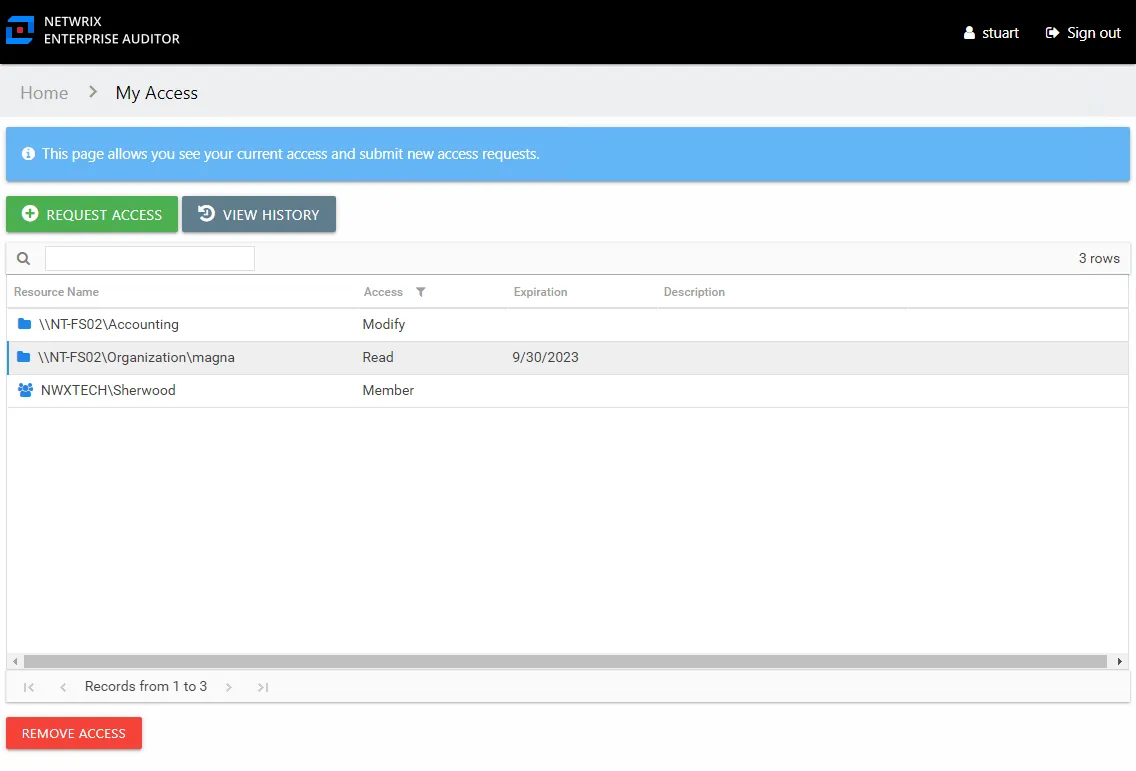
Netwrix Access Analyzer helps organizations understand who can access sensitive data and remove permissions that are excessive, outdated, or inappropriate.
Best for: Enterprises with complex file shares, directories, Microsoft environments, databases, and inherited group permissions.
Key features:
- Sensitive-data discovery and classification.
- Permission and entitlement analysis.
- Access reviews.
- Data-owner workflows.
- Least-privilege remediation.
- Activity auditing.
- Compliance reporting.
Enterprise and security fit:
Netwrix is useful when the main risk is access accumulation. It helps teams identify unnecessary permissions, monitor access attempts, and delegate reviews to business data owners. Netwrix also offers broader DSPM, endpoint, identity, and auditing capabilities across its platform.
Limitations:
Access governance does not provide complete protection against browser uploads, clipboard use, removable devices, or other endpoint leakage channels.
3. Safetica
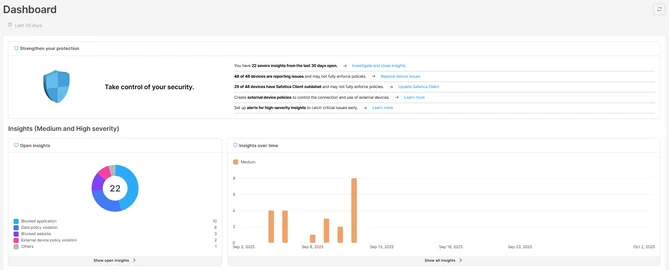
Safetica combines endpoint DLP with user activity and insider-risk monitoring.
Best for: Organizations that need practical controls over how employees transfer sensitive information from managed devices.
Key features:
- Content-aware DLP.
- Data classification.
- Device and transfer controls.
- User activity monitoring.
- Context-based policies.
- User warnings and coaching.
- Cloud and on-premises deployment.
Enterprise and security fit:
Safetica is suitable for teams that want to control common leakage channels without deploying one of the largest enterprise DLP suites. It can evaluate the content, user, destination, and surrounding activity before applying a policy.
Limitations:
It is not designed to replace database activity monitoring, enterprise IGA, or broad DSPM across every cloud data store.
4. Microsoft Purview
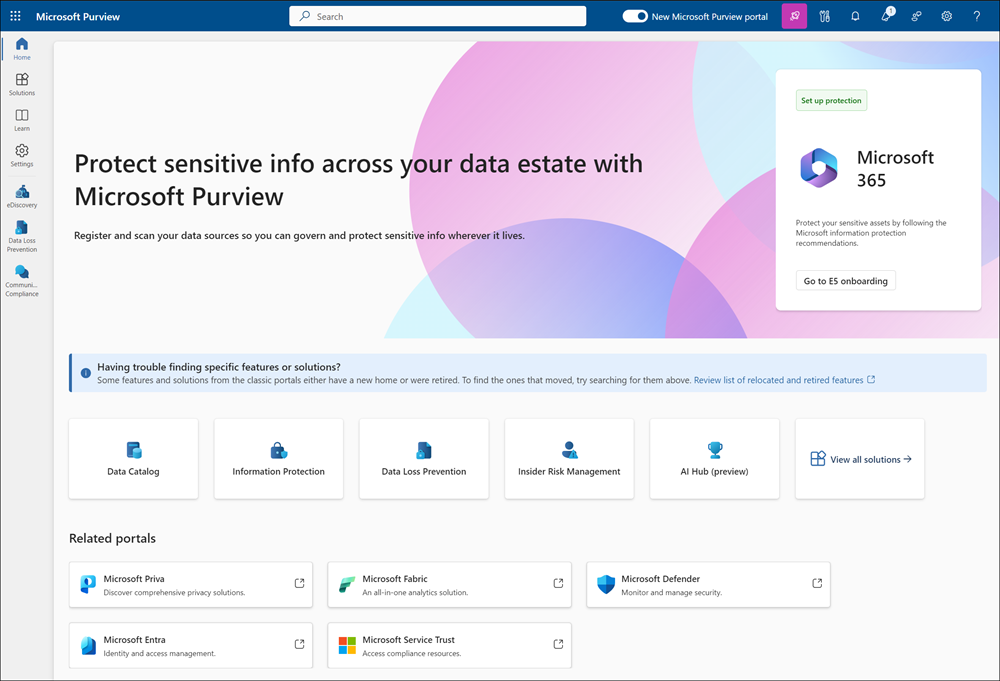
Microsoft Purview provides information protection, governance, compliance, and DLP controls across Microsoft environments.
Best for: Enterprises built around Microsoft 365, Entra, Windows, Teams, SharePoint, OneDrive, Power BI, and related services.
Key features:
- Sensitivity labels.
- Microsoft 365 DLP.
- Endpoint DLP.
- Policy simulation.
- User warnings and overrides.
- Blocking and restriction actions.
- Alerts and investigation tools.
- Audit integration.
Enterprise and security fit:
Purview can enforce policies within services employees already use, reducing the need to build separate controls for every Microsoft workload. Its simulation capabilities help teams test policies before activating blocking actions.
Limitations:
Organizations with substantial non-Microsoft infrastructure should confirm exact coverage, integrations, and licensing requirements before standardizing on Purview alone.
5. IBM Guardium Data Protection
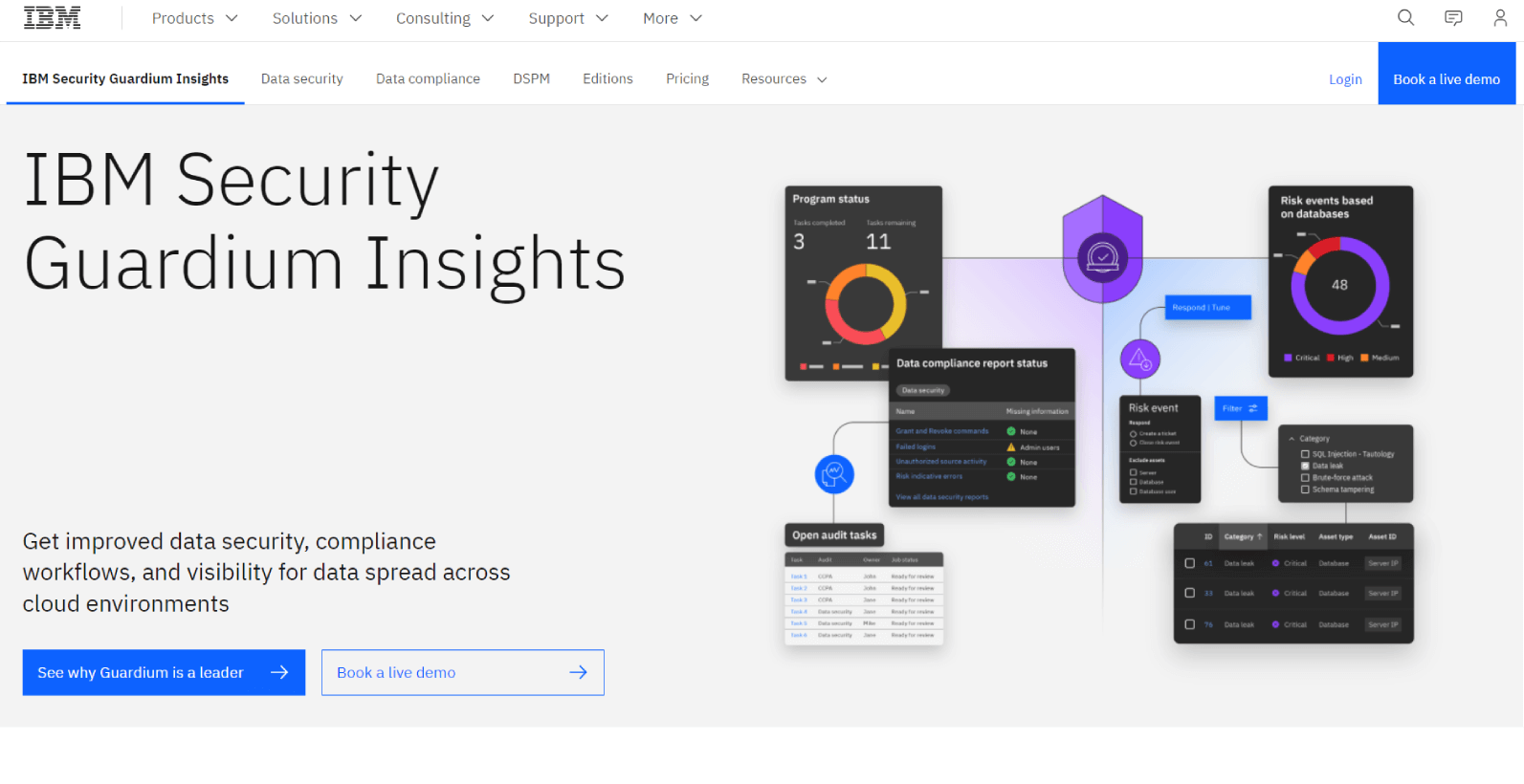
IBM Guardium protects sensitive information across databases, warehouses, hybrid cloud infrastructure, and SaaS environments.
Best for: Regulated enterprises that need database access control, real-time monitoring, compliance evidence, and preventive enforcement.
Key features:
- Data discovery and classification.
- Database activity monitoring.
- Least-privilege enforcement.
- Dynamic masking and redaction.
- Quarantining and blocking.
- Vulnerability management.
- Compliance policies and reports.
- Long-term audit retention.
Enterprise and security fit:
Guardium provides security below the application layer. It can monitor database access, detect suspicious behavior, and apply controls even when activity comes through an approved application or service account.
Limitations:
Implementation, policy management, storage, integrations, and incident handling generally require dedicated security ownership.
6. Varonis
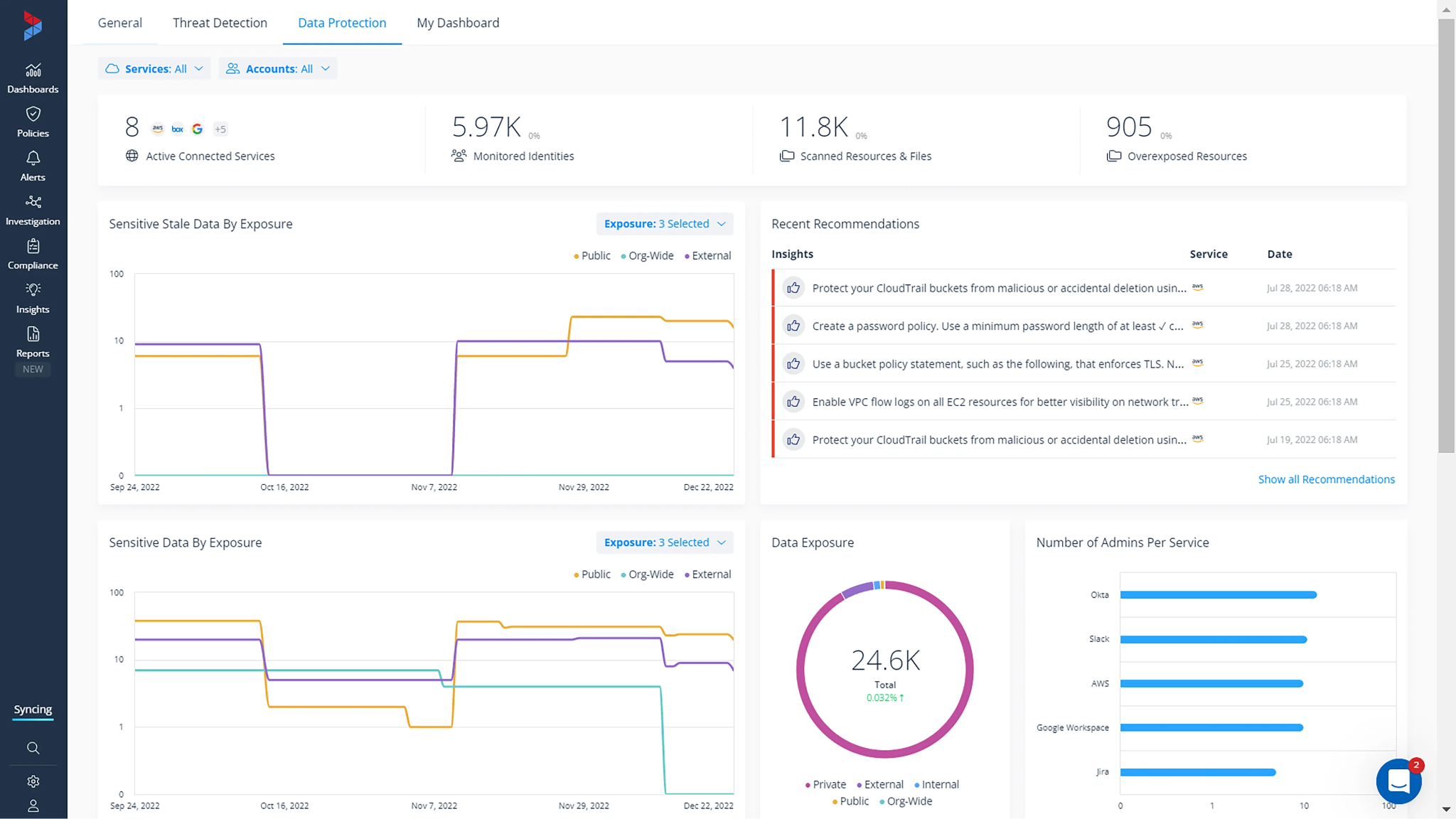
Varonis is a broad data security platform for discovering sensitive information, reducing excessive permissions, monitoring activity, and detecting threats.
Best for:
Large organizations with extensive unstructured data, SaaS applications, cloud infrastructure, and complex identity environments.
Key features:
- Data discovery and classification.
- DSPM.
- Permissions analysis.
- Automated remediation.
- Data activity monitoring.
- DLP controls.
- Threat detection.
- Searchable audit trails.
Enterprise and security fit:
Varonis connects data sensitivity, identity, permissions, and activity. This helps security teams find not only where confidential information exists, but also who can access it and whether that access is being misused.
Limitations:
Its broad platform scope may be more than a company needs when the requirement is limited to one database, endpoint group, or application.
7. Cyera
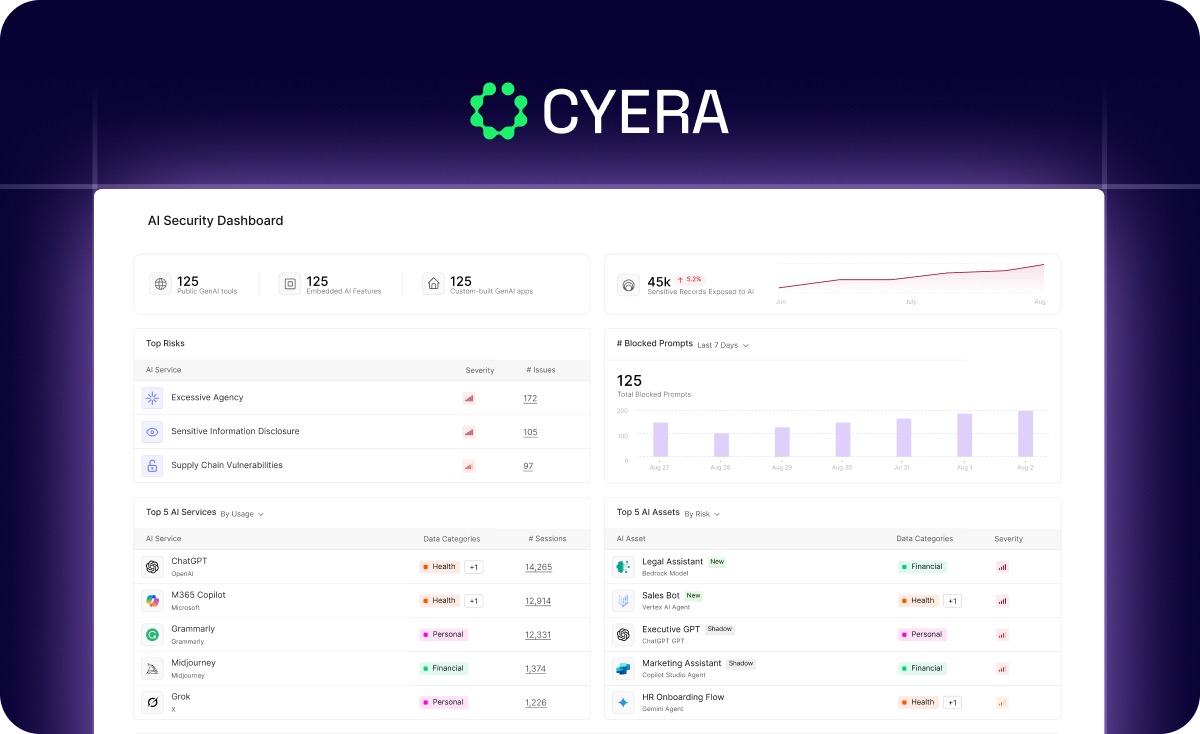
Cyera is an AI-native data security platform centered on DSPM, sensitive-data discovery, access analysis, and AI-related data risk.
Best for: Cloud-focused organizations that need visibility into where sensitive information lives and how human users and AI systems reach it.
Key features:
- Agentless discovery.
- Automated classification.
- Exposure analysis.
- Identity and access context.
- Human and AI access tracking.
- Shadow AI visibility.
- Remediation workflows.
- DLP optimization.
Enterprise and security fit:
Cyera is particularly relevant when AI tools and agents are gaining access to enterprise datasets. It helps connect sensitive information with identities, access paths, and business context so teams can prioritize high-risk exposure.
Limitations:
Buyers should verify which controls Cyera enforces directly and which depend on integrations or additional modules, especially across proprietary and legacy infrastructure.
8. HashiCorp Vault
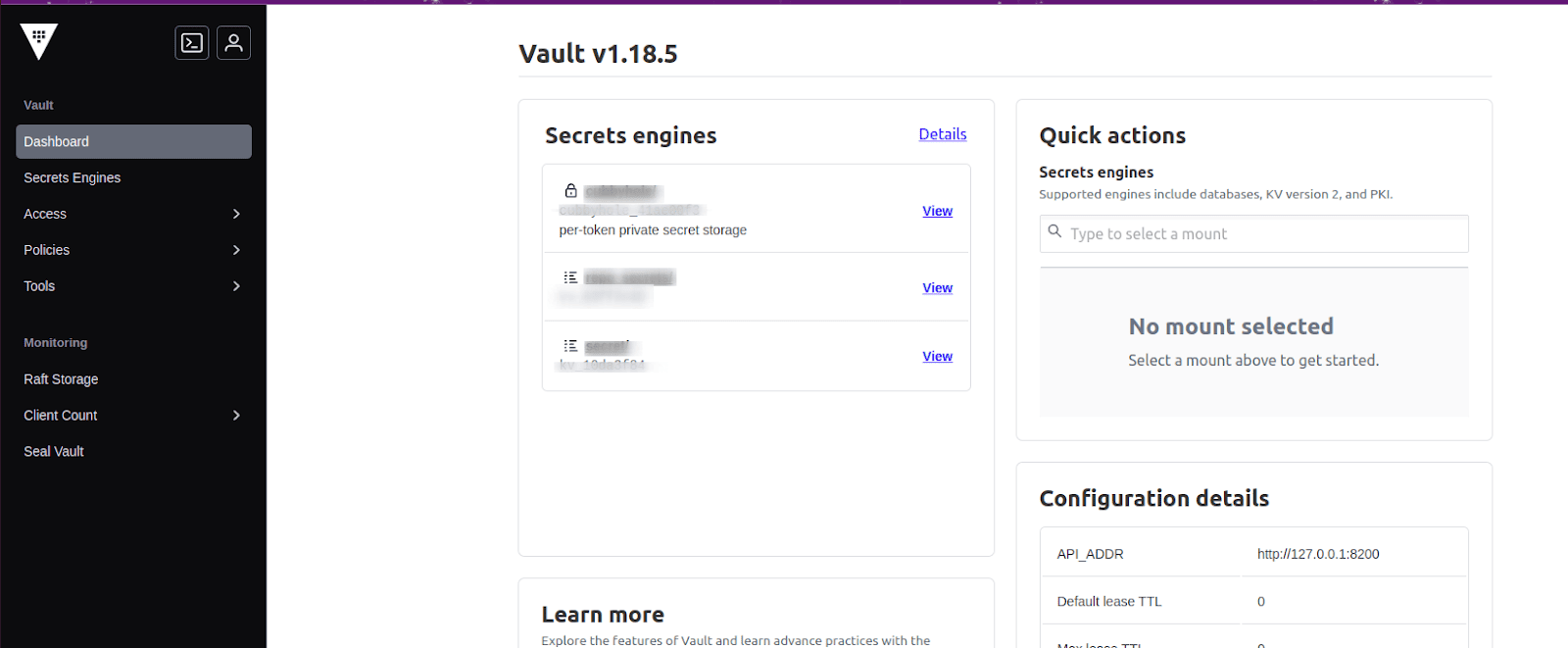
HashiCorp Vault protects credentials, certificates, encryption keys, and other secrets used by applications and infrastructure.
Best for: Platform, DevOps, and security teams that need to eliminate hard-coded or long-lived credentials.
Key features:
- Centralized secret storage.
- Dynamic database credentials.
- Short-lived access.
- Encryption services.
- Certificate management.
- Authentication integrations.
- Authorization policies.
- Audit devices.
Enterprise and security fit:
Vault can issue temporary, narrowly scoped credentials to an application or workflow instead of storing a permanent database password in source code or configuration. It also records requests through configurable audit devices.
Limitations:
Self-managed Vault requires expertise in availability, backups, initialization, unsealing, policy design, upgrades, and incident recovery.
9. SailPoint
SailPoint is an identity security and governance platform for managing roles, entitlements, access requests, certifications, and identity lifecycle events.
Best for: Large enterprises with many applications, complex employee lifecycles, contractors, machine accounts, and formal access-review requirements.
Key features:
- Role and entitlement management
- Dynamic role assignment
- Access requests and approvals
- Certifications
- Automated provisioning
- Separation-of-duties controls
- Access history
- Machine identity governance
- AI-agent identity governance
Enterprise and security fit:
SailPoint centralizes decisions about who should receive access and when it should be reviewed or removed. Its current documentation covers human users, machine identities, application identities, and AI agents.
Limitations:
SailPoint governs identities and entitlements. It does not provide content-aware DLP or replace authorization inside individual applications.
10. UI Bakery
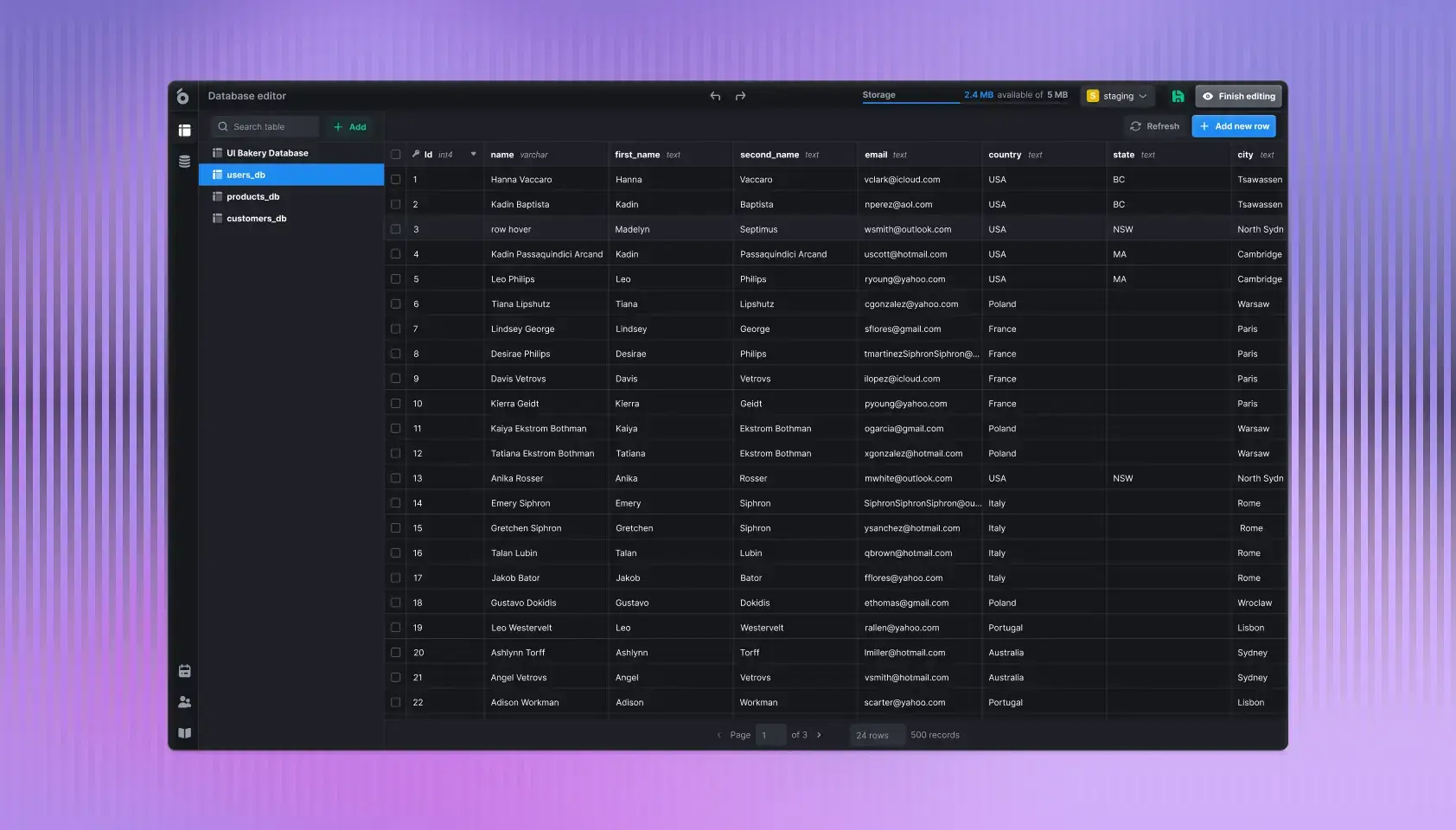
UI Bakery is a platform for building internal tools, dashboards, admin panels, portals, and workflow applications connected to databases, APIs, and business systems.
Best for: IT, operations, data, security, and platform teams that need to give employees controlled access to sensitive business processes.
Key features:
- RBAC and custom roles.
- SSO through SAML, OpenID, and OAuth2.
- Audit logs.
- Private applications.
- Controlled database and API actions.
- Approval workflows.
- Application and data-source environments.
- Git version control.
- Cloud and self-hosted deployment.
Enterprise and security fit:
UI Bakery replaces broad technical access with purpose-built operational interfaces.
For example:
- A support agent can view an account without seeing payment details.
- A finance user can request a refund without changing the original transaction.
- An operations employee can retry a failed job without receiving infrastructure credentials.
- A compliance analyst can review flagged records without exporting the complete dataset.
- A high-risk action can require approval before execution.
UI Bakery supports database and API connections, RBAC, SSO, audit logs, private apps, and low-code or AI-assisted development. Its self-hosted edition can run inside a private network or air-gapped environment.
Teams can build these applications through the visual editor, the AI app generator, or custom JavaScript and React components.
Limitations:
UI Bakery secures the application layer. Enterprises still need appropriate database permissions, credential management, identity governance, data discovery, encryption, and DLP where those controls are required.
How to choose data security software
1. Identify where sensitive data lives
Map the systems that contain confidential, regulated, or business-critical information:
- Databases and warehouses.
- SaaS applications.
- File shares.
- Employee endpoints.
- Cloud object storage.
- Analytics platforms.
- Internal applications.
- AI tools and vector databases.
Choose DSPM when the inventory is incomplete, database security when critical records are concentrated in data platforms, and DLP when information regularly moves through employee-controlled channels.
For infrastructure-level controls, use a broader framework such as these cloud security best practices.
2. Separate human and non-human access
Different identity types need different controls.
Human users usually require SSO, MFA, roles, access reviews, and action-level permissions. Applications and service accounts need scoped credentials, rotation, expiration, and reliable attribution. AI agents need an identifiable machine identity and limits on the data and tools they can use.
3. Select an authorization model
RBAC assigns permissions according to job roles.
ABAC uses attributes such as department, location, ownership, employment status, or transaction value.
PBAC evaluates centralized policies that combine identity, resource, action, and context.
Many enterprises use all three. RBAC can control application modules, while attributes or policies restrict particular records and high-risk actions.
4. Define audit requirements
Decide which events must be recorded:
- Logins and failed authentication.
- Data views and searches.
- Exports.
- Record changes.
- Approval decisions.
- Role and configuration changes.
- Database or API actions.
- Secret access.
- AI-generated and automated actions.
Logs should identify the responsible human or machine identity, resource, action, timestamp, and result.
5. Confirm deployment requirements
Evaluate whether the product supports:
- SaaS.
- Private cloud.
- Self-hosting.
- Private networks.
- Regional data residency.
- Air-gapped environments.
- Customer-managed infrastructure.
- Existing SIEM and identity providers.
Deployment requirements can eliminate otherwise suitable products before a proof of concept begins.
6. Examine how users act on data
Viewing information carries different risks from editing, exporting, deleting, approving, or triggering downstream actions.
Teams that need to act on data through internal tools should evaluate application-level permissions, server-side authorization, validation, approval steps, transaction limits, and auditability.
7. Test real workflows
A useful proof of concept should verify that the product can:
- Find a known sensitive dataset.
- Identify excessive access.
- Remove or review that access.
- Block a prohibited transfer.
- Issue a short-lived service credential.
- Restrict an internal application by role.
- Require approval for a high-risk action.
- Produce enough evidence to reconstruct the event.
Data security for internal tools and AI workflows
A security stack can correctly classify a database, authenticate an employee, and protect its credentials while still exposing an unsafe operational application.
Common internal-tool risks include:
- Shared administrator accounts.
- Broad database permissions.
- Sensitive values returned to unauthorized browsers.
- Unrestricted exports.
- Missing server-side authorization.
- Bulk changes without approval.
- Logs that show only a shared service account.
The application must enforce the business action itself. A hidden button is not a security control if the API remains callable.
AI workflows add another layer of risk. An agent may retrieve records, generate a query, select an API, or trigger an operational action. Deterministic controls should therefore sit outside the model:
- Assign each agent an identity.
- Use short-lived credentials.
- Restrict available data sources and tools.
- Validate generated parameters.
- Preserve row, field, and tenant boundaries.
- Require approval for high-impact actions.
- Record tool calls and execution results.
- Prevent the agent from inheriting administrator privileges.
This application and data-access problem is separate from broader AI model governance.
Where UI Bakery fits in a data security stack
UI Bakery sits between authorized users and enterprise business systems.
A typical architecture may use:
- DSPM to find sensitive and exposed data.
- IGA to govern identities and entitlements.
- Vault to supply protected application credentials.
- Database and API policies to restrict source access.
- DLP to control data movement.
- UI Bakery to expose approved data and operations.
- SIEM tools to centralize security events.
The role of UI Bakery is to convert broad technical access into narrow business workflows.
Instead of giving an employee database access, a team can provide a customer-review screen. Instead of sharing an administrator credential, it can expose a controlled operational action. Instead of allowing direct updates, it can use a validated form with approval and audit logging.
This makes UI Bakery relevant when enterprise teams need to operationalize protected data without giving every user direct access to the underlying systems.
Organizations comparing application platforms can also review Retool security and Supabase security. Teams designing multi-stage approvals and operational processes can explore enterprise workflow management software.
Next step
Planning a HIPAA-sensitive internal app?
Use the checklist above to map data flow, roles, audit events, vendors, and deployment decisions before the first production workflow ships.
Healthcare operations example
Action Behavior Centers scaled internal operations across clinics with UI Bakery
For a real operational example, review UI Bakery customer stories and healthcare operations patterns.
5,000+users supported in the customer story
400+clinics mentioned in the case study
What is data security software?
It is technology that protects sensitive information through discovery, classification, access governance, encryption, masking, monitoring, DLP, secrets management, database controls, and application-level authorization.
Enterprises commonly combine several categories because each protects a different part of the data lifecycle.
What is the difference between data security software and DLP?
DLP is one category within the wider data-protection market. It focuses on identifying sensitive content and preventing unauthorized movement through endpoints, email, browsers, SaaS platforms, cloud services, and removable devices.
Other categories address data discovery, database monitoring, identity governance, encryption, credentials, and internal application access.
What is data access control?
It determines which human or machine identities may access a resource and which actions they can perform. Controls may use database permissions, API scopes, SaaS entitlements, RBAC, ABAC, policy rules, row-level security, field restrictions, or application actions.
What is the best data security software for enterprises?
The strongest choice depends on the control gap:
- Forcepoint for enterprise DLP.
- Cyera for DSPM and AI-related exposure.
- IBM Guardium for database security.
- Varonis for data exposure and permission remediation.
- SailPoint for identity governance.
- HashiCorp Vault for secrets.
- UI Bakery for governed internal applications.
Large enterprises may need several of these products.
Do internal tools need data security controls?
Yes. Internal tools often connect to production databases, customer records, financial systems, and administrative APIs. They should enforce SSO, least privilege, server-side authorization, RBAC, protected credentials, audit logging, environment separation, and approval workflows for sensitive actions.
How do RBAC and audit logs help protect sensitive data?
RBAC limits data and functionality according to a user’s responsibilities. Audit logs record who accessed information, changed a record, approved an operation, or attempted a prohibited action.
Together they improve accountability and investigations, but they do not replace DLP, encryption, identity lifecycle management, or source-level permissions.
What data security risks do AI workflows create?
AI workflows may retrieve unnecessary information, expose data in prompts, use overprivileged accounts, generate unsafe queries, or trigger actions without adequate review.
AI agents should use identifiable identities, limited tools, scoped credentials, deterministic authorization, validation, audit trails, and human approval for high-impact operations.

.jpg)


"The UI Bakery platform offers a cost-effective approach to creating applications. With UI Bakery, you can achieve your app development goals without breaking the bank."

"Before switching to UI Bakery we developed a number of apps within the Retool system. The Retool system was good but ultimately did not have the flexibility and feature sets that we required."
Check the Story