
7 MySQL GUI Tools to Boost Your Database Management in 2026

Updated:
February 14, 2026
In the world of database management, MySQL is a key player for developers, database administrators, and IT professionals. Although many rely on MySQL Workbench as their main tool, there are plenty of other MySQL frontend tools that can make managing databases easier and more effective.
This guide will walk you through the best MySQL frontend tools, highlighting their ey features, pros, and cons. It will also introduce UI Bakery, an interesting choice for managing MySQL databases with ease.
MySQL Workbench
MySQL Workbench is the quintessential tool for MySQL database management, offering a robust suite for design, development, and administration.

Key features
- Developed by Oracle (MySQL maintainer).
- Integrated tools for modeling, SQL editing, visual query building, and performance monitoring.
- Cross-platform availability on Windows, macOS, and Linux.
- User-friendly and feature-rich with an intuitive interface.
Pros
- Comprehensive and well-integrated toolset.
- Visual query builder makes complex queries easier.
- Great for both beginners and advanced users.
Cons
- Can be slow at times, with occasional freezes.
- Some features are locked behind the premium version.
Pricing
- Free and premium versions available.
Available on
- Windows, macOS, Linux
phpMyAdmin
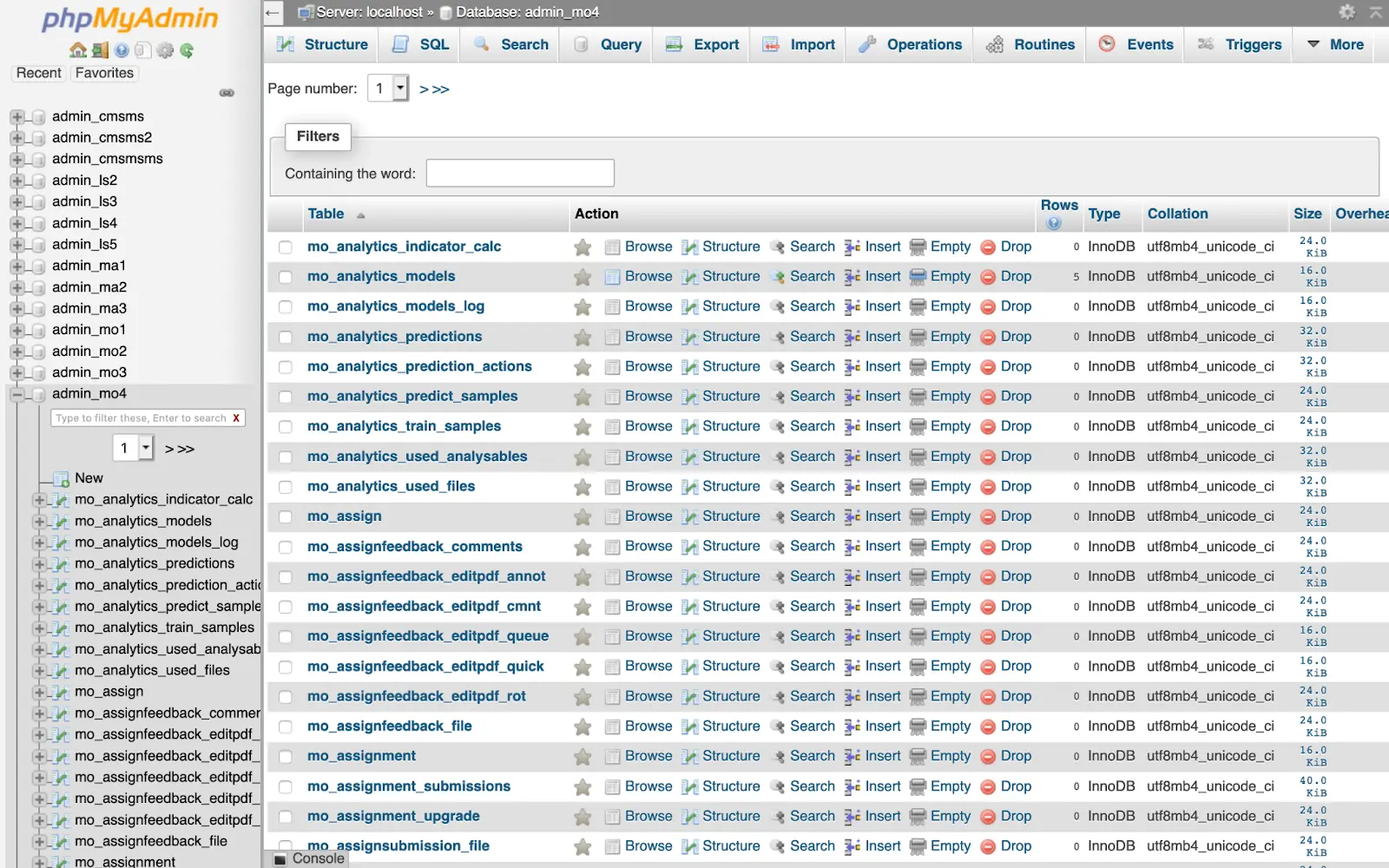
phpMyAdmin remains one of the most widely used web-based tools for managing MySQL and MariaDB databases. Even in 2026 – despite the rise of AI-assisted database tools — it continues to be a lightweight, accessible option for quick administration tasks directly from the browser.
Key features
- Web-based interface accessible from anywhere with secure server access.
- Open-source ecosystem with decades of community contributions.
- SQL execution, schema editing, import/export, and user management tools.
- Compatible with modern MySQL and MariaDB environments.
Pros
- Extremely accessible for beginners and occasional database work.
- No local installation required beyond server setup.
- Highly customizable due to its open-source nature.
Cons
- Requires proper server hardening; web exposure can introduce security risks if misconfigured.
- Limited automation and AI-assisted workflows compared to modern database platforms.
- Not ideal for large-scale enterprise collaboration.
Pricing
Free (open-source).
Available on
Web-based – accessible on any OS through a browser.
DbVisualizer
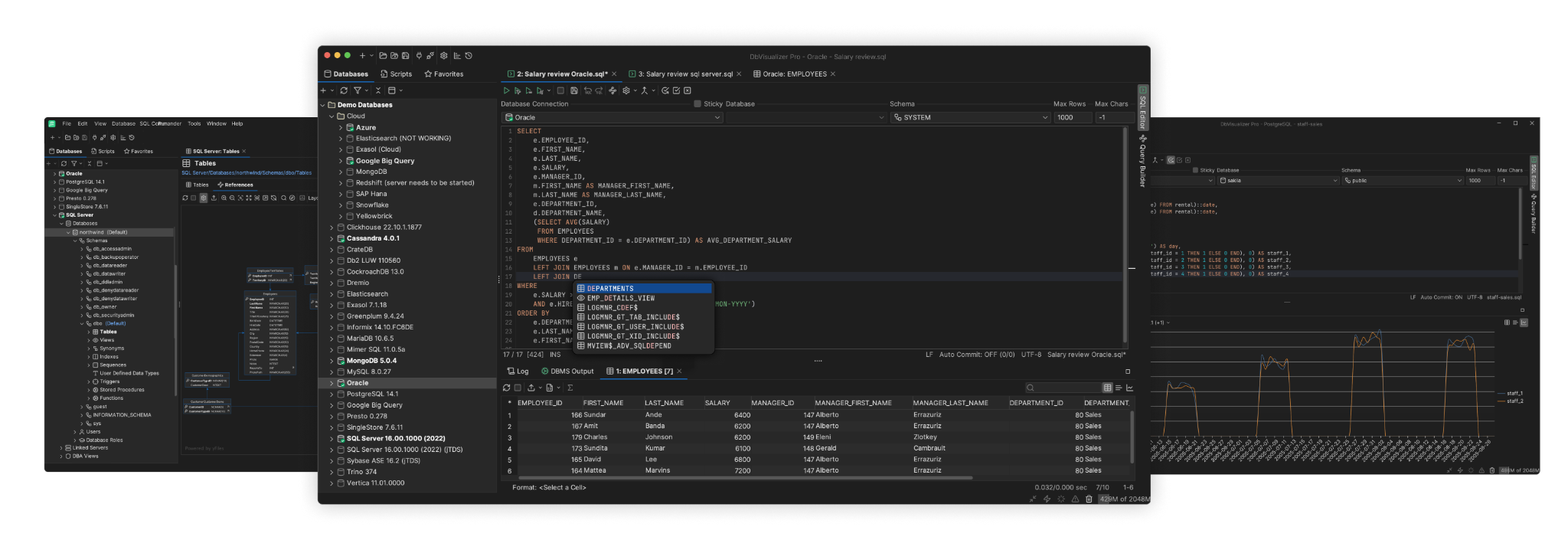
DbVisualizer is a powerful, cross-platform database client designed for developers, analysts, and database administrators working with multiple databases. Even in 2026 — with the rise of AI-driven database tools — it remains a reliable choice for teams that need deep visibility, control, and consistent workflows across environments.
Key features
- Universal database support (MySQL, PostgreSQL, Oracle, SQL Server, Snowflake, and more).
- Advanced SQL editor with auto-completion, visual query building, and execution plans.
- Visual database explorer for schemas, tables, indexes, and relationships.
- Data visualization and export tools for analysis and reporting.
Pros
- Strong multi-database support makes it ideal for teams working across different systems.
- Mature and stable tool with predictable behavior in production environments.
- Rich UI for exploring and managing complex database structures.
Cons
- Interface can feel heavy compared to newer, AI-first tools.
- Limited built-in automation and AI assistance for query generation or optimization.
- Licensing cost may be a factor for larger teams.
Pricing
Free version available (limited features).
Pro version starts at ~$197 per user/year (first year), ~$89/year renewal.
Available on
Windows, macOS, Linux (desktop application).
DBeaver
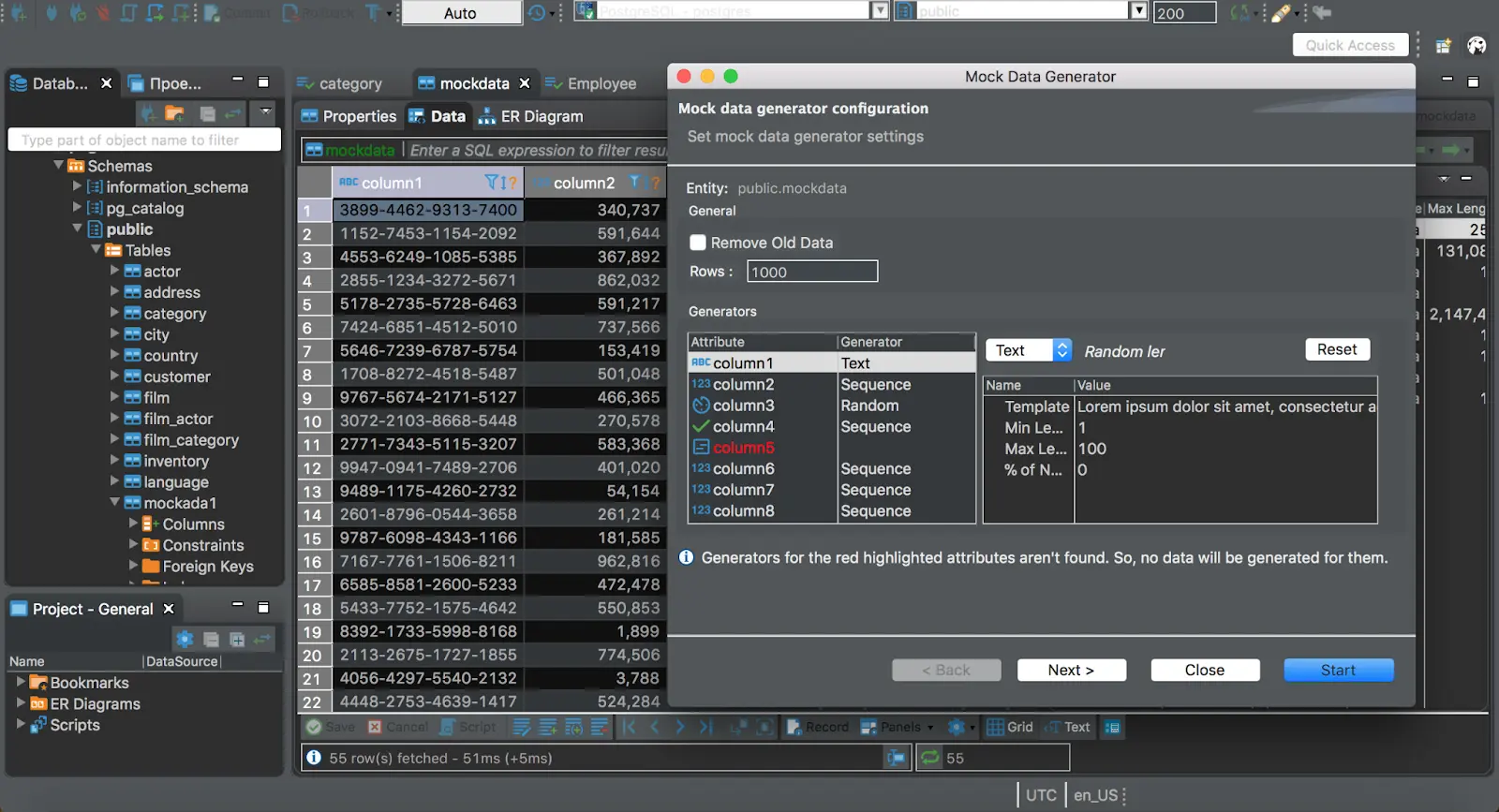
DBeaver has evolved into one of the most versatile universal database tools by 2026, supporting everything from traditional SQL databases to modern cloud data warehouses. Its flexibility and plugin ecosystem make it a strong choice for teams working across multiple data sources.
Key features
- Wide compatibility: MySQL, PostgreSQL, SQL Server, Oracle, BigQuery, Snowflake, and more.
- Advanced data editing, schema comparison, and ER diagrams.
- Extensible architecture with community plugins and enterprise features.
- Cross-platform support across Windows, macOS, and Linux.
Pros
- Ideal for multi-database environments and complex data workflows.
- Powerful query editor with visualization and automation features.
- Active development aligned with modern data engineering trends.
Cons
- Can feel heavy on system resources with large datasets or multiple connections.
- Learning curve for beginners unfamiliar with database concepts.
- Some enterprise features are locked behind paid tiers.
Pricing
Community edition (free) and Enterprise editions with advanced collaboration and security features.
Available on
Windows, macOS, Linux.
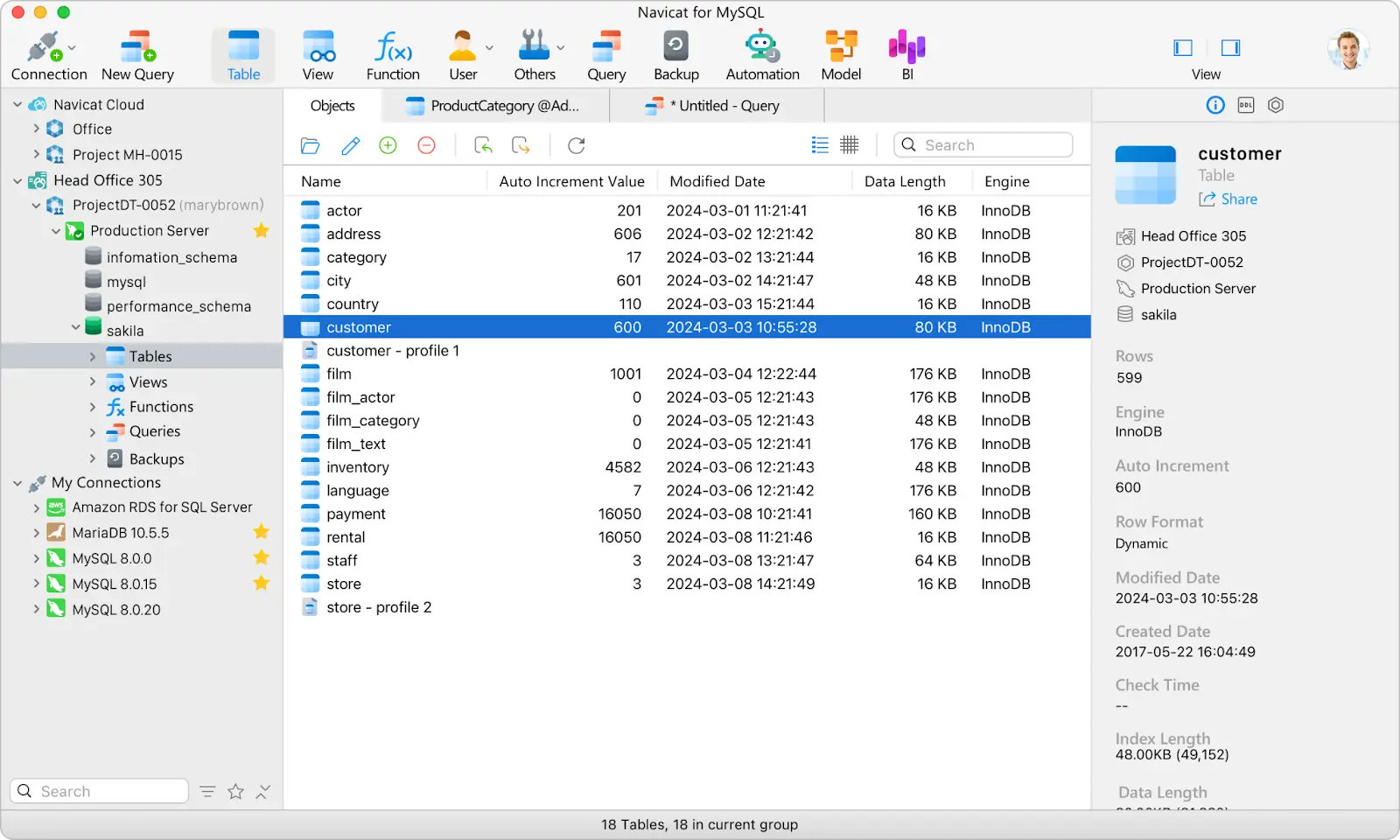
Navicat for MySQL
Navicat for MySQL for MySQL remains a premium database management solution focused on professional teams and enterprise environments. By 2026, it positions itself as a polished, productivity-focused alternative with advanced modeling, automation, and cloud connectivity.
Key features
- User-friendly interface with drag-and-drop functionality.
- Advanced modeling tools and data synchronization.
- Cloud database support for MySQL.
Pros
- Powerful and efficient for enterprise-level management.
- Great for collaboration on larger teams.
- Offers excellent customer support.
Cons
- Only available in paid versions.
- High cost compared to other MySQL frontends.
Pricing
- Paid software with different editions available.
Available on
- Windows, macOS, Linux
TablePlus
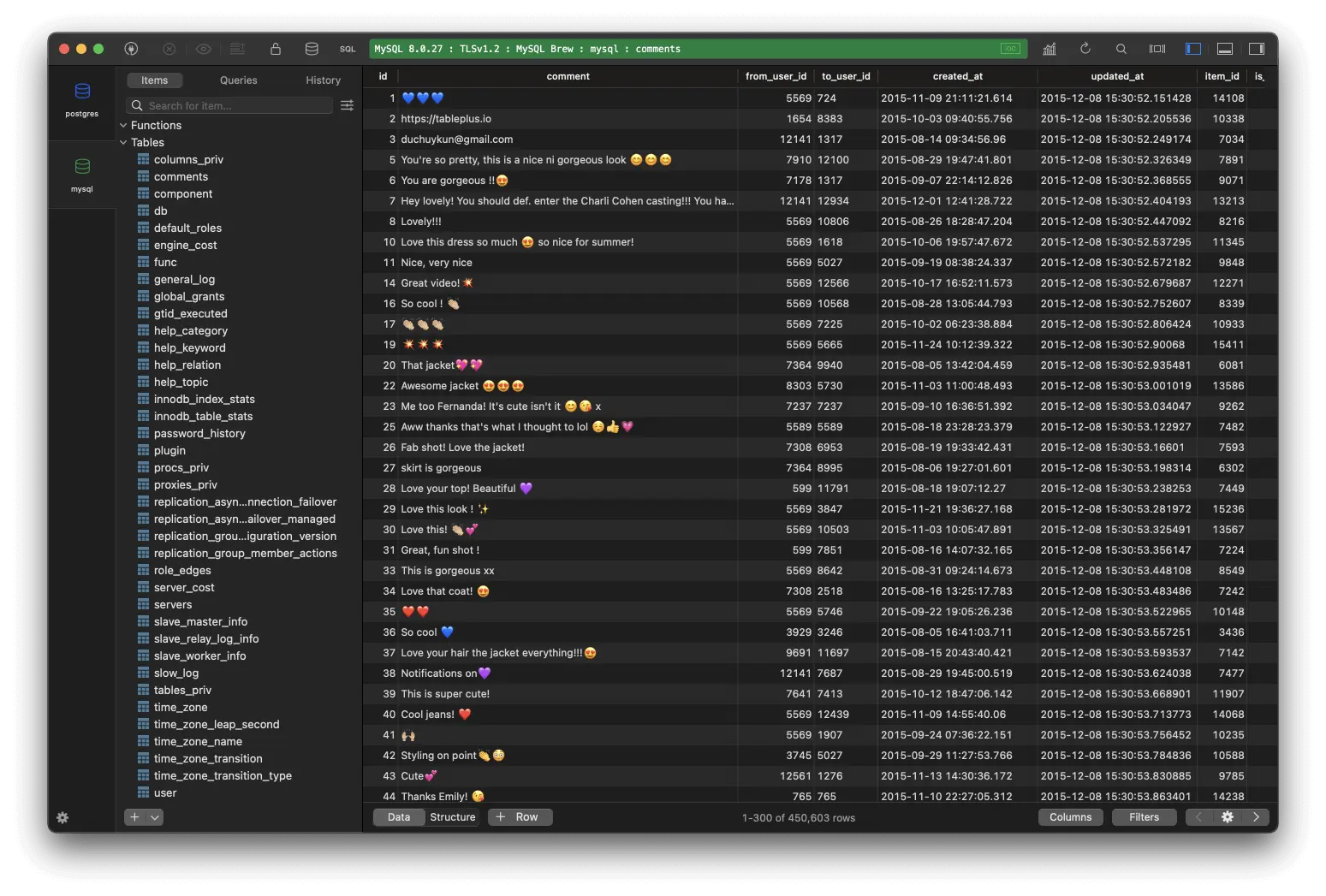
TablePlus is a modern, native, and user-friendly GUI tool for relational databases, including MySQL.
Key features
- Intuitive interface with visual query building.
- Supports multiple databases including MySQL, PostgreSQL, and others.
- Offers collaboration features for team-based work.
Pros
- Clean, modern UI.
- Supports multiple databases in one application.
- Fast performance and regular updates.
Cons
- Limited features in the free version.
- Some advanced functions require a paid version.
Pricing
- Free and paid versions available.
Available on
- macOS, Windows, Linux
Valentina Studio
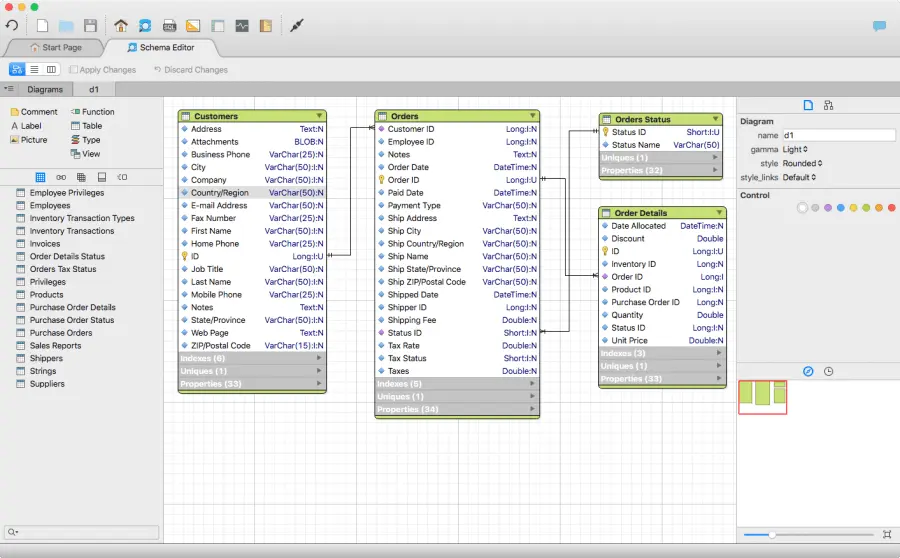
Valentina Studio provides a comprehensive development environment for MySQL, PostgreSQL, and SQLite databases.
Key features
- Visual query builder and data import/export capabilities.
- Supports multiple databases.
- Powerful SQL editor for complex queries.
Pros
- Great for developers needing an all-in-one database tool.
- Multi-database support in a single interface.
- Free version includes many core features.
Cons
- User interface can be complex for new users.
- Performance issues with large datasets.
Pricing
- Free and paid versions available.
Available on
- macOS, Windows, Linux
Ditch the Downloads, Go Visual: UI Bakery for MySQL
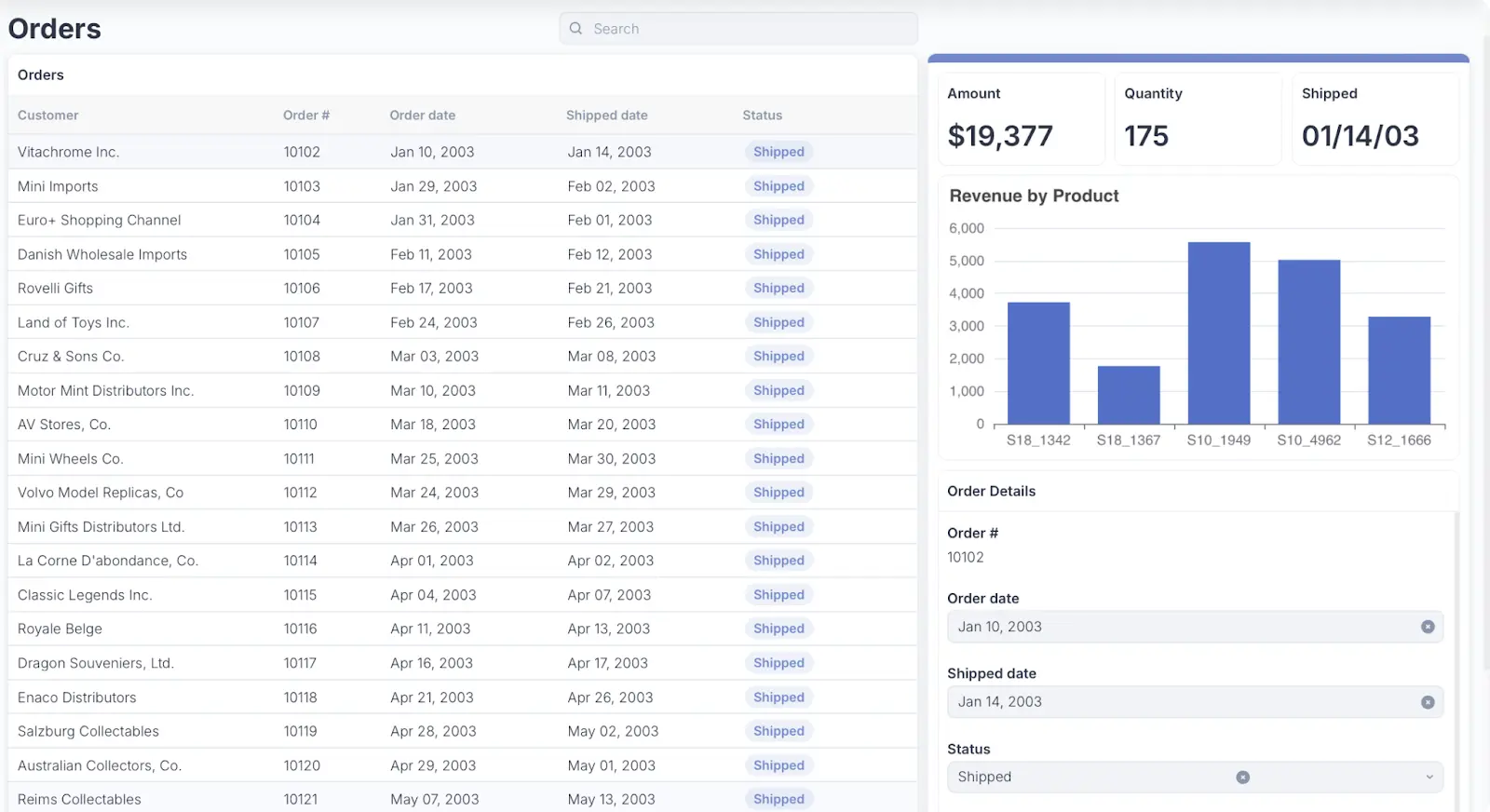
UI Bakery offers a web-based, low-code solution for managing MySQL databases by simplifying the creation of internal tools and admin panels.
To start with, you may try MySQL template, to effortlessly view MySQL table rows in a comprehensive table, delve deep with search functionalities, and gain insights into individual record details – all at your fingertips. Additionally, the provision to modify row data ensures you have complete control over your database.
Key features
- Drag and drop pre-built components to create custom dashboards.
- Connect to MySQL and other databases like PostgreSQL and MongoDB.
- Web-based, no need for downloads or installations.
Pros
- Saves time with an intuitive low-code platform.
- Boosts team collaboration with easy sharing and management.
- Supports multiple databases beyond MySQL.
Cons
- Limited to web-based use; requires an internet connection.
- More focused on front-end and internal tool building than direct database administration.
Pricing
- Free trial available, with paid plans from $5 offering advanced features.
Available on
- Web-based, accessible on any OS with a browser
Each of these MySQL frontend tools has its strengths and weaknesses, and the right choice will depend on your specific needs and environment. Whether you're looking for a powerful all-in-one tool like MySQL Workbench or a low-code, visual solution like UI Bakery, there's a MySQL frontend for everyone.
Next step
Planning a HIPAA-sensitive internal app?
Use the checklist above to map data flow, roles, audit events, vendors, and deployment decisions before the first production workflow ships.
Healthcare operations example
Action Behavior Centers scaled internal operations across clinics with UI Bakery
For a real operational example, review UI Bakery customer stories and healthcare operations patterns.
5,000+users supported in the customer story
400+clinics mentioned in the case study





"The UI Bakery platform offers a cost-effective approach to creating applications. With UI Bakery, you can achieve your app development goals without breaking the bank."

"Before switching to UI Bakery we developed a number of apps within the Retool system. The Retool system was good but ultimately did not have the flexibility and feature sets that we required."
Check the Story