

Best Unstructured Data Management Solutions in 2026
%201.png)
Updated:
February 7, 2026
Unstructured data is no longer an edge case. Documents, PDFs, emails, chat logs, images, audio files, logs, and AI-generated content now make up 80%+ of enterprise data – and most of it doesn’t fit neatly into rows and columns.
Traditional databases weren’t designed for this. That’s why modern teams are investing in unstructured data management solutions that combine search, AI, governance, and secure access – without turning data operations into chaos.
In this guide, we’ll break down what unstructured data management actually means, what to look for in modern data management software, and the best unstructured data management solutions available today – including AI-first platforms.
What Is Unstructured Data Management?
Unstructured data management is the practice of collecting, storing, indexing, securing, and using data that doesn’t follow a predefined schema.
Examples include:
- Text documents and PDFs
- Emails and chat messages
- Images, videos, and audio files
- Application logs and events
- AI prompts, outputs, and embeddings
Unlike structured data, unstructured data requires search, metadata extraction, AI enrichment, and strong data privacy management solutions to be usable at scale.
Modern platforms now combine storage + AI + governance into a single workflow.
What to look for in Unstructured Data Management software
When evaluating data management solutions in 2026, especially for unstructured data, look for these core capabilities:
1. AI-Powered indexing and search
Keyword search is no longer enough. The best platforms support:
- Semantic search
- Vector embeddings
- Natural language queries
- AI-assisted tagging and classification
This is where AI data management becomes a real advantage, not a buzzword.
2. Data privacy and access control
Unstructured data often contains sensitive information. Strong data privacy management solutions should include:
- Role-based access control (RBAC)
- Audit logs
- Field-level or document-level permissions
- Secure deployment options (self-hosted / VPC)
3. Integration with real systems
Great tools connect directly to:
- Cloud storage (S3, GCS, Azure Blob)
- Databases and data warehouses
- Internal tools and workflows
- AI pipelines and LLMs
4. Usability for non-engineers
If only data engineers can access unstructured data, value is lost. Modern platforms allow operators, analysts, and product teams to work with data safely.
Best Unstructured Data Management solutions
1. Databricks
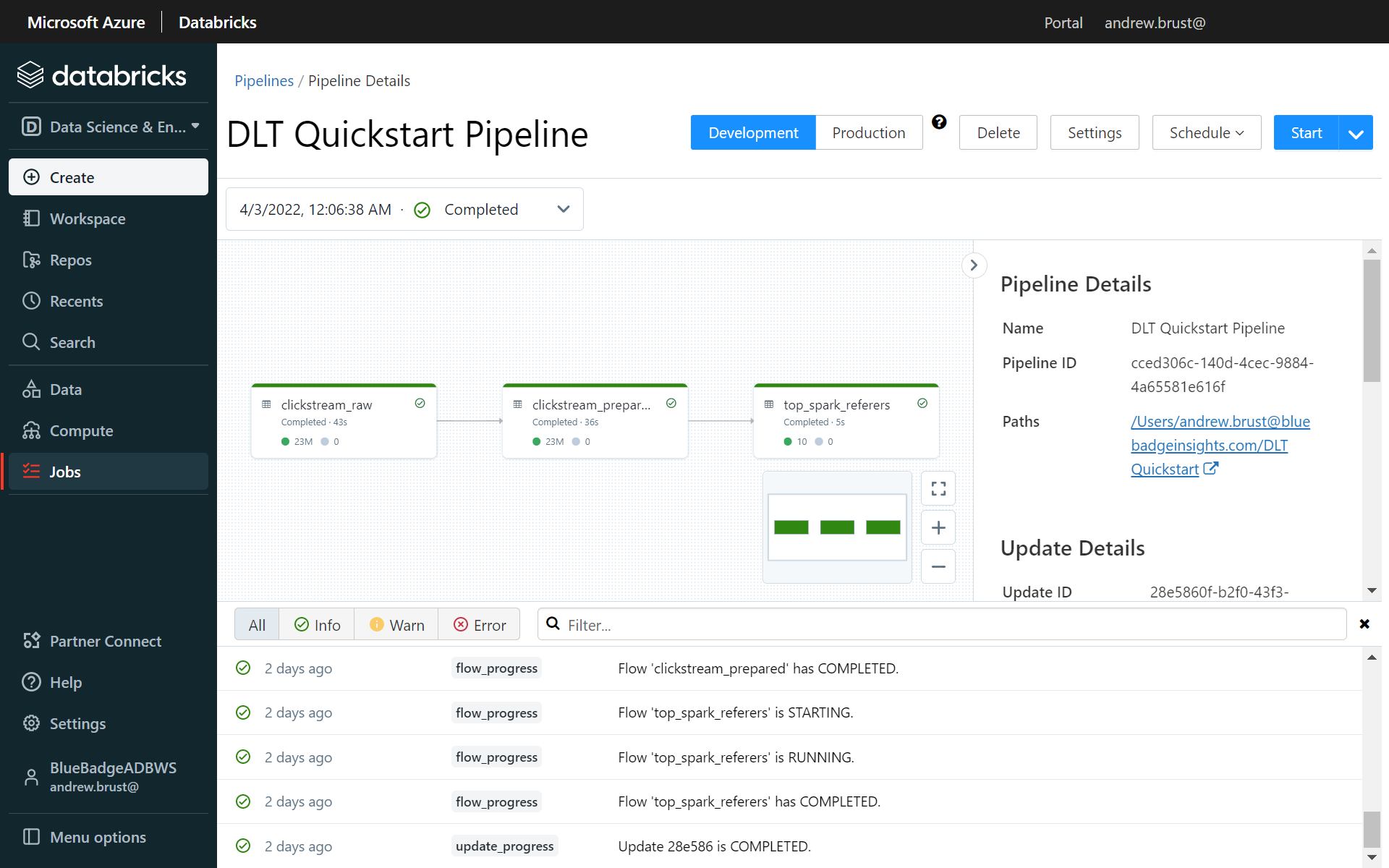
Databricks has evolved into a powerful platform for managing large volumes of structured and unstructured data through its Lakehouse architecture.
Why it stands out
- Handles text, logs, images, and streaming data
- Strong ML and AI integrations
- Scales well for large enterprises
Best for: Data engineering and ML-heavy teams
Limitations: Steep learning curve, engineering-first experience
2. Snowflake
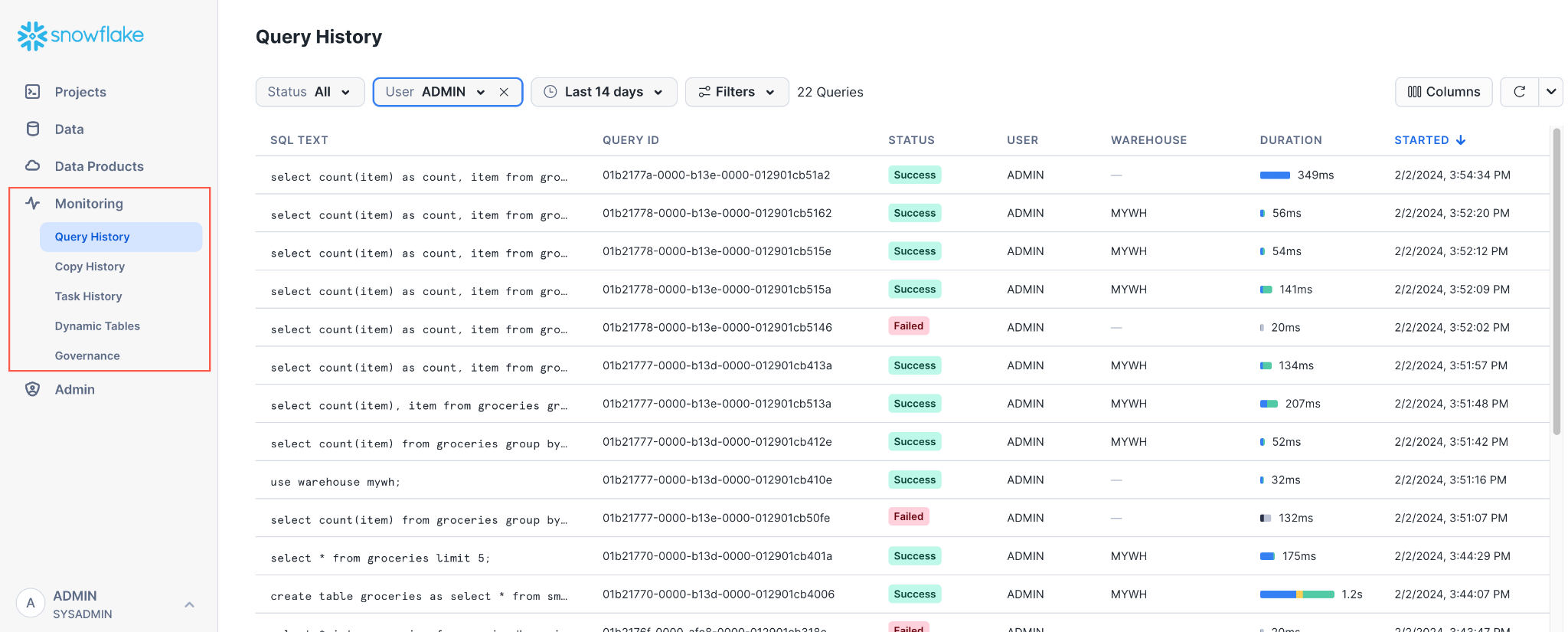
Snowflake is no longer just a warehouse. With support for unstructured data, documents, and external storage, it’s becoming a serious player in enterprise data management software.
Why it stands out
- Unified governance and security
- Works well with AI and analytics tools
- Strong compliance features
Best for: Enterprises standardizing on Snowflake
Limitations: Less flexible for custom internal workflows
3. Elastic
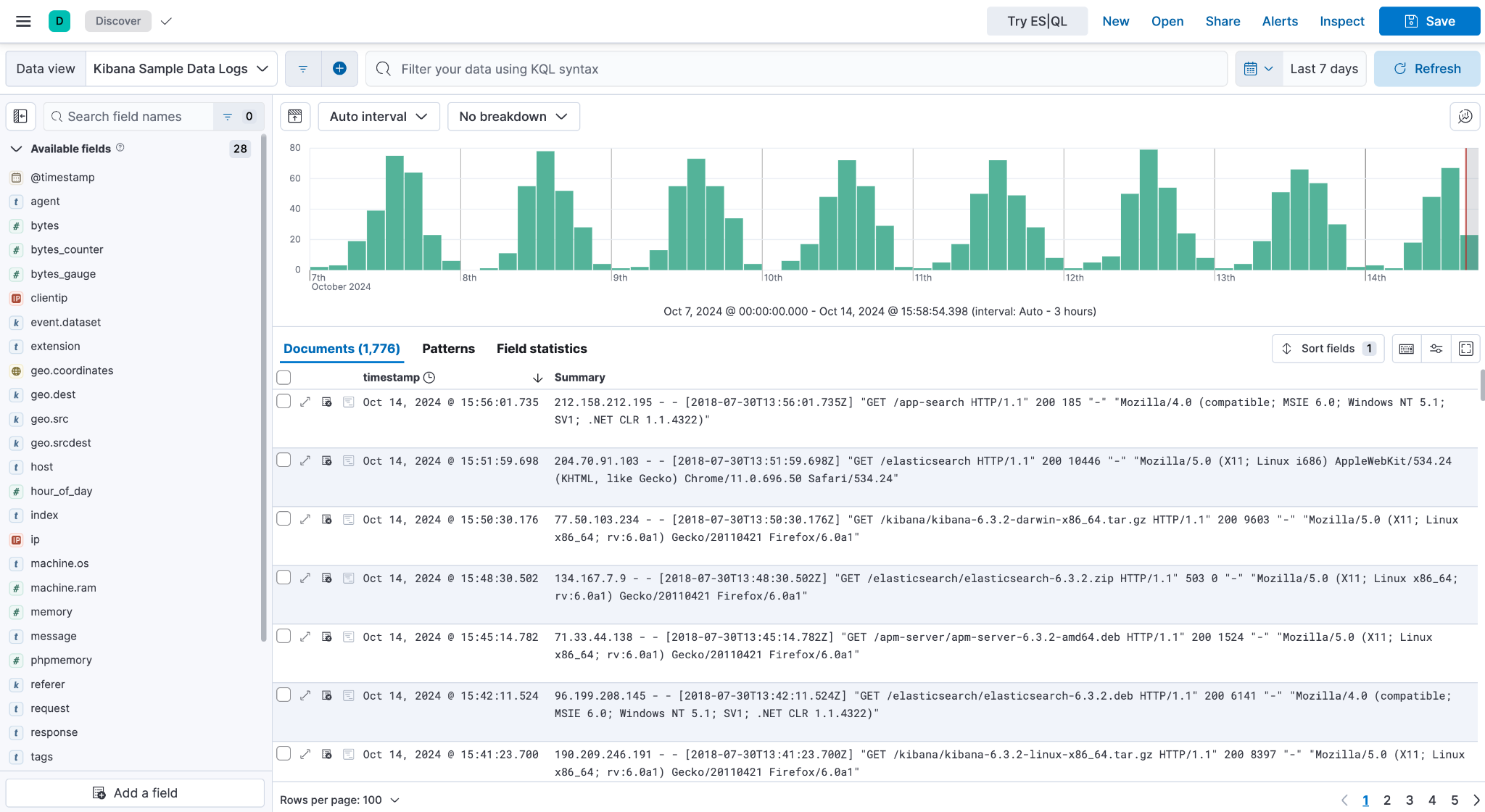
Elastic is a classic choice for indexing and searching unstructured data at scale.
Why it stands out
- Excellent full-text and log search
- Real-time indexing
- Strong observability use cases
Best for: Log data, search-heavy workloads
Limitations: Requires careful tuning and ops experience
4. UI Bakery
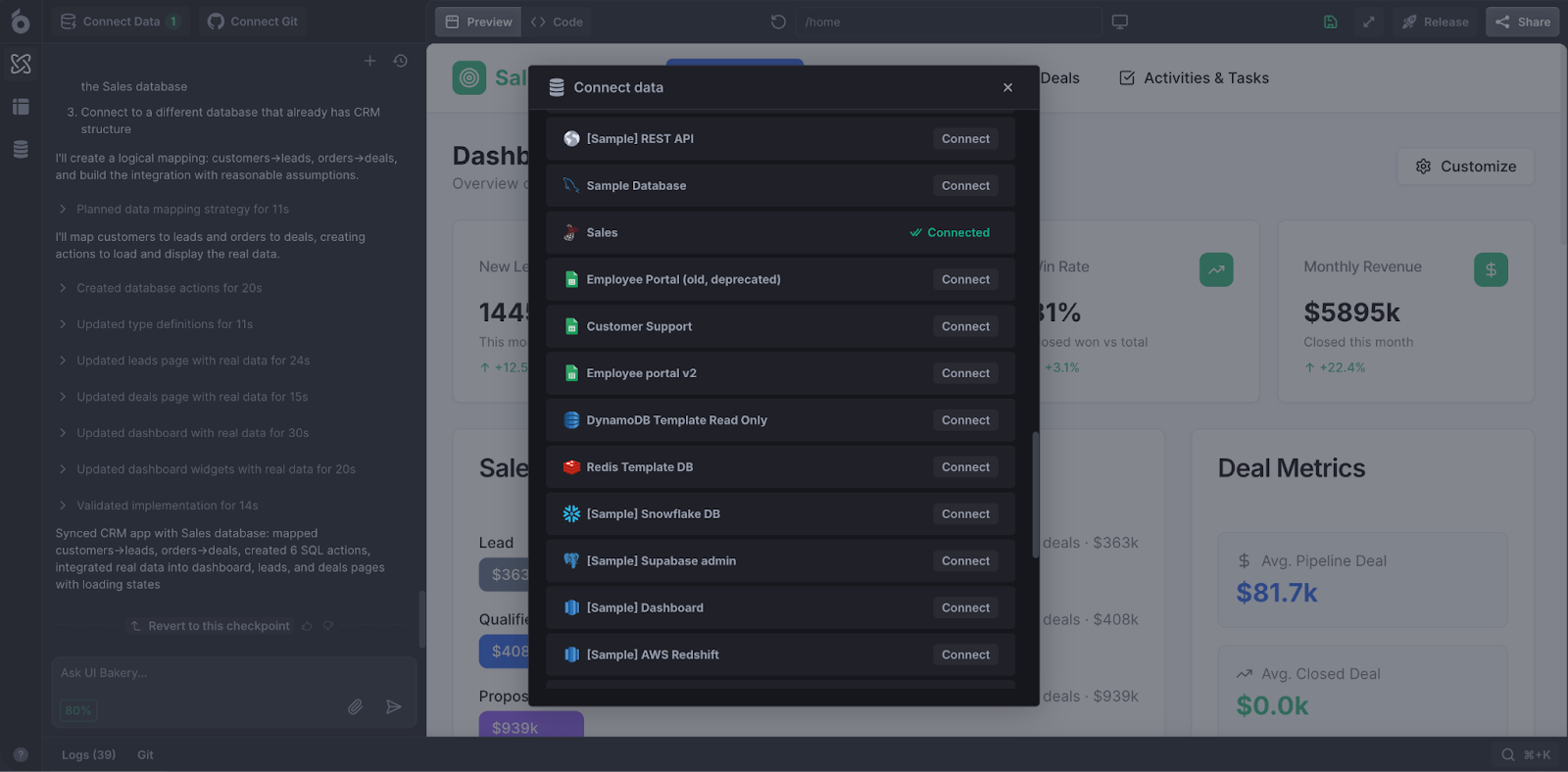
UI Bakery takes a different approach. Instead of being just a storage layer, it acts as an AI agent that sits on top of your existing unstructured data sources and turns them into secure, usable internal apps.
Why it stands out
- Connects directly to databases, APIs, and file storage
- Uses AI to generate internal tools and workflows
- Fine-grained RBAC and enterprise-grade security
- Self-hosted and cloud deployment options
With UI Bakery, teams can:
- Search and filter unstructured data using natural language
- Build role-aware internal dashboards on top of documents and logs
- Enforce data privacy management solutions at the UI and query level
- Let non-engineers safely work with real data
Best for: Companies turning unstructured data into operational tools
Limitations: Not a raw storage engine – works best layered on existing data systems
Choosing the right Unstructured Data Management solution
There is no single “best” tool for everyone. The right choice depends on:
- Volume and type of unstructured data
- Security and compliance requirements
- AI maturity of your team
- Whether you need infrastructure or operational tooling
Many companies now combine platforms:
- A data lake or warehouse for storage
- A search or AI layer for intelligence
- An AI agent like UI Bakery to turn data into usable internal apps
Wrapping up
Unstructured data is where most business value is hiding – but only if you can access, secure, and operationalize it.
The best unstructured data management solutions in 2026 are AI-first, privacy-aware, and workflow-driven. Tools that combine AI data management with strong governance and usability will win – especially those that let teams move fast without compromising control.
Next step
Planning a HIPAA-sensitive internal app?
Use the checklist above to map data flow, roles, audit events, vendors, and deployment decisions before the first production workflow ships.
Healthcare operations example
Action Behavior Centers scaled internal operations across clinics with UI Bakery
For a real operational example, review UI Bakery customer stories and healthcare operations patterns.
5,000+users supported in the customer story
400+clinics mentioned in the case study





"The UI Bakery platform offers a cost-effective approach to creating applications. With UI Bakery, you can achieve your app development goals without breaking the bank."

"Before switching to UI Bakery we developed a number of apps within the Retool system. The Retool system was good but ultimately did not have the flexibility and feature sets that we required."
Check the Story