
.jpg)
UI Bakery 2025 Recap

Updated:
February 12, 2026
It’s the start of 2026. I’m once again looking back at the previous year and reflecting on everything that has happened in 2025. The more I reflect, the clearer it becomes: 2025 was a turning point for UI Bakery.
2025 wasn’t just about new releases or incremental improvements—it was the year we rethought how apps should be built and who should be able to build them. Over the course of the year, we evolved from a low-code platform to an AI app builder, unlocking new ways of creating internal tools and business applications.
Some of the most noticeable changes were released around October, but the story started much earlier. This recap is a look at how this transition unfolded, what we shipped along the way, and how it shaped the product UI Bakery is today.
Part 1. What we shipped in 2025: from low-code features to AI-first building
January-May: strengthening the core and preparing for AI
The first half of the year focused on strengthening UI Bakery’s foundation. Many of the updates focused on improving the daily building experience, but more importantly, they paved the way for a major transition to AI.
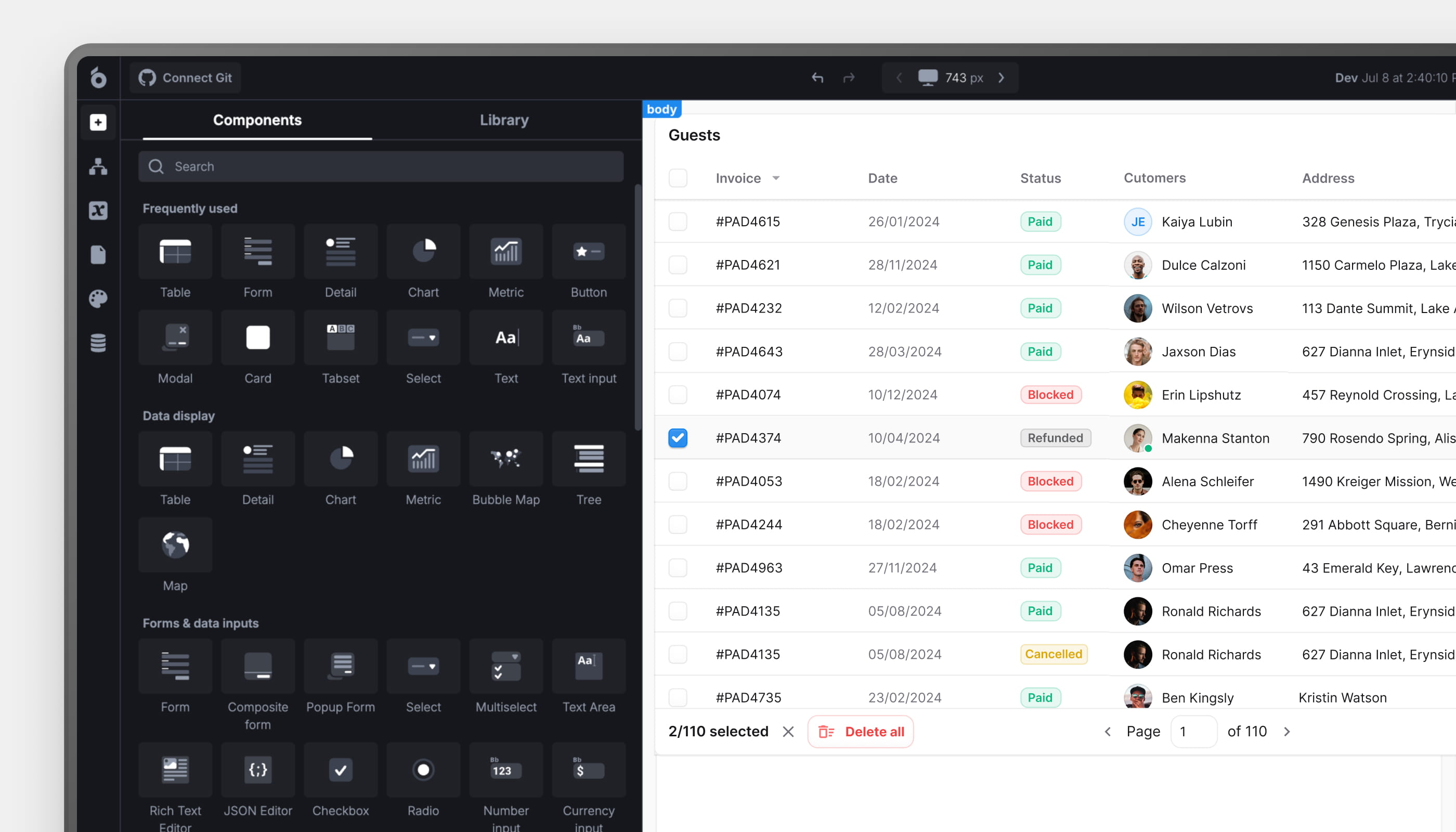
Our component library grew with a suite of editable components (Editable currency, boolean, percent, string, and others) as well as the addition of the Embedded App component.
.jpg)
The Builder itself became smoother and more powerful with such improvements as:
- List menu in action creation supporting search and quick data source connection
- Automatic component name generation based on the action’s resource
- Instant app preview in the Builder via the Preview link
- Resizable left sidebar
- Navigation menu changes syncing instantly in both the Menu component and the Workspace menu
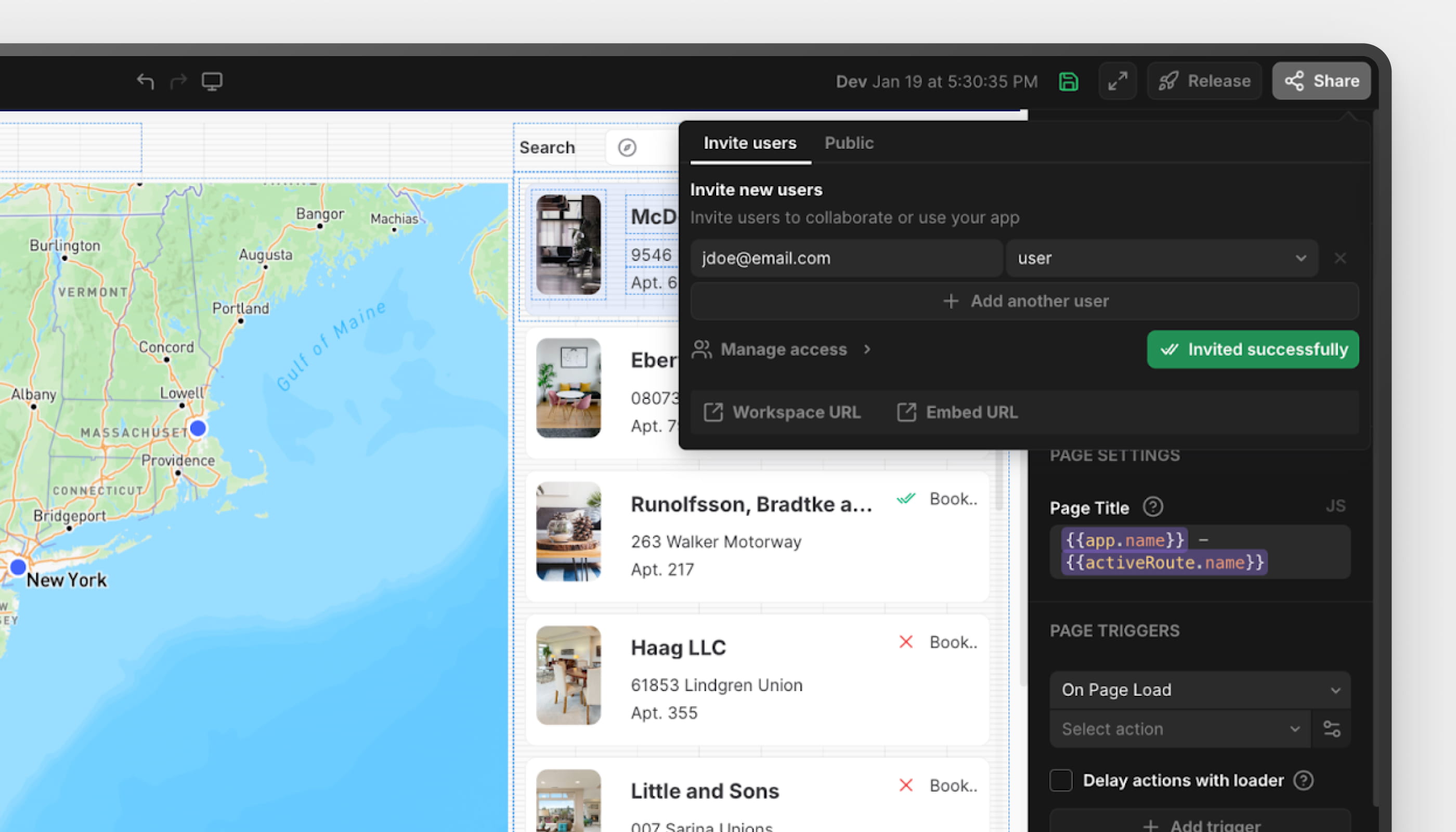
- Inviting users to the app via the Share pop-up directly from the Builder
- Rendering Modules without an iframe
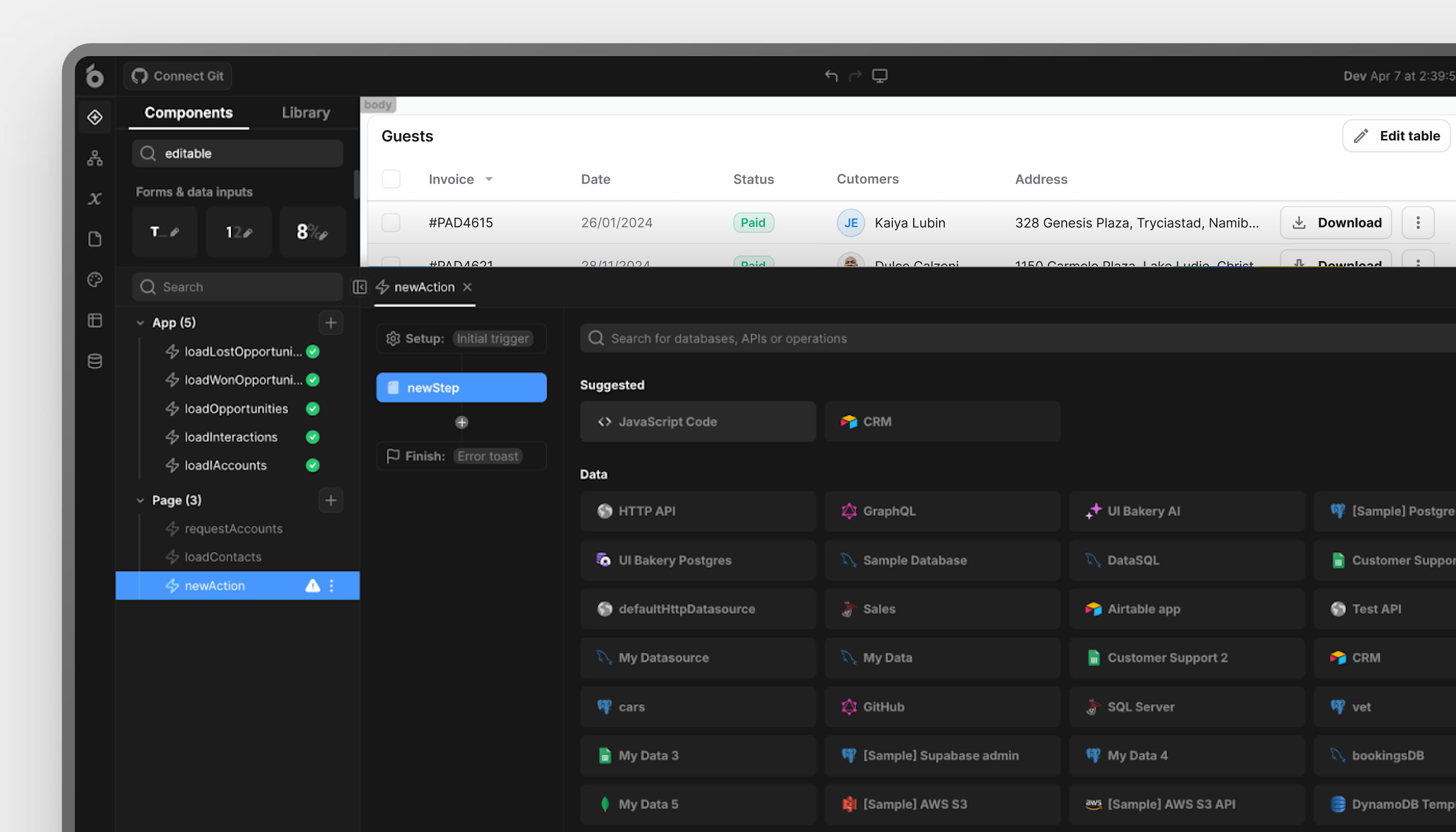
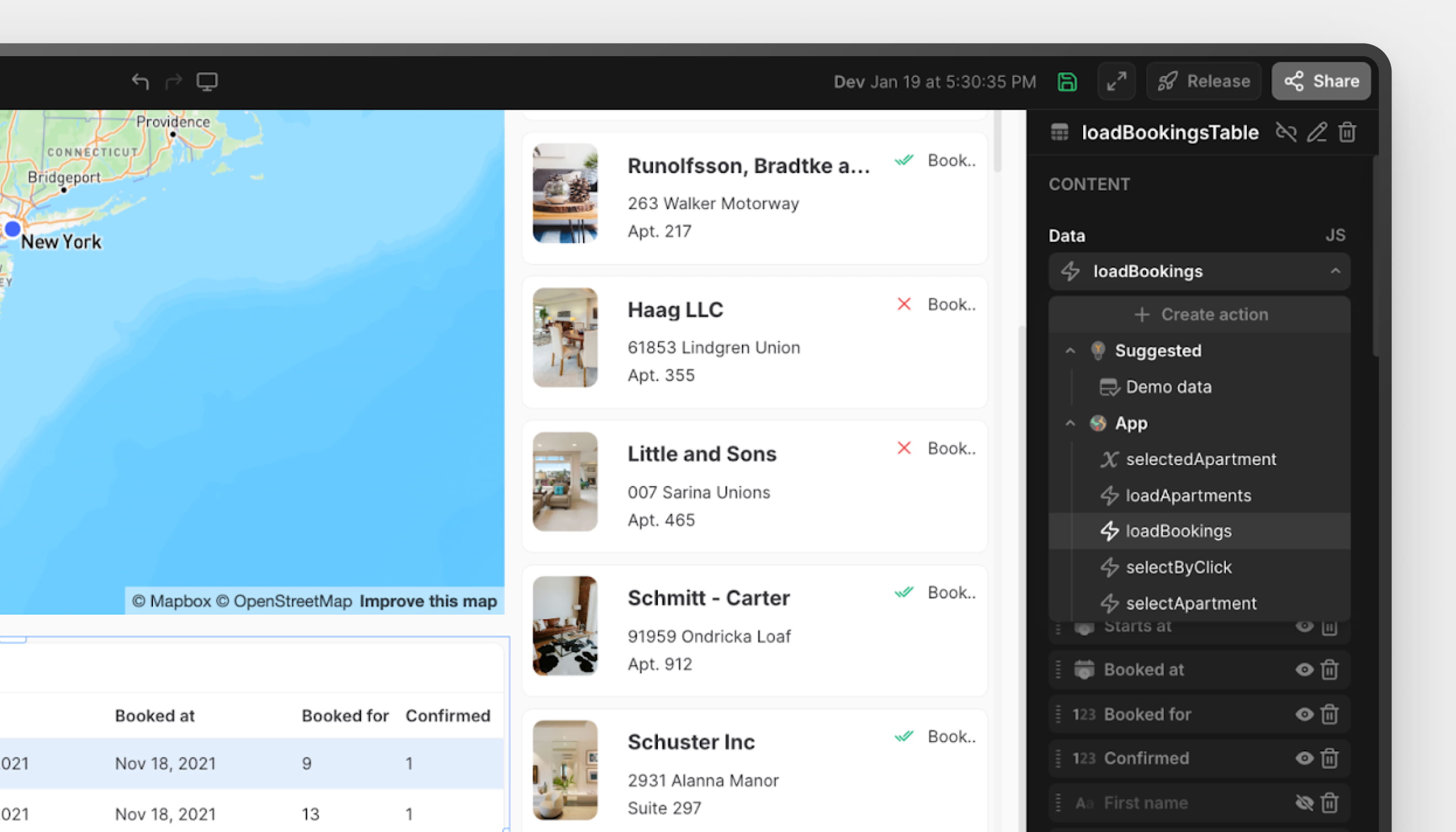
On the data and logic side, enhancements included, among others, transforming the Data field into a dropdown for easier switching between available actions and variables; adding new Python libraries—jira and base64—as well as the i18next library for multilingual support; support of the Elasticsearch data source, and Snowflake key-pair authentication.
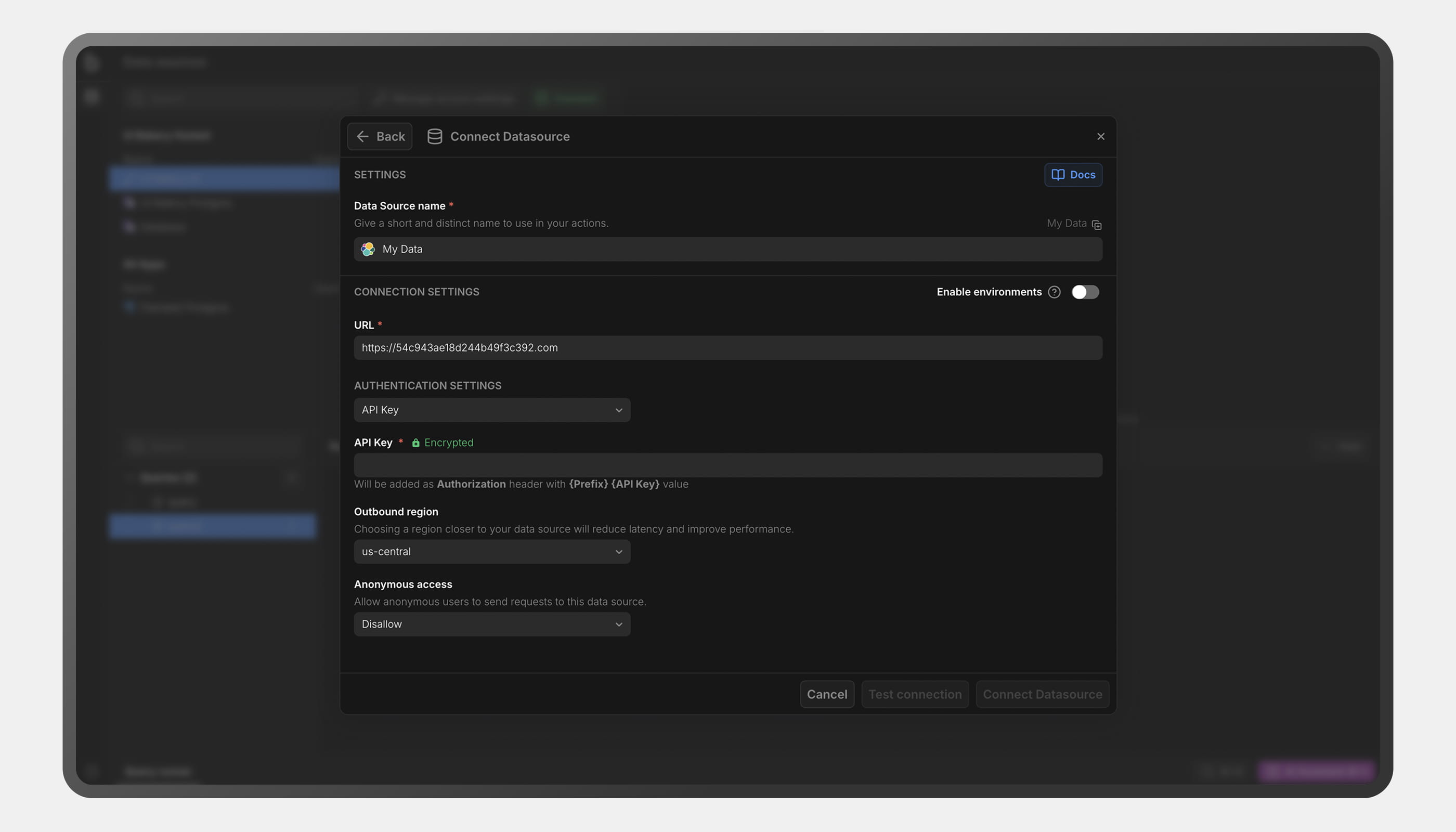
Platform-level improvements, such as the ability to change the default Git branch, user filtering by role, managing billing through the Billing Portal, and, most importantly, achieving SOC 2 compliance made UI Bakery faster, more reliable, and ready for AI-driven building.
June-September: AI getting closer to the surface
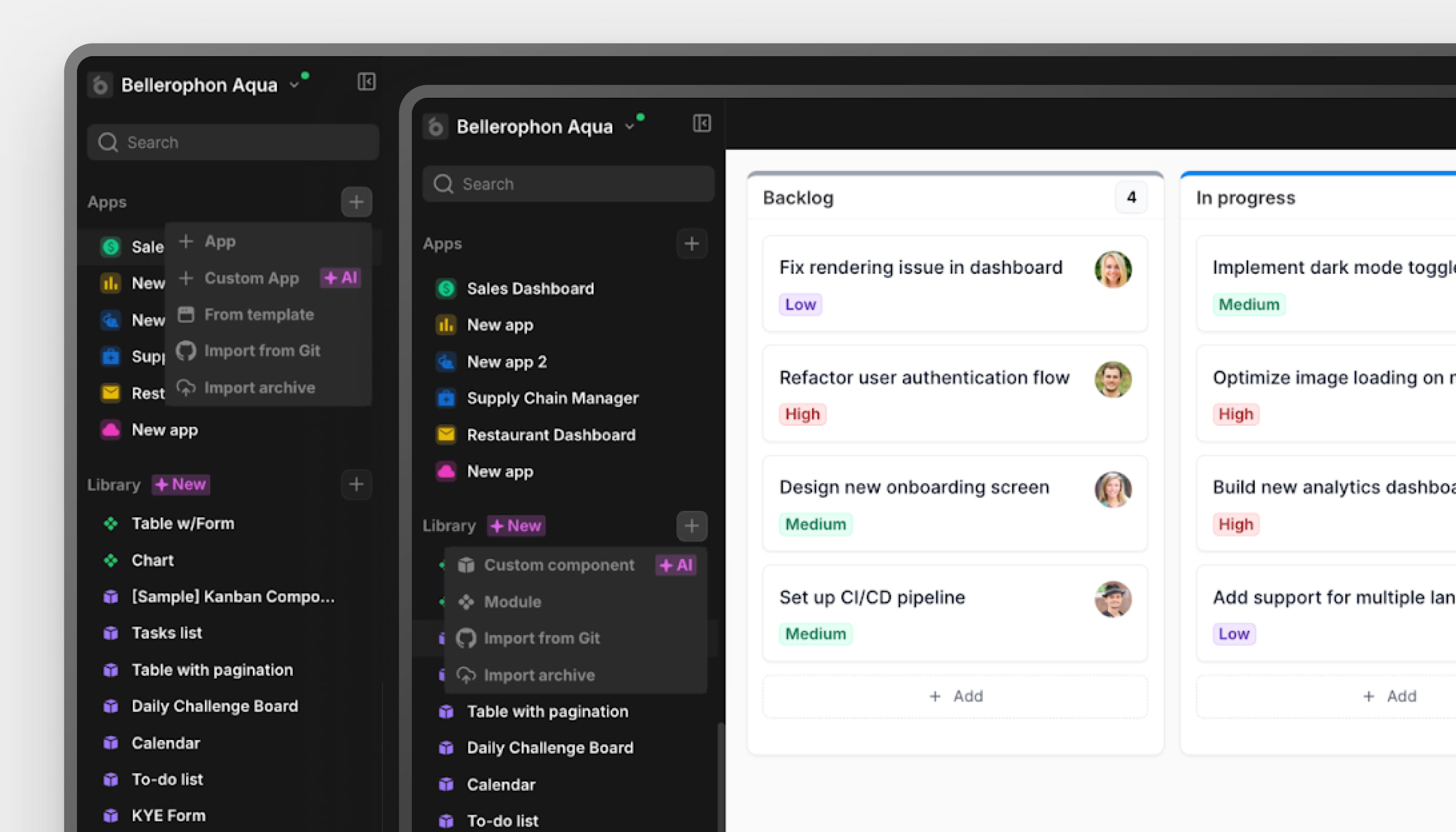
During the summer months, AI became an even more tangible part of UI Bakery. First, we introduced the Custom component 2.0 feature that allows users to generate entire React components with AI—all within the platform.
It allowed users to tweak the generated code, create actions and feed them directly to the AI, and publish components across multiple apps. From Kanban boards and to-do-lists to fitness trackers, blog platforms, and more, users could now create custom components just by describing what they wanted or uploading an image for inspiration.
Following this, in July, we released the Custom App, taking AI assistance to the next level. Custom App made it possible to build fully independent, end-to-end applications directly inside UI Bakery: connect them to data sources and build out logic.
These updates made AI an exciting part of real workflows providing users with the tools to experiment and bring new ideas to life.
October-December: AI-only experience rollout
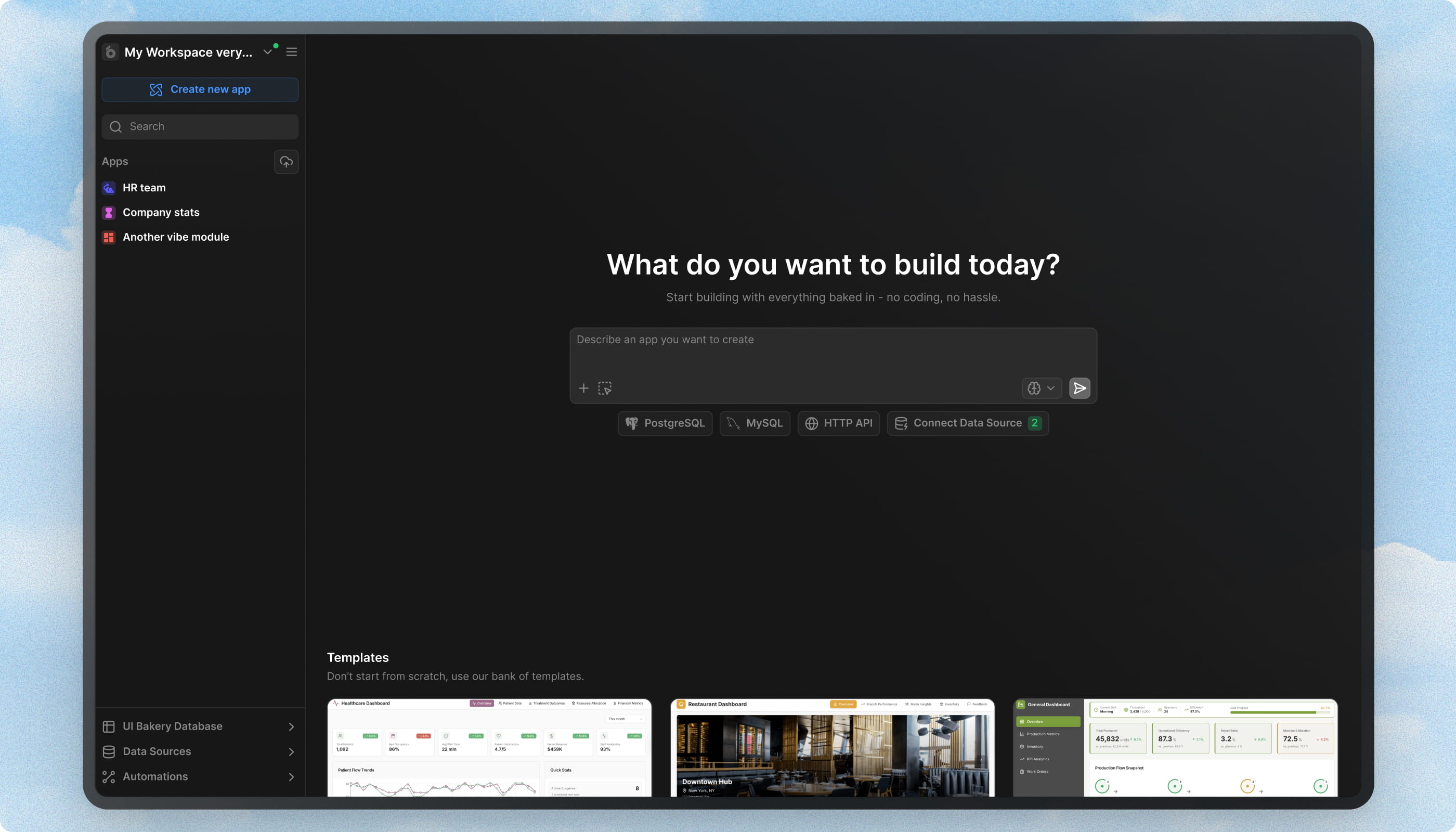
October was a historic milestone—UI Bakery officially became an AI app builder giving users two ways to build apps:
- Low-code with AI assistance, enhancing the traditional workflow
- AI-only mode, generating apps entirely from prompts and templates
During this period we also shipped a number of key supporting features: AI templates for faster app creation, custom amount of tokens you can buy in one transaction, screenshot permissions per app, multi-user collaboration, and more.
By the end of the year, UI Bakery had evolved into a platform where both AI and humans could collaborate seamlessly, setting the stage for even more to come in 2026.
.jpg)
Part 2. Who is there behind the scenes?
Making the AI transition this year was certainly a collective effort—our existing team did their best to maintain all existing features while developing new AI-only capabilities.
We also welcomed Vadzim, an L3 Software Engineer, who joined the team and played an important role in supporting the AI transition and helping us scale development effectively.
Together, we made it possible for UI Bakery to evolve smoothly, balancing innovation with reliability.
Part 3. What’s coming next?
2025 set the stage for AI app building, but our journey here is just beginning. Here are some of the improvements we will be focusing on next year:
- Uploading custom files and images: It will allow AI to work with user-provided data directly, thus enabling more accurate context.
- Broader data source support: Expect to see more integrations coming, such as Azure Blob Storage, Amazon S3, Redis, and more custom APIs.
- MCP support: We will work on improving how the AI agent interacts with tools, data, and workflows.
- Web search support for the AI agent: AI will be able to access up-to-date external information when building and refining apps.
- Model selection: It will give users control over how AI behaves by choosing between different models, for example, for faster responses or more advanced reasoning.
We’re extremely grateful for your continued support and belief in UI Bakery, and we’re excited to continue building this future, where AI and humans collaborate seamlessly, together.
Next step
Planning a HIPAA-sensitive internal app?
Use the checklist above to map data flow, roles, audit events, vendors, and deployment decisions before the first production workflow ships.
Healthcare operations example
Action Behavior Centers scaled internal operations across clinics with UI Bakery
For a real operational example, review UI Bakery customer stories and healthcare operations patterns.
5,000+users supported in the customer story
400+clinics mentioned in the case study




"The UI Bakery platform offers a cost-effective approach to creating applications. With UI Bakery, you can achieve your app development goals without breaking the bank."

"Before switching to UI Bakery we developed a number of apps within the Retool system. The Retool system was good but ultimately did not have the flexibility and feature sets that we required."
Check the Story