

Best Base44 Alternatives & Competitors in 2026

Updated:
May 28, 2026
Short Answer: Best Base44 Alternatives in 2026
- Best for secure internal tools: UI Bakery
- Best for full-stack MVPs: Lovable
- Best for fast prototypes: Bolt.new
- Best for frontend generation: v0 by Vercel
- Best for developer-led apps: Replit
- Best free/open-source options: ToolJet and Appsmith
If you are moving away from Base44 because of pricing, code ownership, vendor lock-in, or production concerns, compare free plan/free tier limits, code export, full code export, self-hosting, enterprise features, and database connectivity.
Base44 became a visible prompt-first app builder after Wix announced its acquisition on June 18, 2025. A consumer MVP and healthcare operations dashboard need different tools.
Why Teams Are Looking for Base44 Alternatives
Base44 is an AI app builder that helps users create apps from prompts. It is useful for ideation, but real workflows need predictable pricing, access control, and maintenance.
Four concerns usually drive the search. First, the Wix acquisition created evaluation pressure: TechCrunch reported the deal at $80 million in cash. Second, Base44's pricing uses message and integration credits, so usage-based pricing and sudden pricing changes complicate planning. Third, code ownership is critical for avoiding vendor lock-in: Base44 says users own the IP and includes GitHub integration on Builder, but IP ownership is not runtime portability or control over own infrastructure. Fourth, production tools often need SSO, RBAC, audit logs, self-hosting, database connectors, backend logic, workflow automation, file storage, and version control.
AI-powered apps and app builders are changing how non-technical founders, non-technical users, and product teams work. Many combine plain language prompts and natural language prompts with visual controls for UI components, data models, app logic, workflow logic, user authentication, built-in authentication, and generated code. That lowers the learning curve for app creation and lets teams build apps without traditional writing code, but business-critical applications expose siloed workflows. Better alternatives connect external tools and core systems, preserve code visibility, and provide AI assistance without fully abstracting the stack.
Quick Comparison: Base44 Alternatives at a Glance
Which Base44 Alternative Should You Choose?
Choose UI Bakery for building internal tools, complex web apps, and customer portals connected to databases, APIs, and workflows. Choose Lovable AI or Bolt.new to validate ideas quickly with full stack applications. Choose Replit for existing codebases and a development environment. Choose v0 for frontend code, frontend performance, and UI components. Choose Glide or Zite for no code tools, business apps, mobile apps, and customer-facing apps. Choose Appsmith or ToolJet for open source, own infrastructure, and self-hosting.
Best Base44 Alternatives in 2026 - Full Reviews
UI Bakery - Best for Secure Internal Tools
UI Bakery is the strongest Base44 alternative when your app needs to become a governed internal tool rather than a prompt-generated prototype.

Best for:
- Secure internal tools, admin panels, CRUD apps, ops dashboards
- Healthcare, fintech, support, and operations workflows
Not best for:
- Native mobile app development
- Pure frontend code generation
Pricing:
- Cloud Free: $0/month per developer; plans support unlimited apps, data connections, public/private apps, release history, and hosted database.
- Cloud Builder: $20/month annually or $25/month monthly; adds environments, app export, roles, and viewer seats.
- Cloud Team: $35/month annually or $40/month monthly; adds RBAC, audit logs, and support.
- Enterprise: custom; adds SSO, dedicated VM, migration help, and more viewer seats.
Code export / ownership:
UI Bakery supports app export on paid cloud and self-hosted plans, but it is not the same as owning a generated React repository.
Self-hosting / deployment:
UI Bakery self-hosted supports private-network/cloud deployment, air-gapped operation, RBAC, audit logs, MFA, SAML/OAuth SSO, custom domains, Git version control, and app export.
Enterprise features:
UI Bakery is strongest when teams need enterprise-grade security, RBAC, audit logs, authentication, workflow logic, sensitive data controls, and governed access.
Main limitation:
UI Bakery is not built for consumer app launches.
Short verdict:
Choose UI Bakery if you need control over internal tools, database connections, access permissions, auditability, and deployment.
Lovable - Best for Full-Stack MVPs
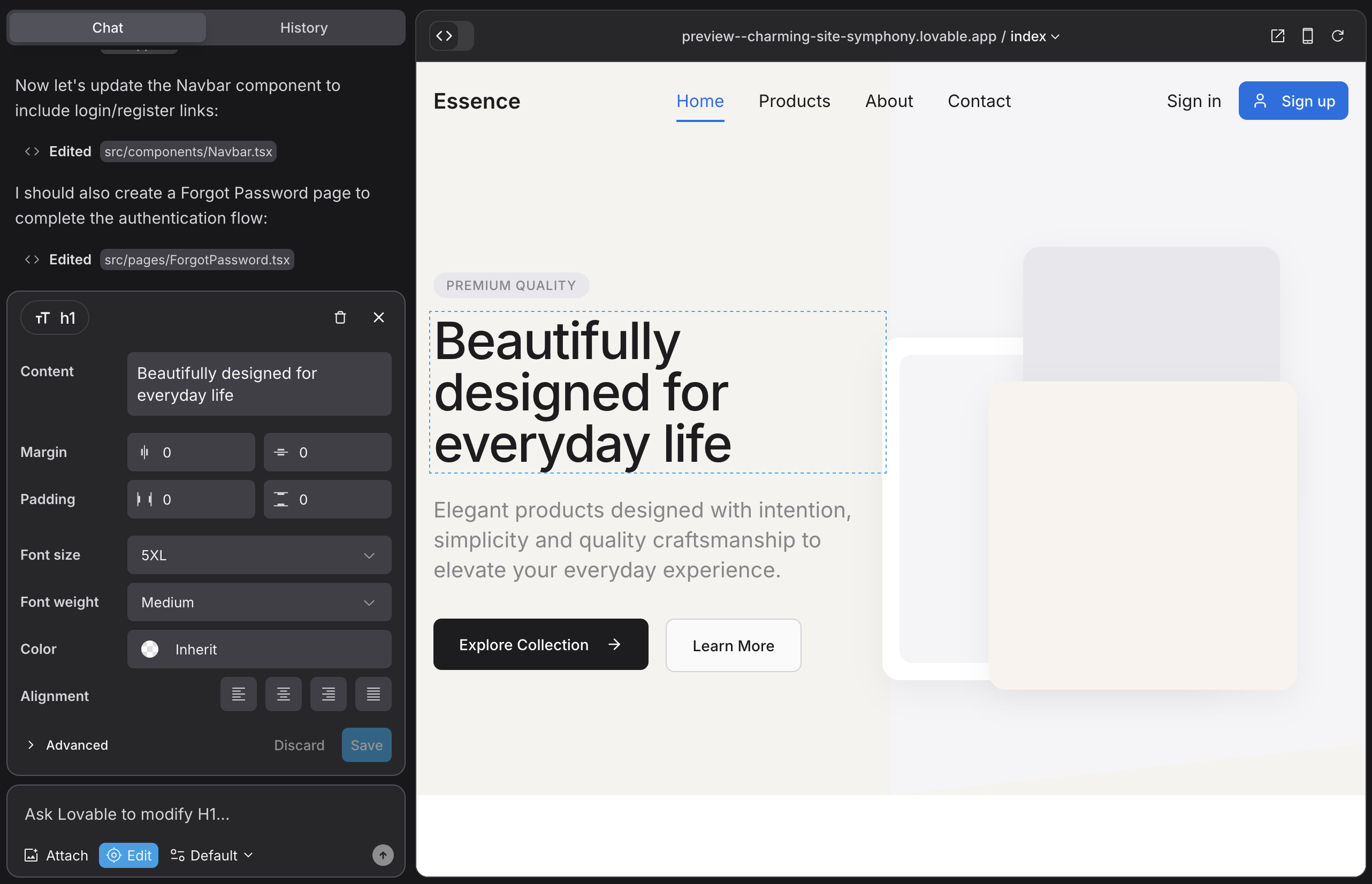
Lovable AI is one of the closest Base44 alternatives for teams that want prompt-first app generation, production-ready code, and code ownership through GitHub sync.
Best for:
- Full-stack MVPs
- Founder-led product experiments
Not best for:
- Conservative regulated workflows
- Complex RBAC and audit trails
Pricing:
- Free: limited daily/monthly credits.
- Pro: starts at $25/month for 100 credits.
- Business: starts at $50/month and adds stronger team controls.
Code export / ownership:
Lovable supports GitHub sync through its GitHub integration.
Self-hosting / deployment:
Lovable is mainly a hosted, code-generating MVP workflow. Deployment depends on the generated app and connected services.
Enterprise features:
Business features include SSO, restricted projects, and data-training opt-out.
Main limitation:
Lovable is stronger for MVPs than for governed internal tools.
Short verdict:
Choose Lovable if you want a Base44 alternative for full-stack MVPs and care about GitHub-based ownership.
Bolt.new - Best for Fast Prototyping
Bolt.new is useful when the goal is speed: create a web app directly from prompts in the browser, then iterate quickly. It can help teams create apps and validate ideas quickly, but debugging, architecture, authentication, deployment tools, and handoff still matter.

Best for:
- Rapid prototypes and demos
- Early MVP concepts
Not best for:
- Regulated internal tools
- Predictable cost requirements during heavy AI iteration
Pricing:
- Free: $0 with public/private projects, 300K daily tokens, 1M monthly tokens, hosting, branding, and unlimited databases.
- Pro: $25/month; starts at 10M tokens/month, removes branding, and adds custom domains.
- Teams: $30/month per member; adds centralized billing, access management, and admin controls.
- Enterprise: custom; adds SSO, audit logs, compliance support, SLAs, and data governance.
Code export / ownership:
Bolt.new is more code-oriented than pure no-code platforms. Test project files, repository workflow, and deployment before using it for a core system.
Self-hosting / deployment:
Bolt.new is aimed at hosted building rather than self-hosted enterprise internal tooling.
Enterprise features:
Enterprise includes SSO, audit logs, compliance support, admin controls, SLAs, and data governance.
Main limitation:
Token usage can become unpredictable during debugging and repeated regeneration.
Short verdict:
Choose Bolt.new when the priority is getting an idea into a working browser prototype fast.
v0 by Vercel - Best for Frontend UI Generation
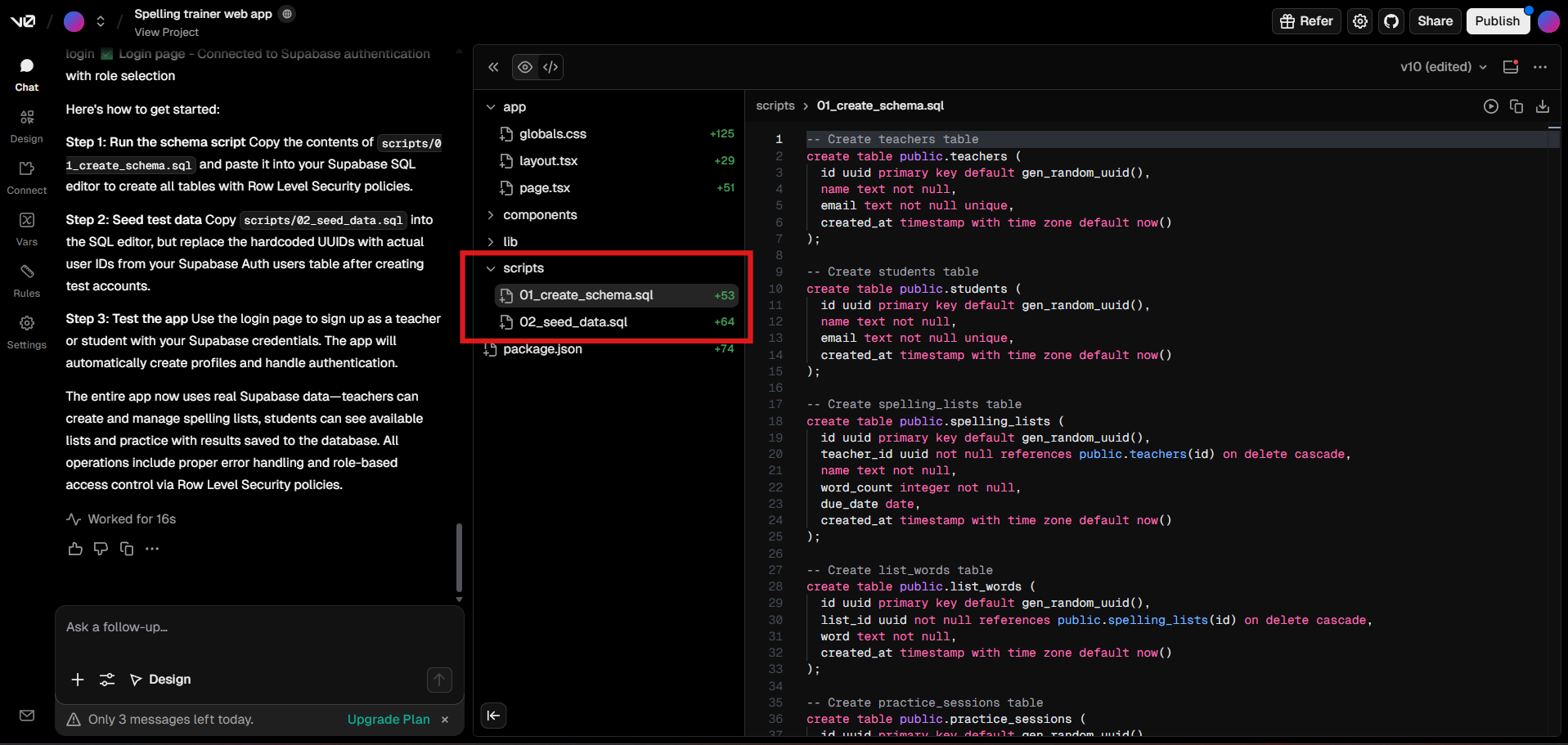
v0 by Vercel is a frontend code and UI generation tool for React and Next.js teams, not a full Base44 replacement. It helps generate screens, UI components, and frontend performance-friendly patterns, but you still need backend logic, authentication, data models, and deployment architecture.
Best for:
- React and Next.js teams
- Frontend generation
Not best for:
- Non-technical business users
- Full no-code internal tools
Pricing:
- Free: $0/month with $5 monthly credits, Vercel deployment, Design Mode, GitHub sync, and a 7-message/day limit.
- Team: $30/user/month.
- Business: $100/user/month.
- Enterprise: custom with SAML SSO, RBAC, SLAs, and training-data protections.
Code export / ownership:
v0 generates code that developers can use in their own projects.
Self-hosting / deployment:
v0 fits naturally with Vercel and modern frontend workflows, not self-hosted internal tool governance.
Enterprise features:
Enterprise supports SAML SSO, RBAC, support SLAs, and training-data protections.
Main limitation:
You still need to solve backend, permissions, authentication, file storage, and production architecture.
Short verdict:
Choose v0 if your main problem is frontend generation.
Replit - Best for Developer-Led Projects
Replit is a code-first cloud development environment with AI assistance, deployment, and collaboration. It fits teams that want more code control than Base44; Claude Code and other AI coding assistant workflows are adjacent options when the main need is editing existing code.

Best for:
- Developer-led applications
- Existing codebases
Not best for:
- Non-technical ops teams
- Simple internal dashboards where code maintenance is unwanted
Pricing:
- Starter: free, with daily Agent credits, built-in database, and publishing for 1 project.
- Core: $25/month or $20/month billed annually.
- Pro: $100/month or $95/month billed annually.
- Enterprise: custom with SSO/SAML, privacy controls, single-tenant environments, VPC peering, and support.
Code export / ownership:
Replit is code-first. Teams work directly with project files and normal development workflows.
Self-hosting / deployment:
Replit provides deployment options, including stronger enterprise infrastructure options, but it is still a cloud development and deployment environment.
Enterprise features:
Enterprise adds SSO/SAML, privacy controls, custom groups, single-tenant environments, VPC peering, and dedicated support.
Main limitation:
Replit gives control, but someone still needs to maintain and debug the app.
Short verdict:
Choose Replit when developers are involved and code control matters.
Glide - Best for Business Workflow Apps
Glide is strong for lightweight business applications, especially when the team starts from spreadsheets or structured data.

Best for:
- Spreadsheet-backed apps
- Field operations
Not best for:
- Complex backend logic
- Full code export
Pricing:
- Free plan available.
- Explorer: $19/month annually or $25/month monthly.
- Maker: $49/month annually or $60/month monthly.
Code export / ownership:
Glide is not code-export oriented. In practice, you are building inside Glide's managed environment.
Self-hosting / deployment:
Glide is cloud-based, so teams that require private infrastructure or self-hosting will need another option.
Enterprise features:
Glide supports business/team workflows and permissions.
Main limitation:
Glide becomes less suitable when teams need complex backend logic, strict infrastructure control, or deep code portability.
Short verdict:
Choose Glide for approachable business workflow apps.
Zite - Best for Non-Technical Business Apps
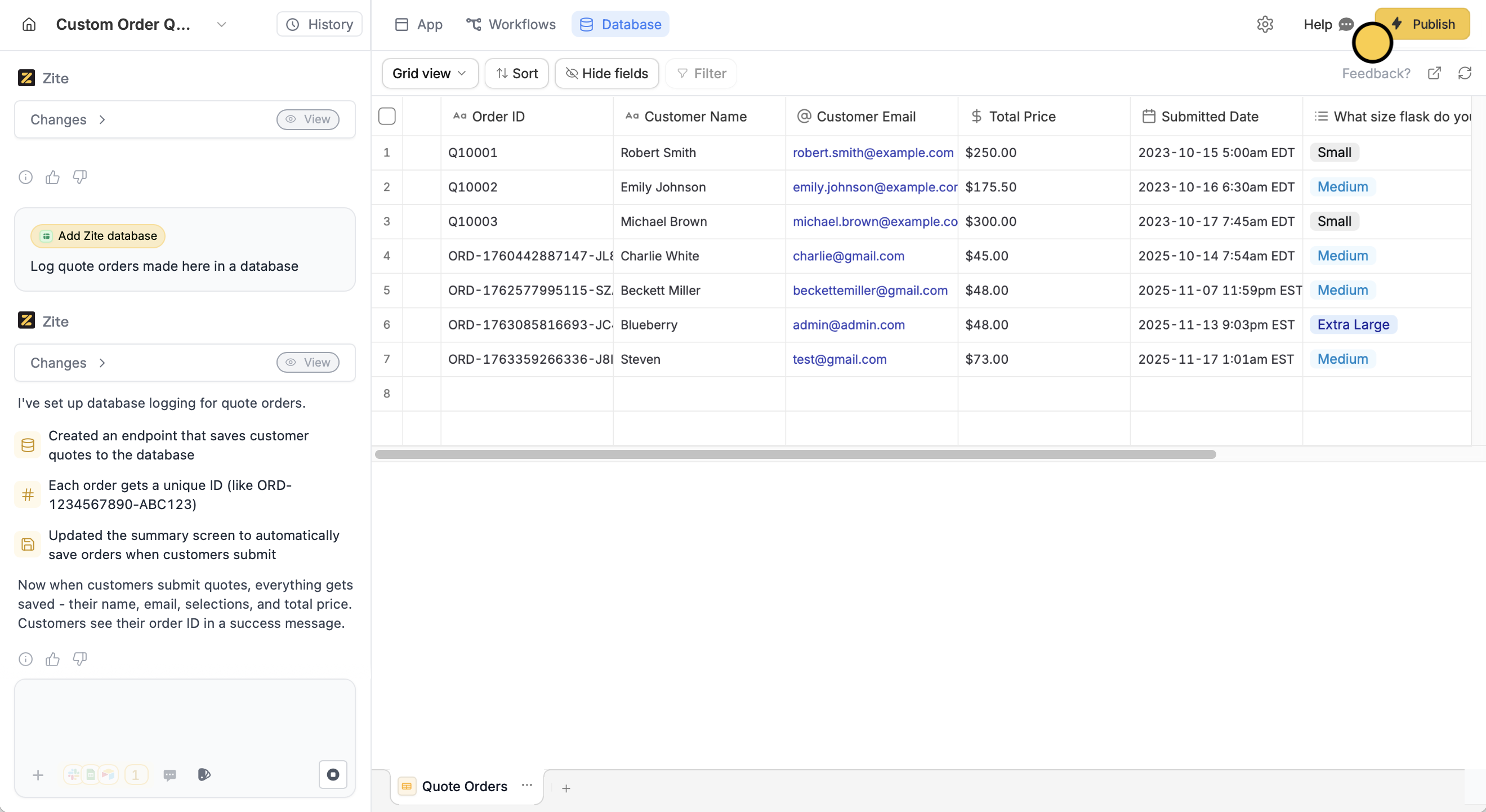
Zite helps non-technical teams build web apps, internal tools, and portals with built-in database capabilities and integrations like Airtable or Google Sheets.
Best for:
- Simple internal tools
- Portals
Not best for:
- Full code portability
- Developer-owned architecture
Pricing:
- Free: $0/month with limited credits, 5,000 database records, 1,000 workflow runs/month, unlimited users, and unlimited apps.
- Pro: $15/month billed annually.
- Business: $55/month billed annually.
Code export / ownership:
Zite says apps can be exported between Zite accounts, but the code does not currently run out of the box in an external environment.
Self-hosting / deployment:
Zite is hosted on AWS-powered infrastructure and is not the right fit if self-hosting is mandatory.
Enterprise features:
Zite includes custom domains, login authentication, granular permissions on higher plans, AI training opt-out on Business, and unlimited users across plans.
Main limitation:
Portability is the main concern.
Short verdict:
Choose Zite for quick business apps and portals.
Retool - Best for Enterprise Internal Tools
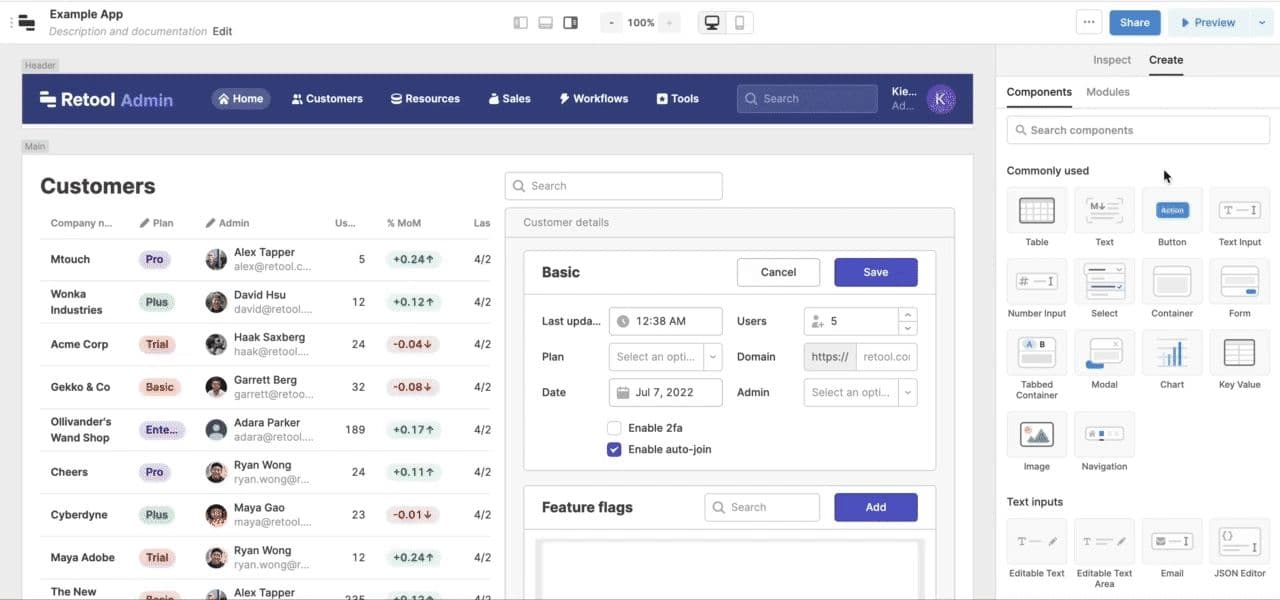
Retool is one of the most mature platforms for admin panels, support tools, database frontends, workflows, dashboards, and enterprise operations.
Best for:
- Enterprise internal tools
- Larger engineering and operations teams
Not best for:
- Small teams trying to minimize cost
- Consumer-facing MVPs
Pricing:
Retool has Free, Team, Business, and Enterprise plans. Cost depends on users and deployment. Business includes audit logging and richer permissions. Enterprise adds SSO, source control, observability, workspaces, APIs, workflow triggers, and support.
Code export / ownership:
Retool is a managed internal tool platform, not a code-export-first AI app generator.
Self-hosting / deployment:
Retool supports self-hosted deployment for enterprise/custom infrastructure scenarios.
Enterprise features:
Retool is strong in governance, permissions, integrations, and enterprise deployment.
Main limitation:
Retool can become expensive and operationally heavy, especially for smaller teams.
Short verdict:
Choose Retool if you need a mature enterprise internal tool platform and have the budget.
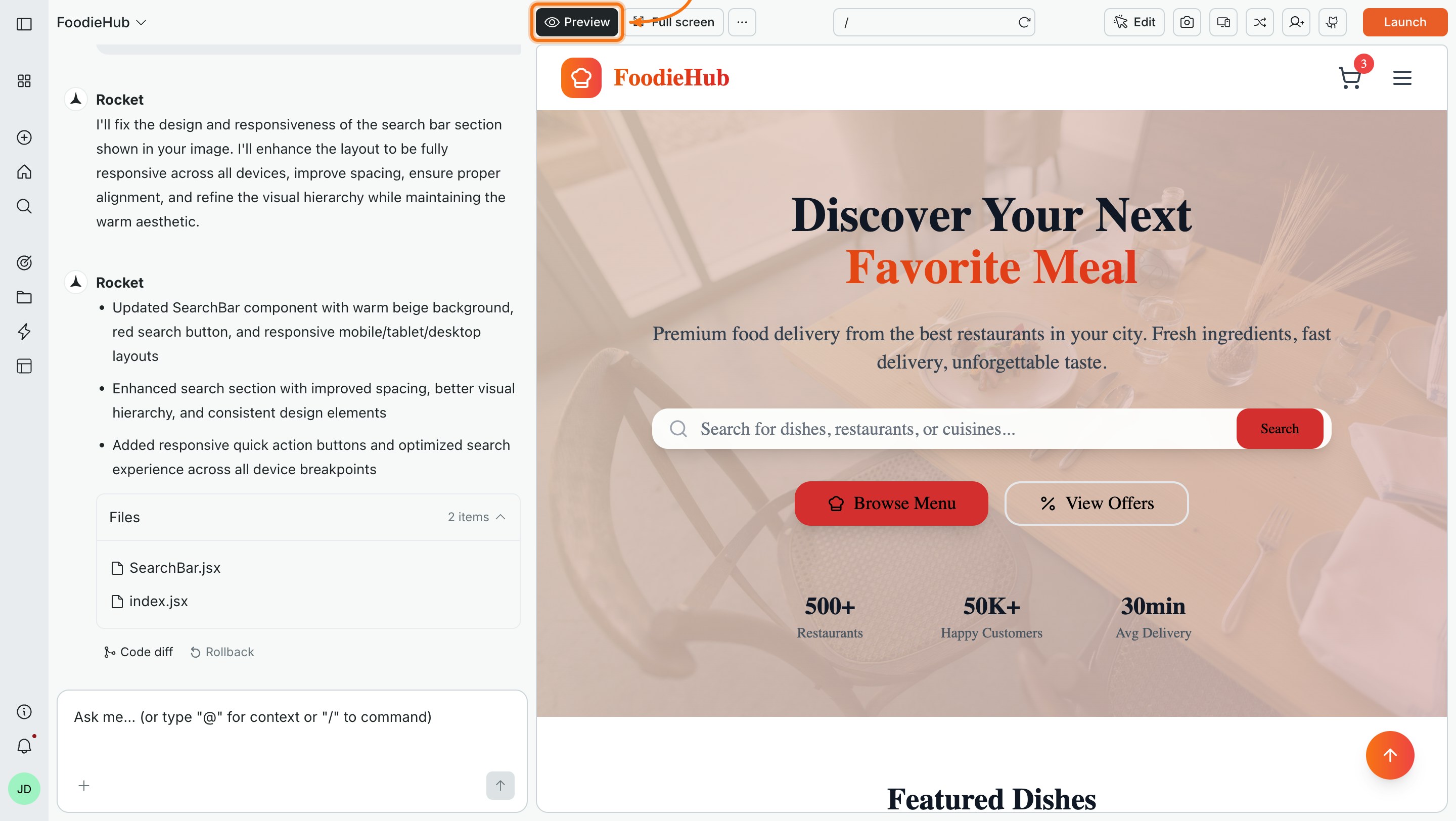
Rocket.new - Best for AI App Builder Workflows
Rocket.new is close to Base44 because it focuses on AI-assisted app creation rather than traditional low-code configuration.
Best for:
- AI app generation
- MVP workflows
Not best for:
- Strictly governed internal tools
- Self-hosted or private-network deployment
Pricing:
- Free: $0 with 20 one-time credits.
- Pro: $25/month with 100 credits/month.
- Rocket: $50/month with 250 credits/month.
- Booster: $250/month with 1,500 credits/month.
Code export / ownership:
Before using Rocket.new for a core business workflow, check what can be exported, what remains hosted, and how the app is maintained after generation.
Self-hosting / deployment:
Rocket.new focuses on hosted AI app building, not self-hosted internal tool deployment.
Enterprise features:
Booster and sales-assisted options cover SSO, data localisation, premium support, and onboarding assistance.
Main limitation:
Regulated teams need more detail on audit logs, deployment boundaries, data localisation, and security documentation.
Short verdict:
Choose Rocket.new if you want another prompt-first AI builder to compare with Base44.
Appsmith - Best Open-Source Internal Tool Builder
Appsmith is one of the strongest open-source alternatives for internal tools, especially when ownership and self-hosting matter more than prompt-first generation.

Best for:
- Open-source internal tools
- Self-hosted dashboards
Not best for:
- Fully autonomous AI app generation
- Consumer app builders
Pricing:
- Free: $0, up to 5 cloud users, 5 workspaces, Git version control, Google SSO, standard roles, and public apps.
- Business: $15/month per user.
- Enterprise: $2,500/month for 100 users.
Code export / ownership:
Appsmith's open-source model and Git workflows give teams stronger ownership than many closed no-code platforms.
Self-hosting / deployment:
Self-hosting is a core Appsmith strength. Enterprise options include managed hosting and air-gapped add-ons.
Enterprise features:
Enterprise includes SSO, SCIM, CI/CD, private app embedding, custom integrations, SLAs, audit logs, granular permissions, and SOC 2 Type II compliance.
Main limitation:
Appsmith is more low-code/developer-oriented than prompt-first.
Short verdict:
Choose Appsmith if open-source control and self-hosting matter more than autonomous app generation.
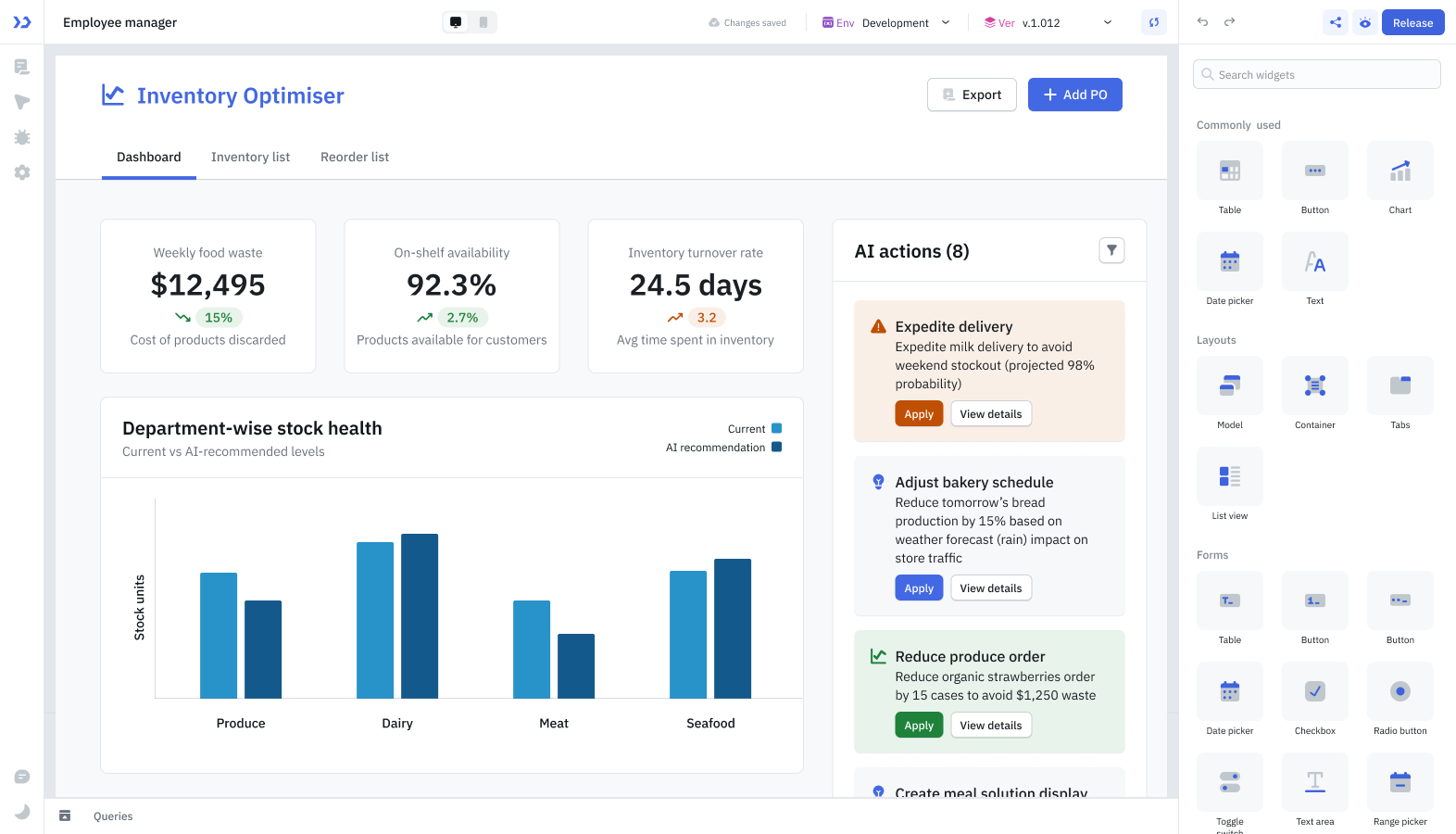
ToolJet - Best Open-Source Self-Hosted Option
ToolJet is another strong open-source no-code/low-code platform for internal tools, especially when self-hosting and cost control matter.
Best for:
- Open-source internal tools
- Self-hosted environments
Not best for:
- Prompt-first consumer app creation
- Highly polished autonomous AI building
Pricing:
- Free: $0 per builder/month, 2 builders, 50 end users, 2 apps, 100 AI credits.
- Starter: $19 per builder/month.
- Pro: $79 per builder/month.
- Team: $199 per builder/month, with unlimited end users/apps, SSO, custom groups, white labeling, custom domain, audit logs, and Git sync.
- Enterprise: custom, with SCIM, custom AI credits, retention, SLAs, and support.
Code export / ownership:
ToolJet's open-source model gives teams stronger infrastructure ownership than closed managed app builders.
Self-hosting / deployment:
Self-hosting is a core ToolJet use case.
Enterprise features:
ToolJet provides SSO, audit logs, custom user groups, Git sync, SCIM, white labeling, and support depending on plan.
Main limitation:
The AI app-building workflow is less polished than Base44, Lovable, or Bolt.new.
Short verdict:
Choose ToolJet if self-hosting and open-source control matter more than prompt-first generation speed.
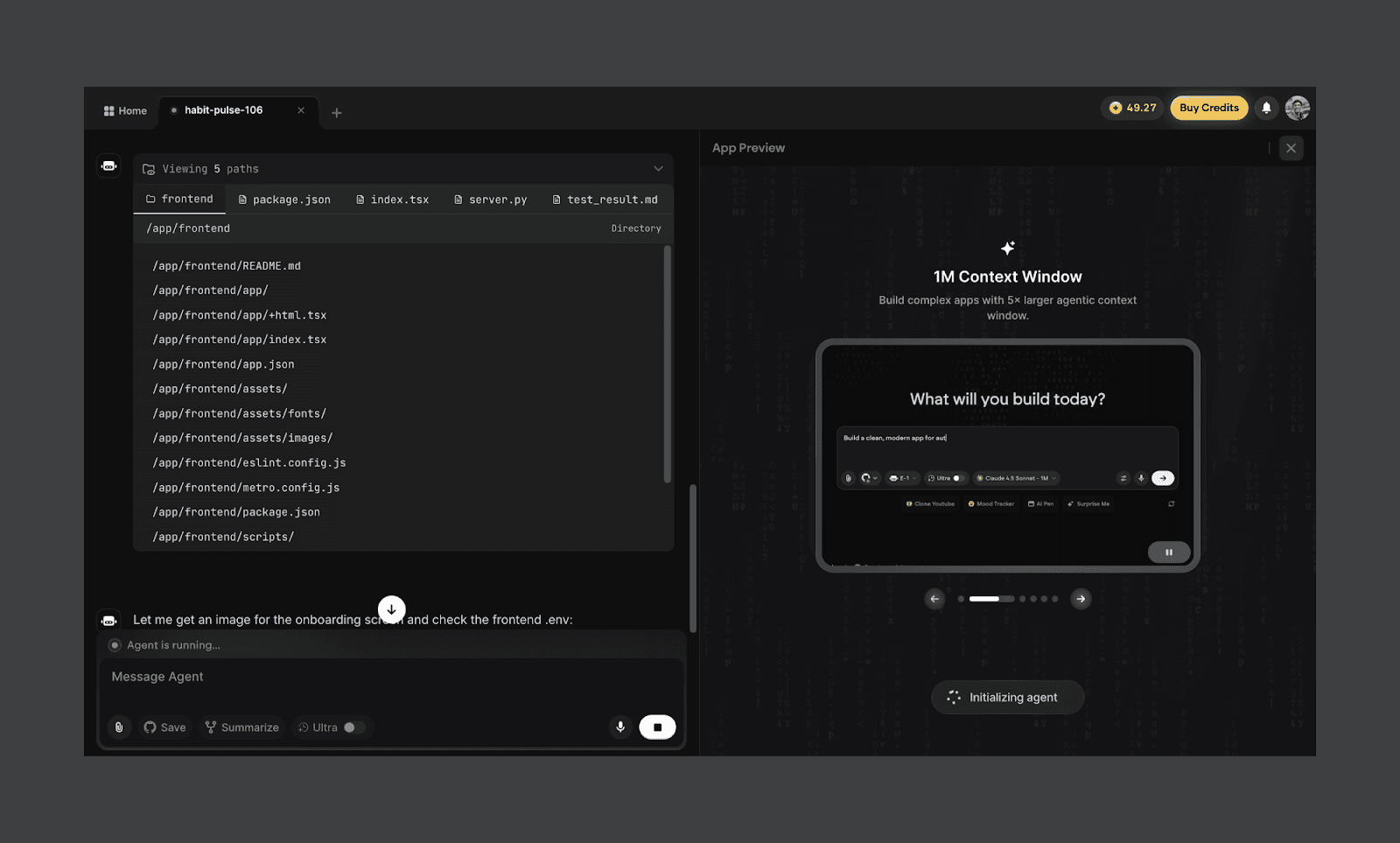
Emergent - Best for Autonomous AI App Building
Emergent positions itself as an autonomous AI app builder for creating production-ready apps through conversation.
Best for:
- Autonomous AI building
- Web and mobile experiences
Not best for:
- Conservative enterprise teams without a security review
- Self-hosted regulated internal tools
Pricing:
- Free: $0/month, 10 monthly credits, core platform features, web and mobile experiences.
- Standard: $20/month annual, 100 credits/month, private project hosting, GitHub integration, fork tasks.
- Pro: $200/month annual, 750 credits/month, 1M context window, custom AI agents, high-performance computing, priority support.
Code export / ownership:
GitHub integration is available on paid plans. Check what moves into GitHub and what remains tied to Emergent's platform.
Self-hosting / deployment:
Emergent is built around hosted autonomous app building, not self-hosted internal tool deployment.
Enterprise features:
The site shows SOC 2 Type I. Regulated teams still need clear answers on access control, audit logging, data residency, and deployment details.
Main limitation:
Emergent has less enterprise proof than older internal tooling products.
Short verdict:
Choose Emergent if you want a more autonomous AI app builder.
Base44 vs UI Bakery: Which Should You Choose?
Base44 and UI Bakery overlap only partly. Base44 is closer to a prompt-first app builder. It also has an ownership story: its pricing article says users own the IP, and paid plans include GitHub integration and in-app code edits.
UI Bakery is built around secure internal software: dashboards, admin panels, CRUD apps, portals, approval workflows, and tools connected to existing databases or APIs. It becomes more relevant when the app needs user roles, audit logs, SSO, backend logic, workflow automation, and private deployment.
Choose Base44 if you want fast prompt-first app generation for prototypes or simple apps and are comfortable with the platform's pricing and portability model.
Choose UI Bakery if you need secure internal tools, existing database/API connections, role-based access, audit logs, self-hosted deployment, and more control over production workflows.
Base44 Alternatives for Regulated Industries
Regulated teams should not evaluate AI app builders only by generation speed. In healthcare, fintech, insurance, logistics, and other sensitive industries, the harder questions are about data access, auditability, private deployment, and vendor security.
TechRadar reported on July 30, 2025 that Wiz found a Base44 vulnerability involving exposed API endpoints. Wix fixed it within 24 hours and said it found no signs of abuse. The point is not to panic; it is to review security architecture before moving sensitive workflows into any AI app builder.
A healthcare operations team could use UI Bakery to build a patient intake or claims-review dashboard connected to internal databases, with role-based access and audit logs. That does not automatically make the app HIPAA compliant. Compliance depends on configuration, infrastructure, contracts, data handling, and internal policies.
Free and Open-Source Base44 Alternatives
Searches for a Base44 free alternative usually come from two groups: people testing AI app builders without paying, and teams avoiding lock-in through open-source or self-hosted tools. For free prototyping, compare Bolt.new, Lovable, Replit, Zite, and Emergent. For open-source control, start with Appsmith and ToolJet. For internal tool workflows, UI Bakery's free plans test apps, data connections, release history, hosted database, and public/private apps.
Free plans are good for evaluation. Production internal tools usually need paid features like SSO, RBAC, audit logs, self-hosting, support, or private deployment.
How to Choose the Right Base44 Alternative
- Internal tool or customer-facing app? Internal tools: UI Bakery, Retool, Appsmith, ToolJet. MVPs: Lovable, Bolt.new, Rocket.new, Emergent, Replit.
- Need self-hosting or private deployment? Start with UI Bakery, Appsmith, ToolJet, Retool, or Superblocks.
- Need code export or GitHub ownership? Look at Lovable, Replit, v0, Appsmith, and ToolJet. If app export is enough, UI Bakery may still fit.
- Need existing databases? UI Bakery, Retool, Appsmith, and ToolJet are stronger for PostgreSQL, MySQL, REST API, GraphQL, Google Sheets, or internal services.
- In healthcare, fintech, or another regulated industry? Prioritize SSO, RBAC, audit logs, self-hosting, data residency, and vendor security documentation.
- Developers involved? Replit, Lovable, v0, and Appsmith may work well. For business-owned workflows, UI Bakery or Glide may be easier.
- Which pricing model scales? Compare key features, advanced features, web tools, specialized tools, AI models, paid plans, and usage-based pricing before relying on claims about a powerful no code platform or democratizing app creation.
Ready to Move Away From Base44? Start with UI Bakery
If you are building secure internal tools for healthcare, fintech, support, logistics, finance, or operations, explore UI Bakery self-hosted deployment or start with internal tool templates.
If you are comparing options, start with UI Bakery's free plan: connect a database, build a CRUD app, add roles, and check deployment.
If you mainly need a fast consumer-facing MVP, compare Lovable, Bolt.new, Rocket.new, and Emergent before choosing.
Next step
Planning a HIPAA-sensitive internal app?
Use the checklist above to map data flow, roles, audit events, vendors, and deployment decisions before the first production workflow ships.
Healthcare operations example
Action Behavior Centers scaled internal operations across clinics with UI Bakery
For a real operational example, review UI Bakery customer stories and healthcare operations patterns.
5,000+users supported in the customer story
400+clinics mentioned in the case study
What is the best Base44 alternative in 2026?
The best Base44 alternative depends on the app. UI Bakery fits secure internal tools. Lovable fits full-stack MVPs with GitHub sync. Bolt.new is useful for prototypes, v0 for frontend generation, and Replit for code-first workflows.
What is the best free Base44 alternative?
For open-source internal tools, ToolJet and Appsmith are strong free alternatives. For prompt-first prototyping, Bolt.new, Lovable, Replit, Zite, and Emergent have free entry points. UI Bakery's free plans are useful for testing internal tools with data connections.
What happened to Base44 after Wix bought it?
Wix announced the Base44 acquisition on June 18, 2025. TechCrunch reported the deal at about $80 million. Base44 became part of Wix's AI app creation strategy.
Is Base44 shutting down?
There is no confirmed public shutdown signal from the sources used here. The better question is whether Base44's pricing, ownership model, deployment options, and security controls fit your app.
What is the difference between Base44 and UI Bakery?
Base44 is a prompt-first AI app builder. UI Bakery focuses on secure internal tools and data-connected business apps. Choose Base44 for simple apps and prototypes. Choose UI Bakery for database connections, backend logic, RBAC, audit logs, SSO, self-hosting, and deployment control.
Can I export code from Base44 alternatives?
It depends on the tool. Base44 states that users own the IP/output and includes GitHub integration on Builder and higher plans, but runtime portability deserves a close look. Lovable supports GitHub sync, v0 generates frontend code, Replit is code-first, Appsmith and ToolJet are open-source/self-hosted, and UI Bakery supports app export on paid cloud/self-hosted plans.
Which Base44 alternative is best for healthcare or regulated industries?
Start with tools that support self-hosting or private deployment, RBAC, audit logs, SSO/SAML, and clear security documentation. UI Bakery is a strong fit for healthcare, fintech, and operations; Retool, Appsmith, ToolJet, and Superblocks are also relevant.
Which Base44 alternatives connect to existing databases?
UI Bakery, Retool, Appsmith, and ToolJet are strong options for internal tools that need PostgreSQL, MySQL, REST APIs, GraphQL, Google Sheets, or internal service connections.



"The UI Bakery platform offers a cost-effective approach to creating applications. With UI Bakery, you can achieve your app development goals without breaking the bank."

"Before switching to UI Bakery we developed a number of apps within the Retool system. The Retool system was good but ultimately did not have the flexibility and feature sets that we required."
Check the Story