

Automation in Construction: Best Tools, Benefits, and Real-World Use Cases
%201.png)
Updated:
March 26, 2026
Automation in construction refers to the use of digital systems, AI platforms, and workflow tools to streamline project management, payments, procurement, payroll, and operational processes. Today, construction automation helps companies reduce manual work, eliminate delays, and improve collaboration across teams.
By implementing construction workflow automation and AI-driven solutions, contractors can accelerate project delivery, improve financial visibility, and maintain higher accuracy in planning and execution.
Top picks: automation tools in construction
- Procore – best for end-to-end construction workflow automation.
- Autodesk Construction Cloud – best for design-to-build automation.
- UI Bakery AI App Generator – best for custom workflow automation construction and internal operations.
- SupplyNet AI – best for AI procurement automation construction.
- STACK – best for takeoff automation software for construction.
1. Procore
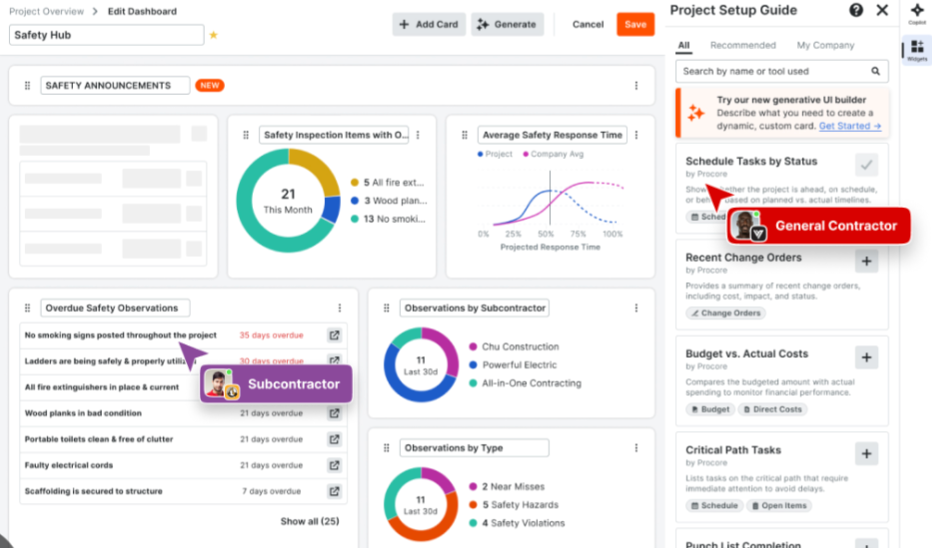
Procore is one of the most widely adopted construction automation software platforms, enabling contractors to manage projects, financial workflows, and collaboration from a single environment. The platform supports construction payment automation tools, document workflows, and reporting automation to reduce administrative overhead.
With real-time data synchronization, teams gain improved visibility into project progress and financial performance. Procore is commonly used for construction app automation and compliance tracking across large-scale projects.
Key strengths:
- Comprehensive construction workflow automation features.
- Built-in project financial management.
- Mobile-friendly collaboration tools.
- Strong integrations with accounting systems.
Pros:
- Scales well for enterprise contractors.
- Centralized project documentation.
- Strong reporting capabilities.
- Supports construction payment automation platform workflows.
Cons:
- Higher learning curve.
- Pricing may be complex for smaller firms.
- Requires structured onboarding.
Best for: full-cycle construction workflow automation.
2. Autodesk Construction Cloud
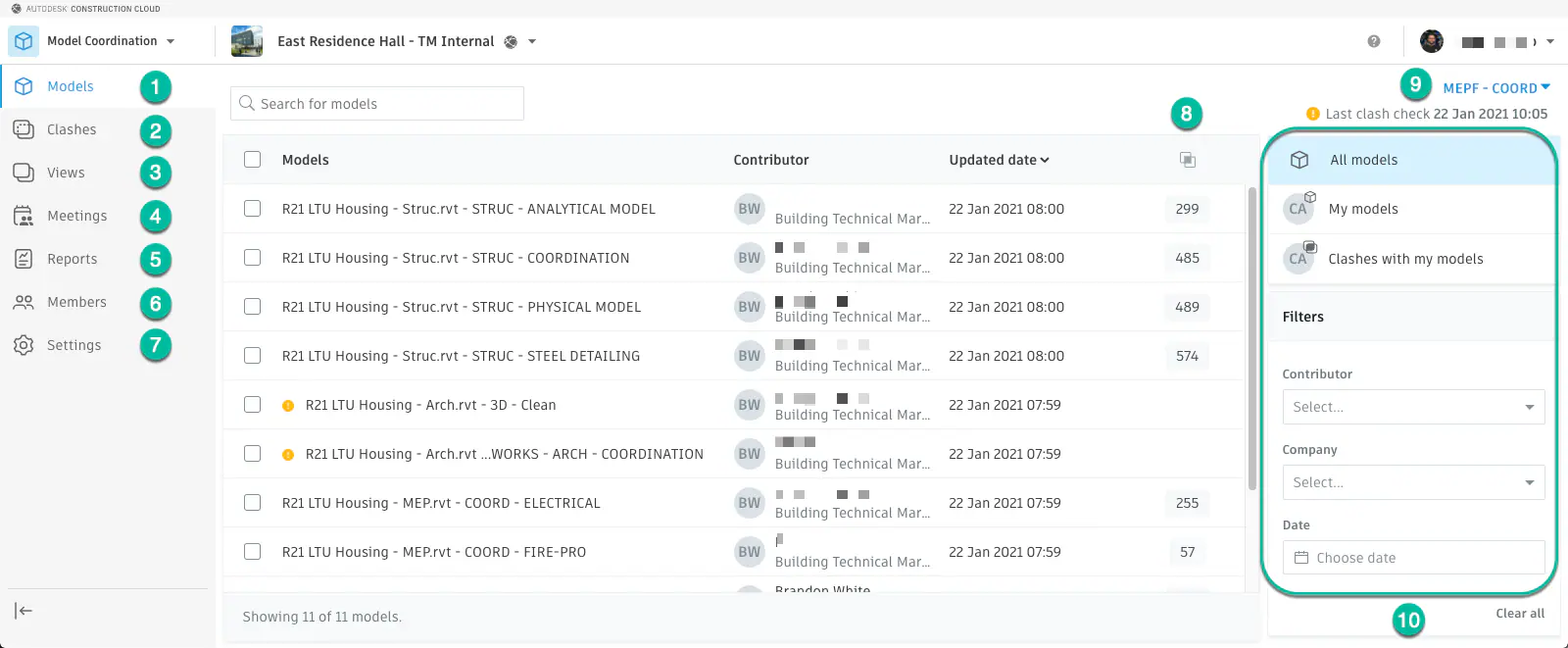
Autodesk Construction Cloud connects BIM, project management, and analytics into a unified automation environment. It supports AI automation for construction by enabling predictive insights and automated risk detection during project execution.
Teams benefit from improved construction workflow automation AI capabilities that align planning with real-time field data. The platform also assists in document workflows, safety compliance automation, and quality management.
Key strengths
- Strong BIM and design integration.
- Advanced analytics for construction AI software supports automation.
- Cross-team collaboration tools.
- Automated issue tracking.
Pros:
- Improves coordination across stakeholders.
- Enhances risk forecasting.
- Supports digital twin workflows.
- Industry-recognized ecosystem.
Cons:
- Can be resource-intensive.
- Requires skilled implementation.
- Subscription costs may add up.
Best for: integrated automation across design, planning, and execution.
3. UI Bakery
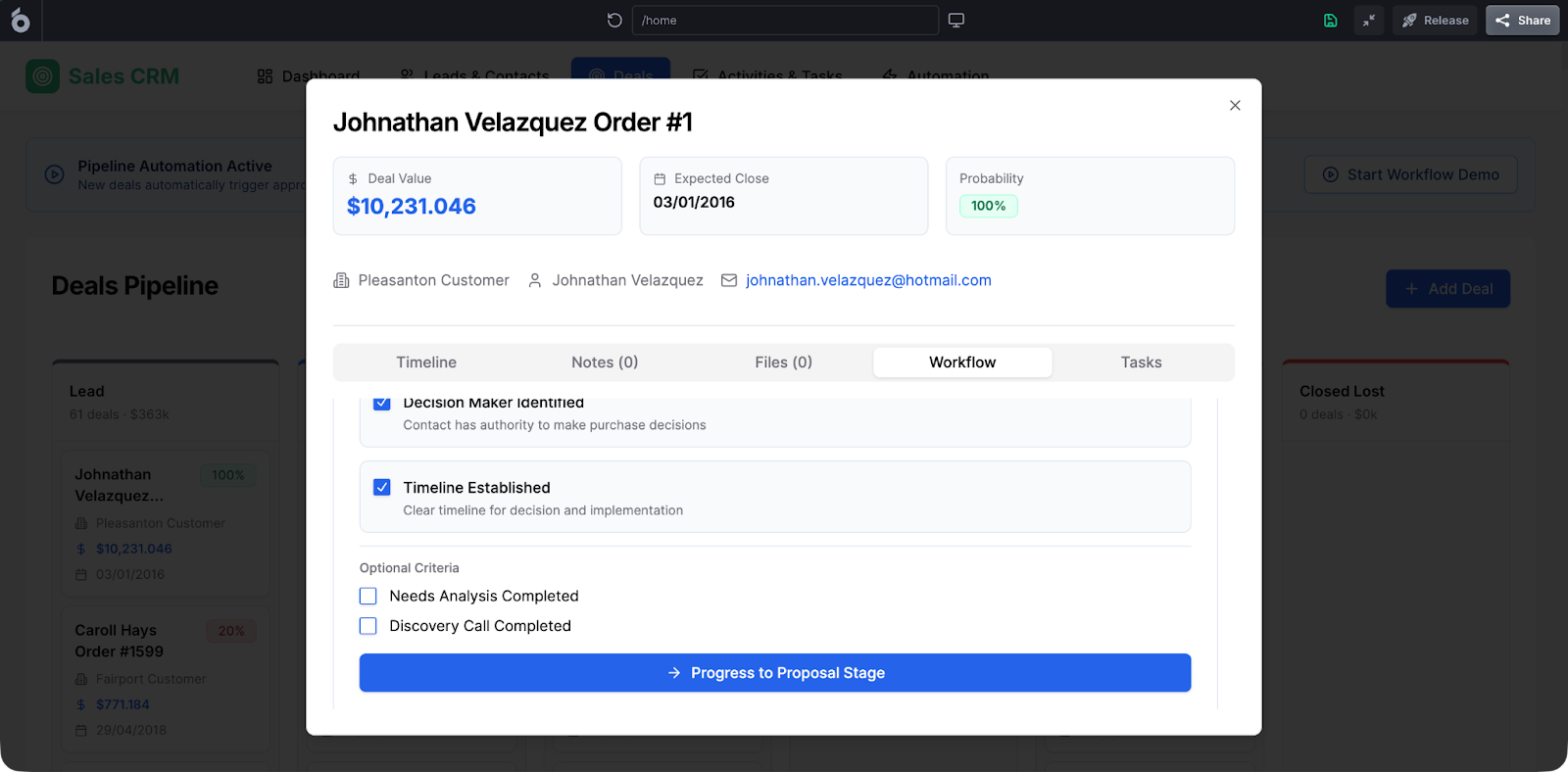
UI Bakery enables construction companies to build tailored internal applications for construction workflow automation, including dashboards, approval flows, and payment tracking tools. Instead of relying solely on off-the-shelf SaaS, teams can create custom systems for construction payroll automation software, procurement monitoring, and reporting.
The platform supports construction payment automation processes by connecting directly to databases and APIs. This flexibility makes it suitable for managing complex operational workflows such as loan approvals, subcontractor coordination, and site reporting.
Key strengths:
- Customizable workflow automation construction apps.
- AI-driven internal tool generation.
- Supports integrations with ERP, CRM, and financial systems.
- Enables automation for construction operations at scale.
Pros:
- High flexibility for unique construction workflows.
- Faster deployment of internal systems.
- Supports self-hosting for data control.
- Helps build construction loan automation software tools.
Cons:
- Requires planning of internal processes.
- Less focused on out-of-the-box construction templates.
- Needs stakeholder alignment for adoption.
Best for: custom workflow automation construction and operational tools.
4. SupplyNet AI
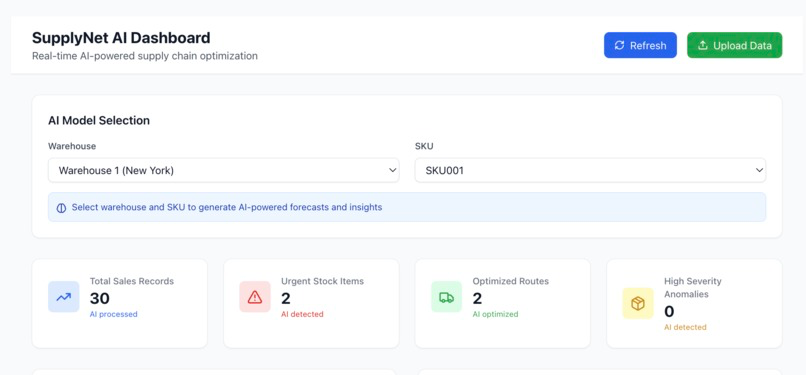
SupplyNet AI focuses on automating supplier sourcing, procurement approvals, and inventory planning. As a specialized AI construction automation software, it uses predictive analytics to optimize material procurement and reduce project delays.
The platform helps automate purchase orders, vendor selection, and logistics workflows, supporting efficient construction workflow automation AI strategies. Construction companies can gain better control over costs and supplier performance.
Key strengths:
- AI-driven procurement analytics.
- Vendor performance automation.
- Inventory forecasting.
- Contract lifecycle tracking.
Pros:
- Improves procurement transparency.
- Reduces manual sourcing tasks.
- Supports supply chain risk management.
- Enhances cost predictability.
Cons:
- Niche focus on procurement.
- Integration setup required.
- May not cover broader project workflows.
Best for: AI procurement automation construction.
5. STACK
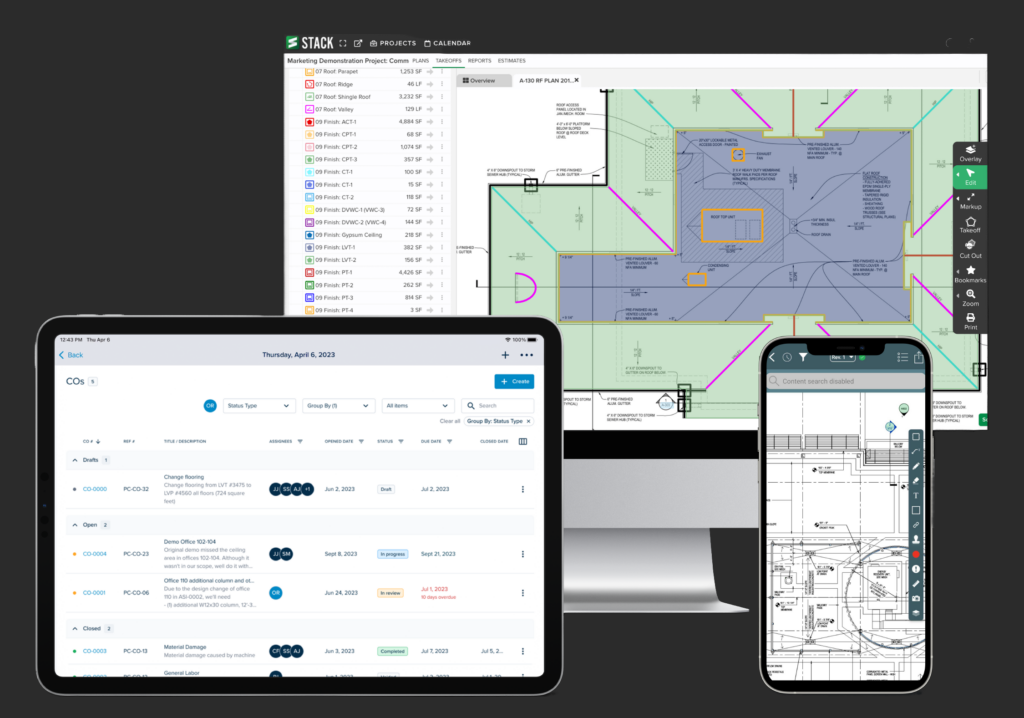
STACK is designed to automate digital takeoffs, estimation workflows, and bid preparation. As a leading takeoff automation software for construction, it reduces errors in quantity calculations and speeds up pre-construction planning. The platform integrates with project management tools to enable seamless construction workflow automation from estimation to execution. This supports better budgeting accuracy and improved bidding efficiency.
Key strengths:
- Digital takeoff automation.
- Estimation workflow optimization.
- Cloud collaboration features.
- Integration with project tools.
Pros:
- Faster bid preparation.
- Improved estimation accuracy.
- User-friendly interface.
- Supports remote teamwork.
Cons:
- Limited operational automation features.
- Focused mainly on pre-construction.
- Requires consistent data updates.
Best for: takeoff automation software for construction.
Comparison table: construction automation tools
Final thoughts
The rise of construction automation is transforming how projects are planned, financed, and executed. From construction payroll automation software to advanced construction payment automation platform solutions, companies are increasingly shifting toward digital operational models.
Next step
Planning a HIPAA-sensitive internal app?
Use the checklist above to map data flow, roles, audit events, vendors, and deployment decisions before the first production workflow ships.
Healthcare operations example
Action Behavior Centers scaled internal operations across clinics with UI Bakery
For a real operational example, review UI Bakery customer stories and healthcare operations patterns.
5,000+users supported in the customer story
400+clinics mentioned in the case study
FAQ
What is automation in construction?
Automation in construction refers to using digital platforms, AI systems, and workflow tools to streamline processes such as planning, procurement, payments, and reporting.
What is integrated automation in construction?
Integrated automation combines project management, financial workflows, and operational tools into a unified system that improves coordination and data accuracy.
How to leverage automation in construction?
Companies can leverage automation by implementing digital workflows, adopting AI procurement tools, and building custom internal apps to automate repetitive operational tasks.
How construction AI software supports automation?
AI construction platforms support automation by providing predictive analytics, automated approvals, intelligent procurement recommendations, and real-time performance monitoring.
Why is construction automation beneficial?
Automation reduces administrative overhead, improves financial control, accelerates project delivery, and enhances collaboration between field and office teams.
What are construction payment automation tools used for?
These tools help automate invoice approvals, subcontractor payments, compliance tracking, and financial reporting across construction projects.
.jpg)




"The UI Bakery platform offers a cost-effective approach to creating applications. With UI Bakery, you can achieve your app development goals without breaking the bank."

"Before switching to UI Bakery we developed a number of apps within the Retool system. The Retool system was good but ultimately did not have the flexibility and feature sets that we required."
Check the Story