

Vercel vs Supabase (2026): Features, Pricing, and Key Differences

Updated:
March 10, 2026
Vercel and Supabase are often compared when developers are building modern full-stack applications, but they solve different problems. Vercel is a frontend deployment platform optimized for frameworks like Next.js and React, while Supabase is an open-source Backend-as-a-Service built on Postgres. In 2026, many teams use Vercel for frontend infrastructure and Supabase for backend services such as databases, authentication, and APIs.
What is Vercel?
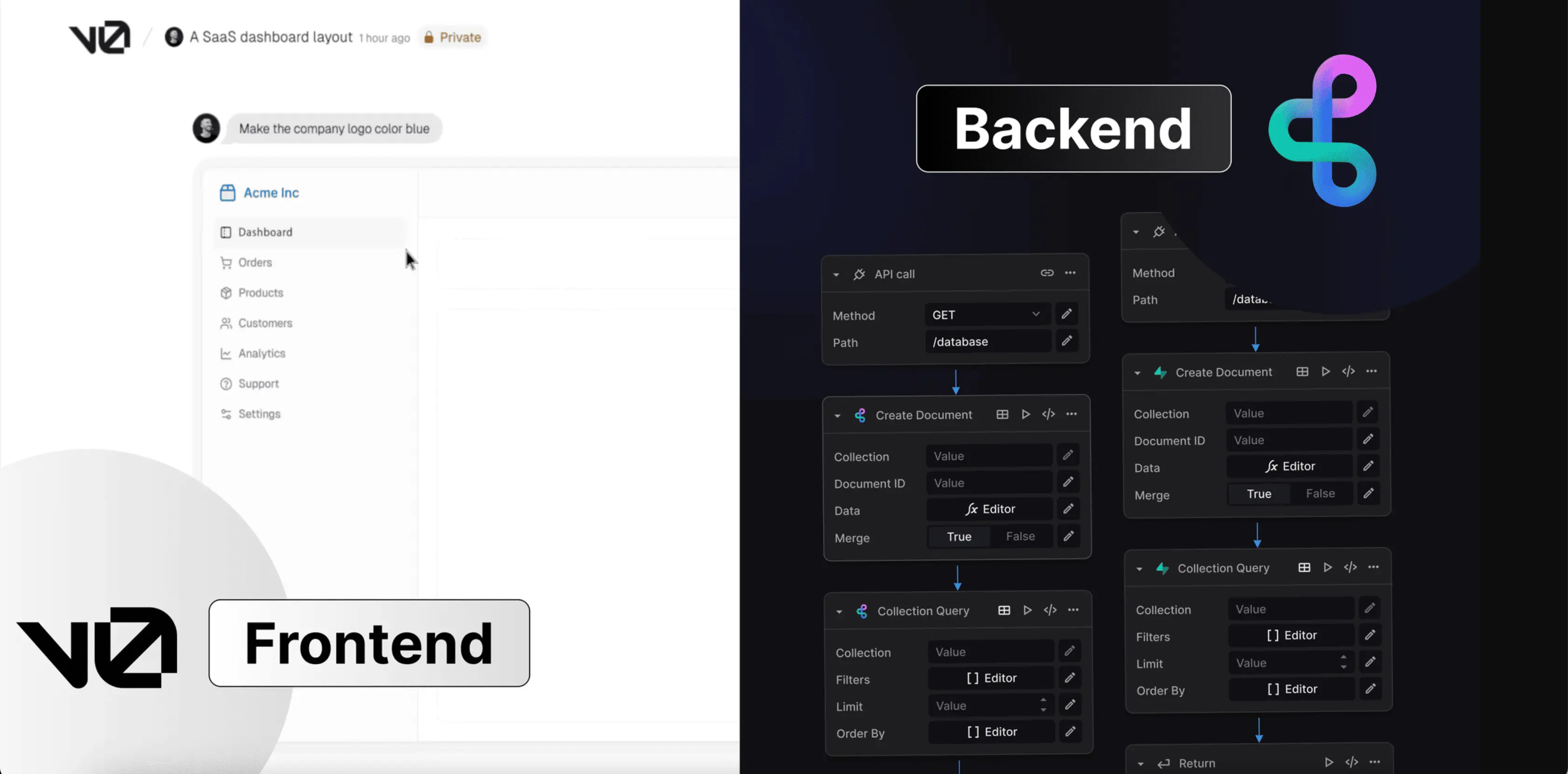
Vercel is a frontend deployment platform designed for high-performance web applications. It provides serverless infrastructure, global edge delivery, and seamless deployments for modern frameworks like Next.js, React, and Astro.
Key features:
- Zero-config CI/CD: Connect your GitHub repo and deploy automatically.
- Edge Functions & Middleware: Ultra-fast serverless logic deployed globally.
- Preview Deployments: Instant previews for every git push or PR.
- Framework Integrations: Optimized for Next.js but supports React, Svelte, Astro, Nuxt, etc.
- Vercel AI SDK (2025): Native support for AI workflows including model streaming, RAG, and edge inference.
Use cases:
- Marketing websites
- SaaS frontends
- AI chat UIs and dashboards
- Landing pages with edge personalization
What is Supabase?
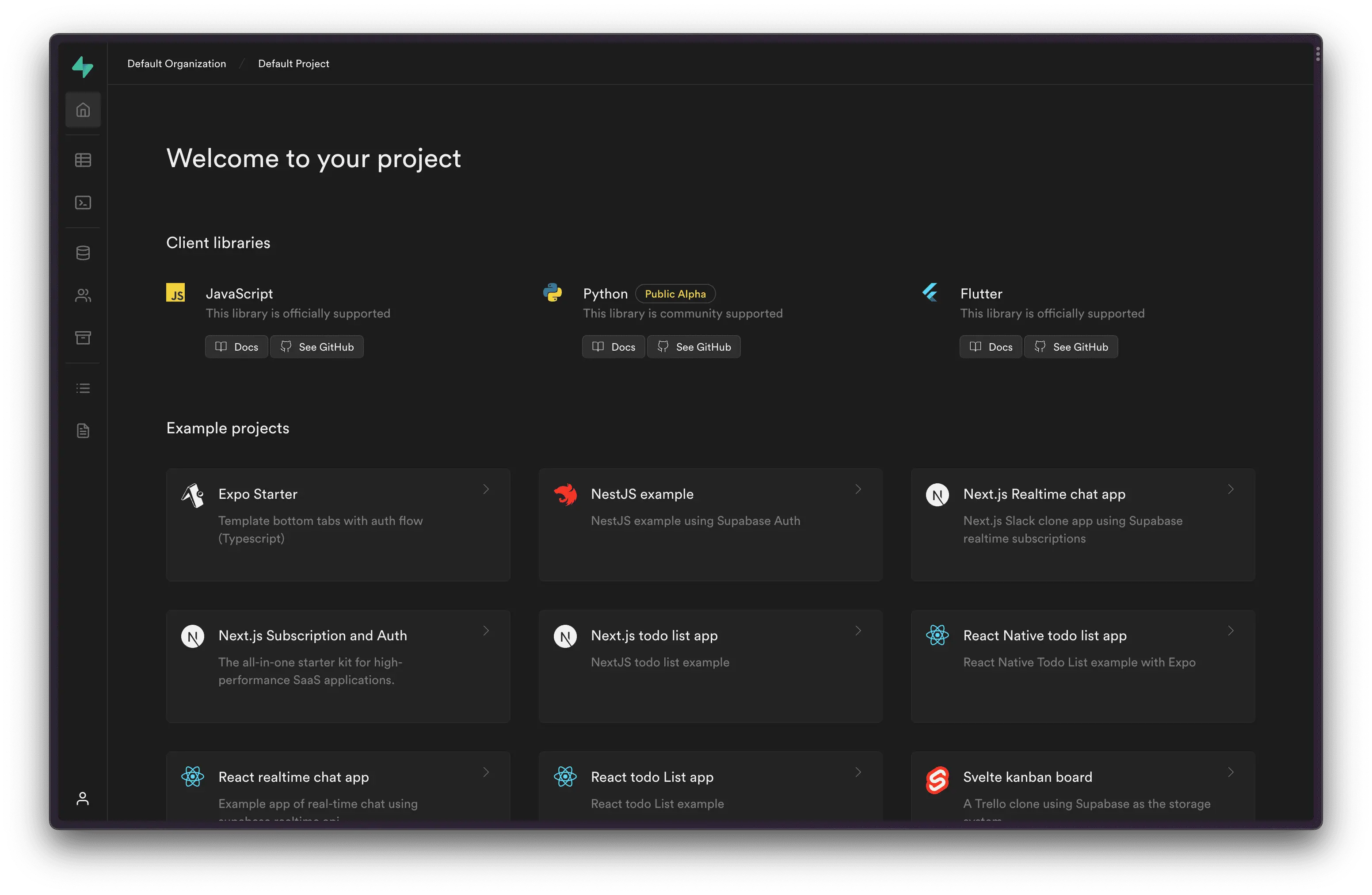
Supabase is an open-source Backend-as-a-Service built on PostgreSQL. It provides a fully managed database, authentication, storage, and APIs, allowing developers to build backend infrastructure without managing servers.
Key features:
- Hosted Postgres: Full-featured SQL database with row-level security.
- Auth & Policies: Built-in support for OAuth, magic links, and policy-based access.
- Real-time: WebSocket-powered listeners on table changes.
- Edge Functions: Lightweight backend logic deployable to Deno-based runtimes.
- Storage: Upload and serve files securely with built-in storage buckets.
- Supabase Studio: Admin dashboard for managing schema, policies, and logs.
Use cases:
- Backend for mobile or web apps
- Realtime chat apps and dashboards
- Internal tooling with instant DB setup
- AI inference logging and feedback collection
When to use Vercel
Choose Vercel when:
- You’re building a frontend-first app with Next.js or React.
- You need instant previews for every pull request.
- You want edge performance for global audiences.
- Your backend is already hosted elsewhere (Supabase, Firebase, Hasura, etc.).
- You’re deploying AI UIs and using Vercel’s AI SDK.
✅ Perfect pairing: Vercel for frontend + Supabase or UI Bakery as backend/internal tools.
When to use Supabase
Choose Supabase when:
- You want an instant backend with a Postgres database.
- You need real-time subscriptions, such as for dashboards or chats.
- You want to skip writing backend boilerplate (auth, DB, API).
- You want to self-host for compliance or cost reasons.
- You’re building mobile, IoT, or hybrid apps with full backend control.
✅ Perfect pairing: Supabase as backend + UI Bakery for building internal UIs.
How UI Bakery complements both
Whether you choose Vercel or Supabase, UI Bakery is an AI-powered internal tool builder that helps teams create dashboards, admin panels, and CRUD applications on top of Supabase databases or APIs deployed on Vercel.
Vercel or Supabase: Which one should you choose?
Ultimately, the choice depends on your stack:
- Use Vercel when you’re frontend-focused and need high-performance deployments.
- Use Supabase when you want a fully-managed backend with built-in features and open-source flexibility.
- Use both when building full-stack apps: Vercel for the UI, Supabase for the logic.
And if you're building internal tools, CRUD apps, or data dashboards, consider skipping the manual UI work and using UI Bakery.
Final thoughts
In 2026, many full-stack applications combine Vercel for frontend deployment and Supabase for backend infrastructure. This architecture allows teams to scale frontend performance while maintaining a flexible, Postgres-based backend.
FAQ
What is the difference between Vercel and Supabase?
Vercel is a frontend deployment platform optimized for frameworks like Next.js, while Supabase is a Backend-as-a-Service that provides a Postgres database, authentication, storage, and APIs.
Can you use Vercel with Supabase?
Yes. Many developers deploy their frontend applications on Vercel while using Supabase for backend services such as databases, authentication, and real-time APIs.
Is Supabase a replacement for Vercel?
No. Supabase handles backend infrastructure, while Vercel focuses on frontend hosting and deployment. They are often used together in modern full-stack architectures.
Is Supabase free to use?
Supabase offers a free tier with limited database resources. Paid plans scale based on database size, bandwidth, and compute usage.
When should you choose Vercel instead of Supabase?
Choose Vercel when you need fast frontend deployments and edge performance for frameworks like Next.js or React.
Next step
Planning a HIPAA-sensitive internal app?
Use the checklist above to map data flow, roles, audit events, vendors, and deployment decisions before the first production workflow ships.
Healthcare operations example
Action Behavior Centers scaled internal operations across clinics with UI Bakery
For a real operational example, review UI Bakery customer stories and healthcare operations patterns.
5,000+users supported in the customer story
400+clinics mentioned in the case study





"The UI Bakery platform offers a cost-effective approach to creating applications. With UI Bakery, you can achieve your app development goals without breaking the bank."

"Before switching to UI Bakery we developed a number of apps within the Retool system. The Retool system was good but ultimately did not have the flexibility and feature sets that we required."
Check the Story