

Best CRM for Healthcare in 2026 List: Top Healthcare CRM Software Compared

Updated:
March 13, 2026
The best CRM for healthcare in 2026 includes platforms like Salesforce Health Cloud, Zoho CRM for Healthcare, UI Bakery AI App Generator, HubSpot CRM, and Creatio Healthcare. These healthcare CRM solutions help hospitals, clinics, and medical startups manage patient relationships, automate workflows, improve data visibility, and comply with industry regulations.
Healthcare organizations increasingly rely on healthcare CRM software to streamline operations, personalize patient engagement, and unify fragmented data systems. Choosing the right CRM software for healthcare can directly impact operational efficiency, patient satisfaction, and long-term growth.
Top healthcare CRM picks
- Salesforce Health Cloud – best for enterprise healthcare networks.
- Zoho CRM – best affordable CRM software healthcare option.
- UI Bakery – best for custom healthcare CRM solutions.
- HubSpot CRM – best for patient marketing automation.
- Creatio – best workflow automation CRM platform healthcare teams.
How we evaluated these tools
To compile this 2026 top healthcare CRM list, we analyzed leading industry reviews, vendor documentation, and product capabilities. We evaluated each CRM software healthcare platform based on:
- Healthcare-specific features (HIPAA readiness, patient journey tracking).
- Customization and ability to build custom healthcare CRM solutions.
- Pricing transparency and scalability.
- Automation capabilities and integrations.
- Data management strength for CRM solutions for healthcare providers.
- User experience and implementation complexity.
- Suitability for clinics, hospitals, and healthcare SaaS teams.
This methodology ensures our ranking reflects real-world needs across the best CRM software for the healthcare industry landscape.
Best CRM software healthcare comparison
Salesforce Health Cloud – best CRM software for healthcare industry
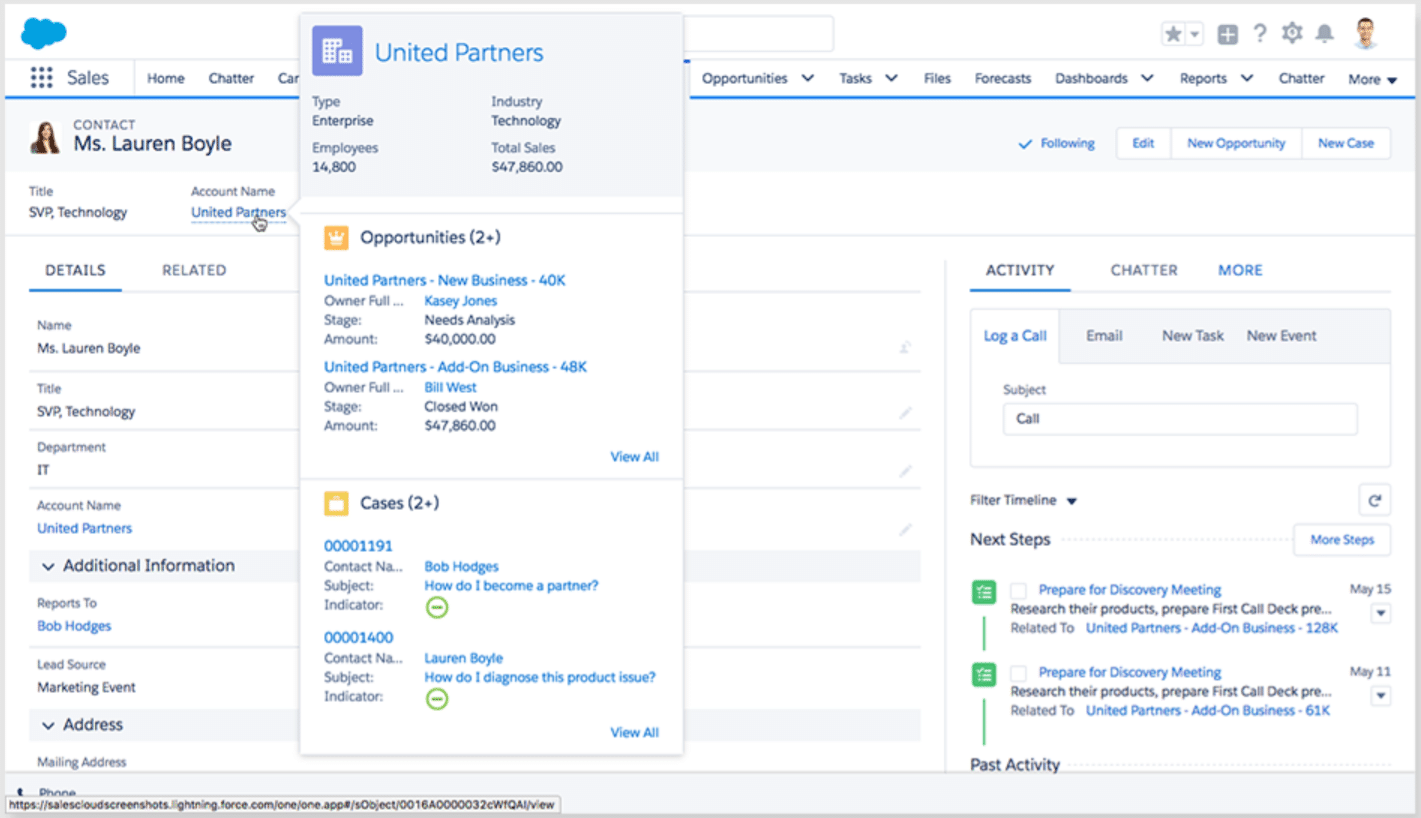
Salesforce Health Cloud is widely recognized as a leading enterprise-grade platform designed to unify clinical and operational data into a single patient-centric environment. It enables providers to automate workflows, and deliver personalized patient engagement at scale, build comprehensive patient profiles, track care journeys, and coordinate across departments using AI-driven insights.
Healthcare organizations choose this solution when they need scalable healthcare CRM solutions capable of integrating clinical and operational datasets into one unified environment.
Key strengths:
- Unified patient profiles combining clinical and non-clinical data.
- Advanced automation and predictive AI insights.
- Deep integration ecosystem and enterprise scalability.
- Strong compliance and security infrastructure.
Zoho CRM – best healthcare CRM
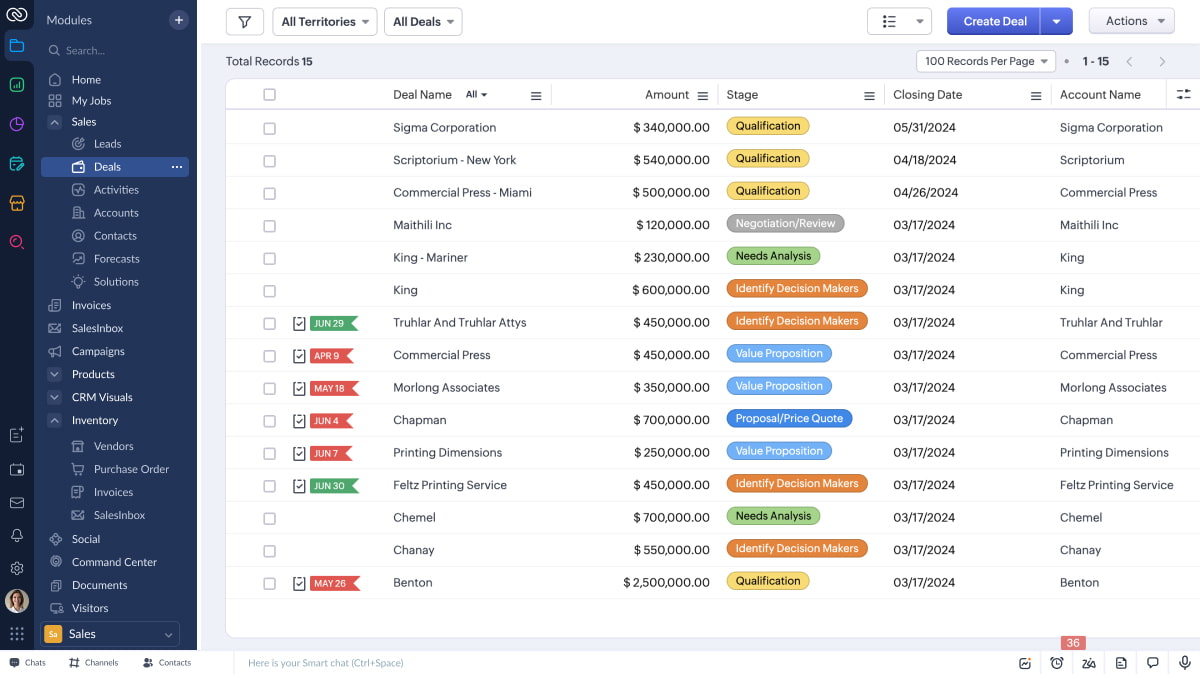
Zoho CRM offers a balanced combination of affordability and flexibility, making it attractive for small and mid-sized healthcare providers. Its modular ecosystem enables clinics to automate appointment reminders, manage communications, and analyze patient trends without excessive technical overhead.
For organizations seeking efficient tools with manageable implementation complexity, Zoho represents a strong entry point into structured patient relationship management.
Key strengths:
- Affordable subscription tiers suitable for clinics.
- Strong automation for scheduling and follow-ups.
- Extensive integrations with productivity and analytics tools.
- User-friendly interface with fast implementation.
UI Bakery – best CRM platform healthcare teams use for internal systems
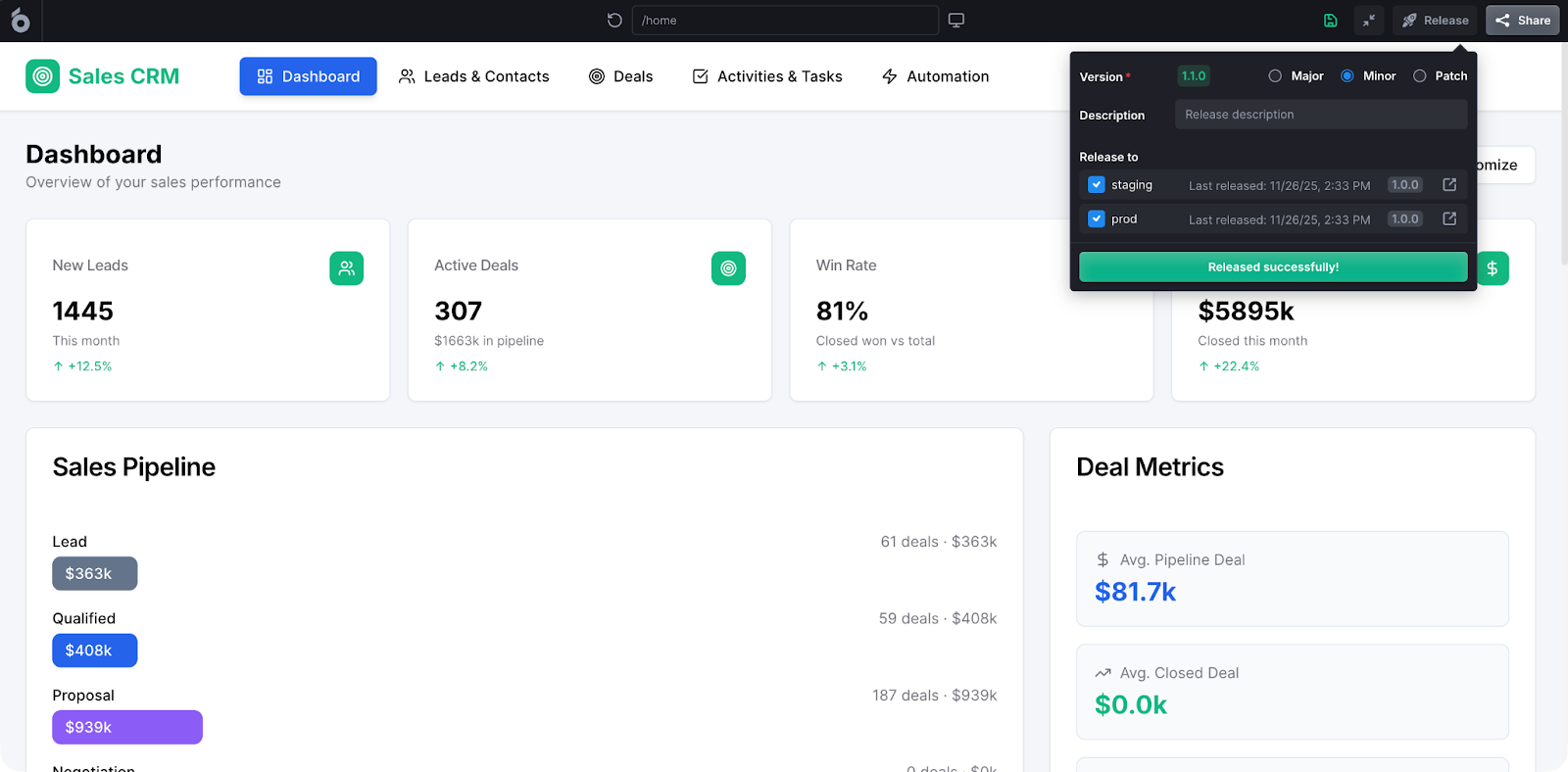
Unlike traditional CRM products, UI Bakery focuses on enabling organizations to build tailored internal applications connected directly to their operational databases. This makes it highly suitable for fast-growing companies that require custom healthcare CRM solutions aligned with operational workflows such as logistics tracking, patient onboarding pipelines, or internal reporting dashboards.
Healthcare companies adopting this approach benefit from faster deployment cycles and deeper control over best CRM for healthcare data management strategies.
Key strengths:
- AI-assisted generation of internal healthcare applications.
- Extremely high customization for operational workflows.
- Secure self-hosted deployment options.
- Direct integrations with existing healthcare data systems.
HubSpot – best CRM for healthcare industry growth
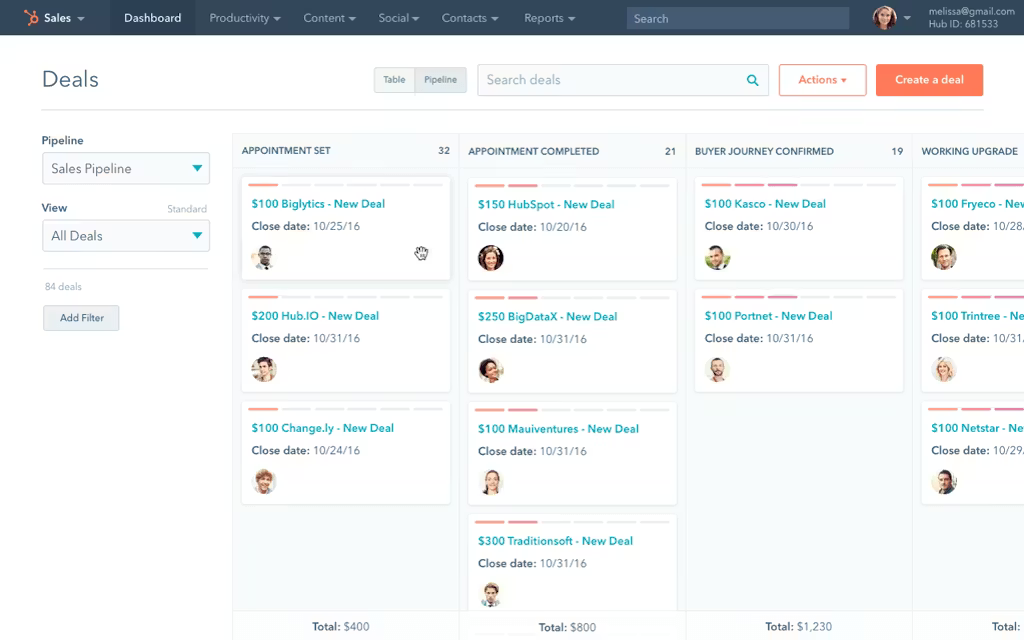
HubSpot CRM is widely adopted by healthcare marketing and patient engagement teams looking to improve acquisition funnels and retention strategies. It combines contact management, communication tracking, and campaign analytics in a unified platform that supports long-term growth initiatives.
Its user-friendly interface and scalable pricing structure make it a popular choice among growing digital health startups focused on measurable growth outcomes.
Key strengths:
- Powerful marketing automation and patient communication tools.
- Clear reporting dashboards for campaign performance.
- Fast onboarding with minimal technical setup.
- Strong ecosystem of integrations and educational resources.
Creatio – best CRM for healthcare data automation
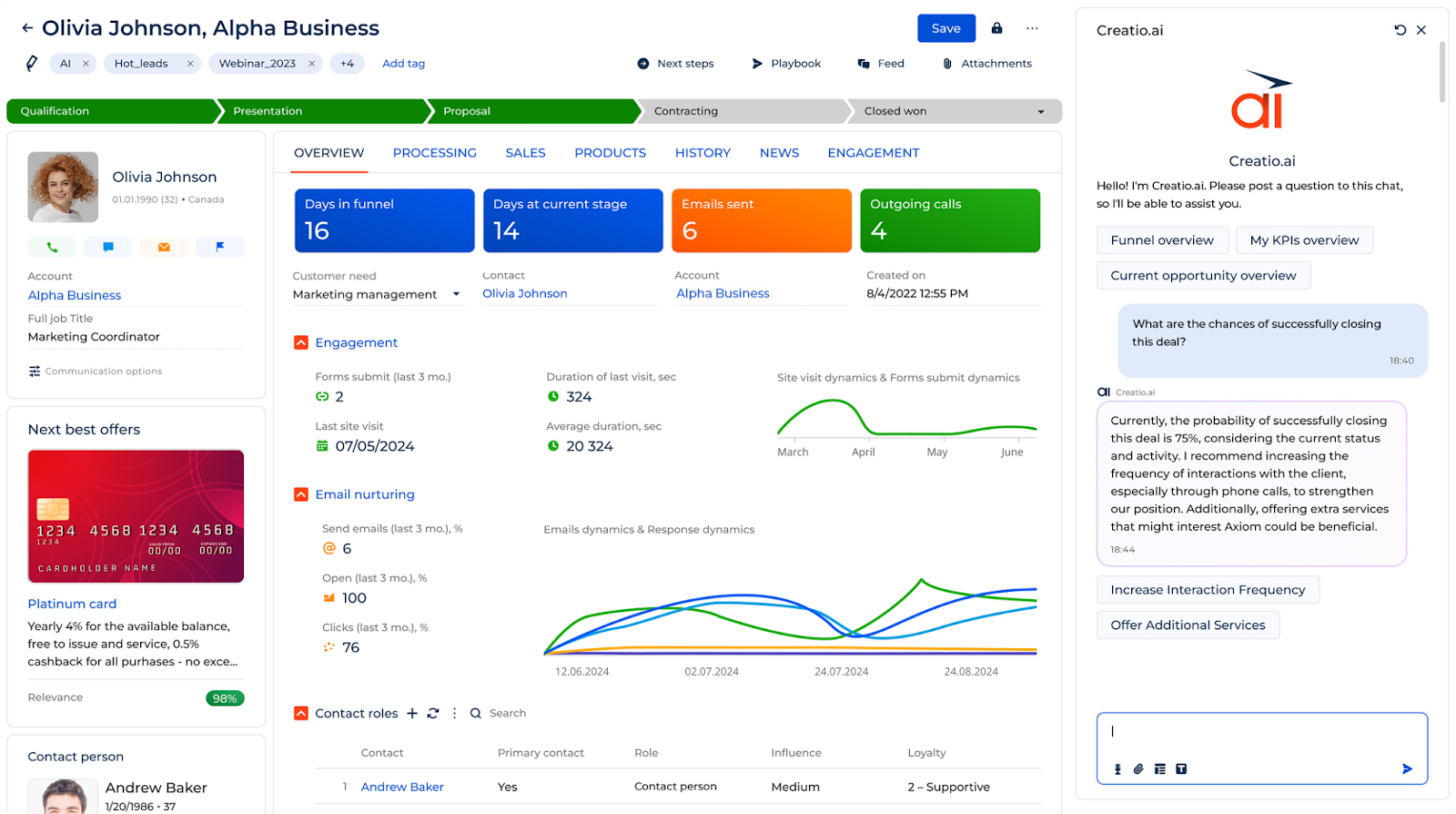
Creatio combines CRM functionality with business process management capabilities, allowing healthcare organizations to automate complex workflows such as case approvals, patient onboarding, and internal service coordination. Industry comparisons highlight Creatio as a strong option for organizations seeking low-code customization capabilities combined with advanced workflow orchestration.
Key strengths:
- Built-in BPM engine for healthcare process automation.
- Low-code customization environment.
- Centralized operational workflow management.
- Suitable for mid-size and enterprise healthcare organizations.
Top healthcare CRM in the United States
The U.S. healthcare technology market continues to lead global CRM adoption due to regulatory complexity and high competition among providers. Platforms such as Salesforce Health Cloud, HubSpot, and Creatio dominate enterprise and mid-market segments, while flexible builders are gaining traction among innovation-driven organizations seeking operational agility.
Final thoughts
Selecting the best CRM platform healthcare organizations can rely on requires balancing customization needs, compliance expectations, and budget constraints. Enterprise providers typically prioritize scalability and analytics, while smaller clinics focus on usability and cost efficiency.
As healthcare ecosystems become more data-driven, investing in modern CRM software for healthcare environments is increasingly essential for delivering coordinated, patient-centric services.
FAQ
What is healthcare CRM?
Healthcare CRM refers to technology systems designed to manage patient interactions, communication history, operational workflows, and engagement strategies across medical organizations.
What is the best CRM for healthcare?
The optimal solution depends on organization size and technical requirements, but leading platforms typically include enterprise ecosystems, affordable modular tools, and customizable internal app builders.
How much does a healthcare CRM software cost?
Pricing varies widely, ranging from free starter plans to enterprise subscriptions costing hundreds of dollars per user monthly depending on compliance, automation, and integration capabilities.
How do I choose affordable healthcare CRM tools?
Evaluate feature relevance, implementation effort, scalability, and long-term operational value rather than focusing solely on entry-level pricing tiers.
How to implement CRM for healthcare practices?
Successful implementation involves mapping patient workflows, integrating existing databases, training staff, and gradually automating repetitive administrative tasks.
What features should a healthcare CRM include?
Essential capabilities include patient lifecycle tracking, reporting dashboards, communication automation, secure data management, and flexible integration with healthcare systems.
Next step
Planning a HIPAA-sensitive internal app?
Use the checklist above to map data flow, roles, audit events, vendors, and deployment decisions before the first production workflow ships.
Healthcare operations example
Action Behavior Centers scaled internal operations across clinics with UI Bakery
For a real operational example, review UI Bakery customer stories and healthcare operations patterns.
5,000+users supported in the customer story
400+clinics mentioned in the case study



"The UI Bakery platform offers a cost-effective approach to creating applications. With UI Bakery, you can achieve your app development goals without breaking the bank."

"Before switching to UI Bakery we developed a number of apps within the Retool system. The Retool system was good but ultimately did not have the flexibility and feature sets that we required."
Check the Story